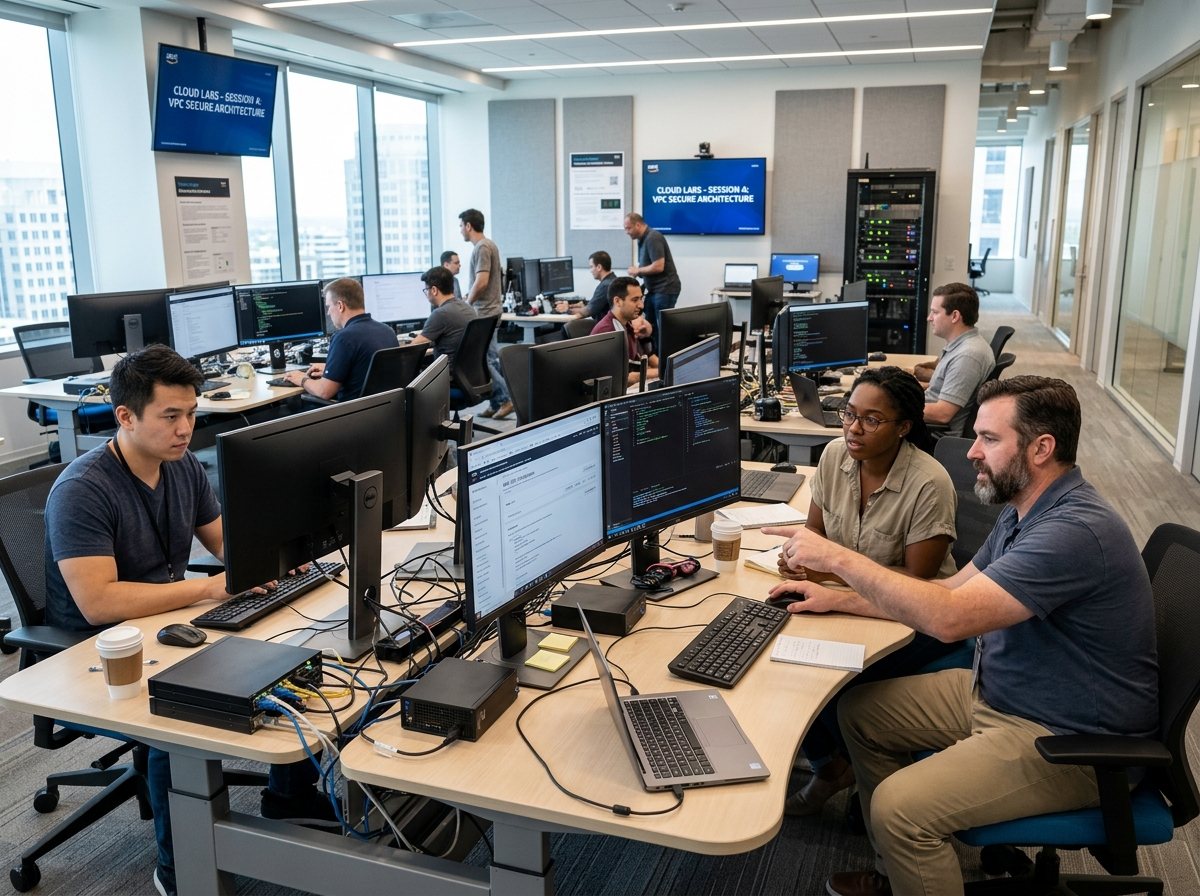
IBACTP® — International Board of AI, Cybersecurity & Technology Professionals
Training by Certification

Explore Training Across
IBACTP® Categories

Structured Professional Training Aligned with 28 Global Pathways

IBACTP® provides structured professional training aligned with certification pathways in Artificial Intelligence, Generative AI, AI Engineering, Data & Analytics, Cybersecurity & Defense, Infrastructure & Cloud, and IT Systems & Governance. Build applied skills & leadership.

Core Philosophy:
  1. Learn
  2. Practice
  3. Apply
  4. Prepare
  5. Certify
  6. Advance

Designed for all career stages:

  • Emerging Professionals
  • Practitioners & Specialists
  • Analysts & Engineers
  • Managers & Consultants
  • Directors & Executives
  • Career Changers
Instructor guiding an applied analytics lab Cohort-based classroom training
Independent Rigor 100-MCQ PROCTORED STANDARD
Explore Curriculum by Specialization (7 Core Domains)

Select a Discipline to View Full Syllabi & Competencies

12 Flexible Delivery Formats: VILT • Self-Paced • Bootcamps • Custom Cohorts • Executive Education • Hands-On Labs Explore Formats ↓

Pedagogical Architecture

The 6-Stage Learning Progression & 12 Delivery Formats

From foundational theory to applied laboratory competence and lifelong leadership advancement.

1

Learn · Body of Knowledge Foundations

Master domain principles, frameworks, and theoretical concepts aligned with the blueprint.

Video Modules · Digital BoK Guides · Structured Units

2

Practice · Applied Technical Labs

Engage in interactive cloud labs, coding drills, and security exercises on live environments.

Cloud Sandboxes · Jupyter Notebooks · Tool Drills

3

Apply · Real-World Case Studies

Solve complex organizational scenarios, governance dilemmas, and production challenges.

Incident Drills · Architecture Reviews · Tabletop Simulations

4

Prepare · Blueprint Exam Alignment

Review domain breakdowns, sample questions, and diagnostic tests with instructor coaching.

Diagnostic Tests · Knowledge-Gap Analysis · Review Sessions

5

Certify · Independent 100-MCQ Exam

Sit for the formal psychometric examination to earn your globally recognized credential.

Double-Blind Psychometrics · Verifiable Transcript · Digital Badge

6

Advance · Triennial CPE & Leadership

Maintain active status through continuous professional education, master tracks, and advisory networks.

60 CPE Credits / 3 Yrs · Master Specializations · Global Registry

Flexible Learning Formats (12 Available Options)

Choose the Training Delivery Model That Fits Your Goals

1. Virtual Instructor-Led (VILT)

Live online classes (5-day or evening cohorts) with remote Q&A.

2. Self-Paced Online Learning

24/7 modular video lessons, digital guides, and practice tests.

3. Live Classroom Training

Traditional face-to-face instruction at authorized ATP centers.

4. Intensive Bootcamps

Accelerated 3-5 day immersive skills and exam preparation.

5. Hybrid Training Models

Combines online self-study with live virtual/classroom workshops.

6. Certification Prep Courses

Domain-by-domain reviews, practice MCQs & gap analysis.

7. Short Courses & Workshops

Focused deep-dives on Prompting, MLOps, DFIR, and Cloud Security.

8. Executive Education

Strategic governance, risk oversight & AI literacy for CxOs/Boards.

9. Corporate & Team Training

Dedicated workforce upskilling for internal engineering & IT teams.

10. Customized Enterprise Tracks

Organization-specific case studies, stack alignment & competencies.

11. Cohort-Based Learning

Structured group milestones for universities, agencies & partners.

12. Applied Labs & Exercises

Hands-on technical sandboxes, RAG pipelines & threat simulations.

Certification Disclaimer: Completion of training does not automatically confer certification. Candidates must independently pass the formal proctored exam.

Domains 1 & 2 · Artificial Intelligence & Generative AI

Practical AI & Generative AI Training Pathways

Comprehensive curricula spanning core machine learning, LLMs, prompt engineering, RAG, and AI governance.

1. Artificial Intelligence

Build Practical AI Competence

CAIP® (Practitioner) & CAIM® (Manager Pathways)

Designed for professionals who need to understand, apply, manage, secure, and govern AI across modern enterprise environments.

What You Will Learn (Curriculum Topics):
  • Machine Learning Fundamentals
  • Supervised & Unsupervised Learning
  • Neural Networks & Deep Learning
  • Predictive Analytics & Modeling
  • Natural Language Processing (NLP)
  • Computer Vision Systems
  • Recommendation Architectures
  • AI Project Lifecycle Management
  • AI Model Evaluation & Drift
  • Responsible AI & Human Oversight
  • AI Risk Management & Ethics
  • Enterprise AI Strategy & Governance

Journey: UnderstandPracticeApplySecureGovernLead

Roles: AI Analyst, AI Specialist, AI Consultant, AI Program Manager, AI Strategy Leader

Professional vs Manager Level Tracks:
Professional Track:
Focuses on technical modeling, prompt testing, evaluation & pipelines.
Manager Track:
Focuses on AI governance, portfolio ROI, risk tolerance & board reporting.
Executive Series:
Strategic decision-making, organizational transformation & policy.

Available Formats: 5-Day VILT • Self-Paced Online • Intensive Bootcamps • Custom Enterprise Cohorts

View AI Training Programs & Labs →
2. Generative AI

Use, Govern & Secure Generative AI

CGAIP® (Practitioner) & CGAIM® (Manager Pathways)

From prompt engineering and RAG architectures to agentic workflows, hallucination management, data leakage prevention, and enterprise governance.

What You Will Learn (Curriculum Topics):
  • LLM Architecture & Inference
  • Structured Prompt Engineering
  • Reusable Prompt Design Patterns
  • AI Copilots & Workflow Integration
  • Retrieval-Augmented Generation (RAG)
  • Embeddings & Vector Databases
  • Autonomous AI Agents & Workflows
  • Hallucination Mitigation & Validation
  • Prompt Injection & Security Controls
  • Data Leakage & Privacy Defense
  • Deepfakes & Synthetic Media Risks
  • Enterprise GenAI Policy & Auditing

Journey: UnderstandPromptBuildIntegrateAutomateSecureLead

Roles: GenAI Specialist, Prompt Professional, Automation Specialist, GenAI Consultant, AI Product Mgr

Specialized Hands-On Workshops & Labs:
  • Advanced Prompt Design & Prompt Libraries
  • GenAI for Cybersecurity & Analytics
  • RAG Implementation with Vector Search
  • Multi-Agent System Automation
  • Prompt Injection Defense & Guardrails
  • Executive Generative AI Strategy

Corporate GenAI Accelerators: Department-specific training for HR, Finance, Legal, Tech & Customer Operations.


View Generative AI Training Programs →
Data Science Pathways
Data Science Pathways From raw data to decision intelligence
Generative AI Tracks
Generative AI Tracks LLMs, embeddings and guardrails
Technical Labs
Technical Labs Sandboxes, pipelines and simulations
Domains 3 & 4 · AI Engineering & Data Analytics

Engineering Production Systems & Data Intelligence

Move from proof-of-concept models to production-ready MLOps pipelines and enterprise analytics.

3. AI Engineering

Production-Ready AI Systems

CAIEP® (Practitioner) & CAIEM® (Manager Pathways)

Bridge data science, software engineering, cloud infrastructure, and MLOps to build dependable, monitored, scalable, and secure AI platforms.

What You Will Learn (Engineering Lifecycle):
  • Python for AI & Machine Learning
  • Repeatable ML Pipelines (ETL/ELT)
  • Model Optimization & Hyperparameters
  • Model Serving & REST APIs
  • Full MLOps: CI/CD for Machine Learning
  • Model Versioning, Artifacts & Registries
  • Continuous Model & Data Drift Detection
  • Feature Stores & Feature Engineering
  • Cloud AI Platforms (AWS, Azure, GCP)
  • Docker Containers & Kubernetes
  • Production RAG & Vector Stores
  • AI Security & Adversarial Robustness

Lifecycle: CodeBuildTestIntegrateDeployMonitorSecure

Roles: AI Engineer, ML Engineer, MLOps Engineer, AI Architect, AI Platform Specialist

Applied AI Engineering Labs & Tools:
  • End-to-End Solution Lifecycle Projects
  • MLflow, Databricks & PyTorch Drills
  • Blue/Green & Canary Model Deployment
  • AI Observability & Latency Profiling
  • Secure AI Coding & Secrets Management
  • Cloud GPU Cost Optimization Strategies

Project-Based Training: Define Use Case → Prepare Data → Build Model → Containerize → Deploy → Monitor.

View AI Engineering Training & Labs →
4. Data & Analytics

Insight, Intelligence & Value

CDAP®, CDAM®, CDSP®, CDSM® Certification Pathways

Transform raw information into actionable intelligence, predictive modeling, executive dashboards, and strategic business outcomes.

What You Will Learn (Data Discipline):
  • Data Science Lifecycle & Problem Framing
  • Advanced SQL Queries & Window Functions
  • Python for Analytics (Pandas, NumPy)
  • Exploratory Data Analysis (EDA)
  • Statistical Analysis & Hypothesis Testing
  • Data Cleaning, Preparation & Quality
  • Business Intelligence & Power BI / Tableau
  • Machine Learning & Predictive Analytics
  • Time-Series Forecasting & Trends
  • Enterprise Data Governance & Ethics
  • Data Storytelling & Executive Dashboards
  • Decision Intelligence & KPI Systems

Journey: Raw DataQualityAnalysisInsightPredictionDecision

Roles: Data Analyst, Data Scientist, BI Analyst, Analytics Manager, Decision Intelligence Lead

Tools, Libraries & Executive Modules:
  • Python, SQL, Jupyter, Excel, Power BI, Tableau
  • Scikit-learn, Matplotlib, Databricks, Snowflake
  • Executive Dashboard Design & KPI Governance
  • Churn, Fraud & Demand Forecasting Models
  • Data Stewardship, Lineage & Privacy Compliance
  • Generative AI-Assisted Data Analytics

Data Storytelling Principle: Data → Insight → Context → Recommendation → Action

View Data & Analytics Training →
Domain 5 · Cybersecurity & Digital Defense

Detect, Defend, Respond & Lead

SOC Operations, Threat Hunting, SIEM/SOAR, DFIR, Cloud Security, AI Red Teaming & Cyber Governance.

SOC

Defensive Operations

CICSP®, CCDP®, CDFOP® Tracks

SOC & Incident Operations:

  • Security Monitoring & Alert Triage
  • SIEM Rule Engineering & Telemetry
  • SOAR Playbooks & Auto-Enrichment
  • Endpoint Detection & Response (EDR/XDR)

Threat Hunting & Intelligence:

  • MITRE ATT&CK & D3FEND Frameworks
  • Adversary TTPs & IoC Analysis
  • Threat Intel Lifecycle (Plan → Feedback)
  • Proactive Behavioral Log Hunting

Malware & DFIR Forensics:

  • Memory, Disk, Network & Cloud Evidence
  • Chain of Custody & Forensic Reporting
  • Static/Dynamic Malware Classification
Explore Defensive Tracks →
ZT

Cloud & AI Security

Zero Trust & AI Red Teaming

Zero Trust Architecture:

  • Explicit Verification & Least Privilege
  • Microsegmentation & Conditional Access
  • Identity-Centric Security & Continuous Auth

Cloud Security & CSPM:

  • Shared Responsibility Matrix
  • Cloud Workload Protection & IAM
  • Container & Kubernetes Defense

AI Security & AI Red Teaming:

  • Prompt Injection & Jailbreak Testing
  • Data Poisoning & Model Extraction
  • Synthetic Media & Deepfake Defense
  • Guardrails & RAG Security Testing
View Cloud & AI Labs →
GRC

Cyber Governance & Risk

CICSM® (Manager & CISO Series)

Frameworks & Compliance:

  • NIST CSF 2.0 & NIST NICE Workforce
  • ISO/IEC 27001, 27002, 27005 & 42001
  • CIS Critical Controls & COBIT

Cyber Risk & Tabletop Drills:

  • Quantitative & Qualitative Risk Scoring
  • Third-Party / Supply-Chain Exposure
  • Incident Tabletop & Crisis Management

Executive & Board Oversight:

  • Board-Level Cyber Risk Reporting
  • Security Budget & Resource Allocation
  • Cyber Resilience & Business Continuity
View Manager Tracks →

Cyber Lifecycle: GovernIdentifyProtectDetectAnalyzeRespondRecoverImprove

Domains 6 & 7 · Infrastructure & IT Governance

Resilient Cloud Infrastructure & Strategic Governance

From hybrid networks, IaC, and Kubernetes to IT audit, risk controls, and executive GRC leadership.

6. Infrastructure & Cloud

Secure, Resilient & Scalable

CNEP®, CNEM®, CITP®, CCTP® Certification Pathways

Design, implement, automate, monitor, and scale multi-cloud environments, containers, and high-availability digital backbones.

What You Will Learn (Infrastructure Topics):
  • Cloud Architecture Principles (AWS, Azure, GCP)
  • Network Architecture & SDN
  • Virtualization, Hypervisors & Storage
  • Identity & Access Management (IAM)
  • Infrastructure as Code (Terraform, Ansible)
  • Containers & Kubernetes Orchestration
  • Hybrid & Multi-Cloud Strategy
  • Cloud Observability & Cost Control
  • Business Continuity & Disaster Recovery (DR)
  • Operational Resilience & Chaos Drills
  • AI Workload Infrastructure & GPUs
  • Enterprise Cloud Governance Models

Journey: ArchitectDeployConnectSecureAutomateScaleLead

Roles: Cloud Engineer, Infrastructure Architect, Network Engineer, Cloud Security Specialist

Modern Tools & Architecture Workshops:
  • Multi-Tier Application High-Availability Design
  • Kubernetes Security & Deployment Patterns
  • RTO/RPO Recovery Point & Failover Runbooks
  • Multi-Cloud Vendor Concentration Risk
  • AI Platform Cluster & GPU Scaling Strategy
  • Zero Trust Cloud Integration Blueprints

Resilience Philosophy: Prepare → Protect → Failover → Restore → Validate → Improve

View Cloud & Infrastructure Training →
7. IT Systems & Governance

Risk, Governance & Strategy

CISP®, CISyM®, CDevSOP®, CDevSOM®, CITGP®, CITGM® Tracks

Connect operational technology with risk oversight, compliance controls, IT audit, third-party governance, and board-level strategy.

What You Will Learn (Governance Disciplines):
  • IT Governance Structures & Decision Rights
  • Technology Risk Identification & Heatmaps
  • General IT Controls (GITC) & Testing
  • Technology Compliance & Audit Readiness
  • IT Service Management (ITSM & ITIL Align)
  • IT Audit Lifecycle (Planning → Reporting)
  • Technology Policy Formulation & Review
  • Digital Governance & Transformation
  • Vendor & Third-Party Risk Management
  • AI & Data Governance Frameworks
  • IT Strategy, Operating Models & Portfolios
  • KPI / KRI Performance & Board Dashboards

Pathway: SystemsControlsRiskGovernancePerformanceLead

Roles: IT Auditor, Compliance Officer, Risk Manager, GRC Lead, CIO-Office Executive

Case-Based Simulations & Frameworks:
  • COBIT, ISO 27001, ISO 42001, DAMA-DMBOK
  • Failed Transformation Case Post-Mortems
  • Tabletop Exercises: Major Outage & Data Breach
  • Vendor Contractual Protection & Exit Plans
  • Board Risk Reporting & Executive Oversight
  • DevSecOps Automation & Continuous Compliance

Governance Motto: Govern Technology. Manage Risk. Strengthen Accountability. Enable Business Value.

View IT Systems & Governance Training →
Enterprise Workforce Development

Training for Individuals & Organizations

Build structured workforce capability with private enterprise cohorts, technical academies, and executive workshops.

ROLE

Role-Based Tracks

Structured learning paths segmented for practitioners, engineers, managers, and executive leaders.

Learn More
ACAD

Academies

Multi-tiered long-term internal academies (e.g. Enterprise AI Academy) aligned with corporate strategy.

Learn More
WORK

Workshops

Intensive deep-dives in prompt engineering, cyber incident drills, and responsible AI governance.

Learn More
GOV

Public Sector

Federal, municipal, and defense training compliant with procurement rules and security standards.

Learn More

Training for Individuals

  • Prepare for globally recognized certifications & career promotions
  • Build new technical and managerial competencies at your own pace
  • Transition into high-demand AI, Cloud, and Cybersecurity disciplines
  • Maintain professional standing through triennial CPE renewal credits
Explore Individual Training →

Training for Organizations

  • Skills-gap assessments & customized role-based training pathways
  • Private team bootcamps aligned with internal technology stacks
  • Executive AI & cyber literacy workshops for senior decision-makers
  • Enterprise progress dashboards, invoicing, and account management
Explore Corporate Training →

Need a customized proposal for team training? Contact Corporate Workforce Solutions Team →

Accreditation & Quality

Why Train with IBACTP®?

Four foundational pillars ensuring world-class pedagogical rigor and credential credibility.

QA

100% Blueprint Aligned

Directly structured around official Bodies of Knowledge, eliminating gaps between instruction and examination competency domains.

ATP

Authorized Master Instructors

Courses led by certified industry practitioners with proven technical mastery and verified adult-learning accreditations.

ISO

Psychometric Quality Standards

Exams developed independently under ISO/IEC 17024 and NCCA double-blind guidelines to guarantee complete credential trust.

CPE

Lifelong Career Advancement

Continuous learning ecosystem supporting credential renewal, executive networking, and global leadership council participation.

Certified professional advancing their career
Global Standard 100+ COUNTRIES RECOGNIZED
Standards & Framework Alignment Awareness

Educational Alignment with Globally Recognized Industry Frameworks

  • NIST Cybersecurity Framework (CSF 2.0)
  • ISO/IEC 27001, 27002 & 27005 (Security)
  • MITRE ATT&CK & D3FEND
  • COBIT & ITIL Principles
  • NIST AI Risk Management Framework
  • ISO/IEC 42001 & 23894 (AI Governance)
  • Zero Trust Principles & CISA Guidance
  • DAMA-DMBOK (Data Management)
  • NIST NICE Cybersecurity Workforce
  • ISO 22301 & 31000 (BCP & Risk)
  • Cloud Security Alliance (CSA Guidance)
  • CIS Controls v8

Note: Reference to external standards indicates educational alignment and curriculum mapping, and does not imply direct endorsement unless formally certified.

Start Your Certification Journey Today

One Training Ecosystem. 7 Domains. 28 Pathways.

Building Skills. Preparing Professionals. Developing Technology Leaders.

28
Certifications
7
Core Domains
12
Delivery Formats
100
MCQ Standard
100+
Countries
Training by Certification

Training by Certification

“TRAINING BY CERTIFICATION” – SUB-MENU

Instructor-led classroom training
01

Explore Training Across IBACTP® Certification Categories

IBACTP® provides structured professional training aligned with its certification pathways in Artificial Intelligence, Generative AI, AI Engineering, Data & Analytics, Cybersecurity & Defense, Infrastructure & Cloud, and IT Systems & Governance.

Training helps professionals build the knowledge, applied skills, technical understanding, governance awareness, and leadership capabilities required for modern technology roles.
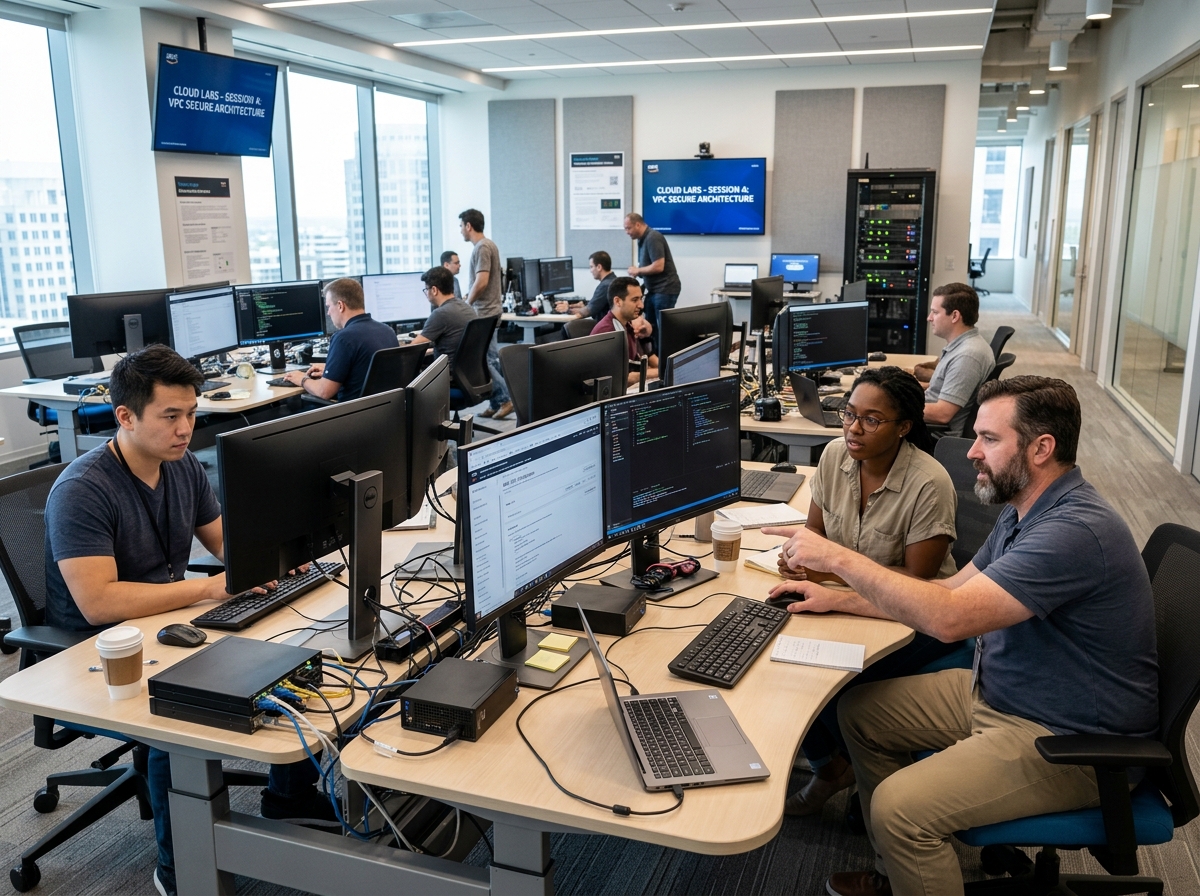
Hands-on technology laboratory cohort
02

Our training philosophy is built around a simple progression:

  • Learn
  • Practice
  • Apply
  • Prepare
  • Certify
  • Advance

Each training category supports one or more IBACTP® certification pathways and may include:

  • Instructor-led training
  • Virtual live classes
  • Self-paced learning
  • Boot camps
  • Workshops
  • Case studies
  • Practical labs
  • Scenario-based exercises
  • Certification preparation
  • Exam review sessions
  • Corporate training
  • Customized workforce development

Continuing Professional Development

Corporate workforce collaboration
03

IBACTP® training is designed for professionals at multiple career stages, including:

  • Emerging professionals
  • Practitioners
  • Specialists
  • Analysts
  • Engineers
  • Managers
  • Consultants
  • Directors
  • Executives

Explore the training category that best matches your professional goals.

01 · Training by Certification

Artificial Intelligence

Instructor-led classroom training
01

Build Practical AI Competence for the Modern Digital Economy

Artificial Intelligence is reshaping how organizations operate, compete, innovate, automate decisions, manage risk, serve customers, and create new products and services.

IBACTP® Artificial Intelligence training is designed for professionals who need to understand, apply, manage, secure, and govern AI in real organizational environments.

This training category supports learners who want to develop strong foundations in AI as well as professionals preparing for advanced AI-related certifications and leadership roles.

Hands-on technology laboratory cohort
02

What You Will Learn

Artificial Intelligence training may cover:

  • AI concepts and terminology
  • Machine learning fundamentals
  • Supervised and unsupervised learning
  • Neural network concepts
  • Predictive analytics
  • AI-supported decision-making
  • Natural language processing
  • Computer vision
  • Recommendation systems
  • AI automation
  • AI project lifecycle
  • AI model evaluation
  • Responsible AI
  • AI risk management
  • AI governance
  • AI security
  • Human-AI collaboration
  • Enterprise AI strategy
Corporate workforce collaboration
03

Who Should Attend or Take Courses

This training category is suitable for:

  • AI professionals
  • Data professionals
  • Technology specialists
  • Business analysts
  • Digital transformation professionals
  • IT professionals
  • Consultants
  • Project managers
  • Technology managers
  • Risk and governance professionals
  • Executives seeking AI literacy
  • Students and career changers
Executive enterprise workshop
04

Professional Skills Developed

Participants in IBACTP® Artificial Intelligence training programs may develop practical, analytical, technical, governance, and leadership competencies that support the responsible adoption and management of AI across modern organizations.

Depending on the training program and level, participants may develop competencies in:

  • Understanding core Artificial Intelligence concepts, systems, models, and applications
  • Distinguishing between AI, machine learning, deep learning, generative AI, and automation
  • Identifying appropriate AI use cases across business and technology environments
  • Evaluating AI opportunities based on feasibility, value, risk, and organizational readiness
  • Interpreting AI and machine learning model outputs
  • Understanding model accuracy, limitations, uncertainty, and performance
  • Recognizing hallucinations, bias, data-quality issues, and other AI limitations
  • Applying AI to improve business processes, decision-making, customer experience, and operational efficiency
  • Managing AI-related operational, ethical, cybersecurity, privacy, and compliance risks
  • Applying responsible AI principles, including fairness, accountability, transparency, explainability, and human oversight
  • Supporting AI governance and policy development
  • Evaluating AI tools, platforms, and technology providers
  • Communicating AI opportunities, risks, and capabilities to technical and non-technical stakeholders
  • Participating in AI implementation and digital transformation initiatives
  • Supporting organizational AI adoption and change management
  • Assessing the business value and potential return on AI investments
  • Developing a stronger understanding of enterprise AI strategy
  • Collaborating effectively with data scientists, AI engineers, cybersecurity professionals, business leaders, and governance teams
  • Supporting the secure and responsible deployment of AI technologies
  • Developing the professional knowledge required for applicable IBACTP® certification examinations

For manager and executive-level programs, participants may also develop competencies in:

  • Leading AI programs and multidisciplinary teams
  • Establishing AI governance structures
  • Prioritizing enterprise AI initiatives
  • Managing AI investment portfolios
  • Developing AI policies and controls
  • Assessing enterprise AI risk
  • Measuring AI performance and business value
  • Communicating AI strategy to senior leadership and boards
  • Leading responsible AI transformation across the organization

Training Delivery Formats

Academic mentorship
05

Flexible Learning Options Designed for Professionals and Organizations

IBACTP® recognizes that professionals learn in different ways and operate under different schedules, organizational environments, and career-development needs.

Our training programs may therefore be delivered through multiple flexible formats, depending on the course, certification pathway, location, instructor availability, and organizational requirements.
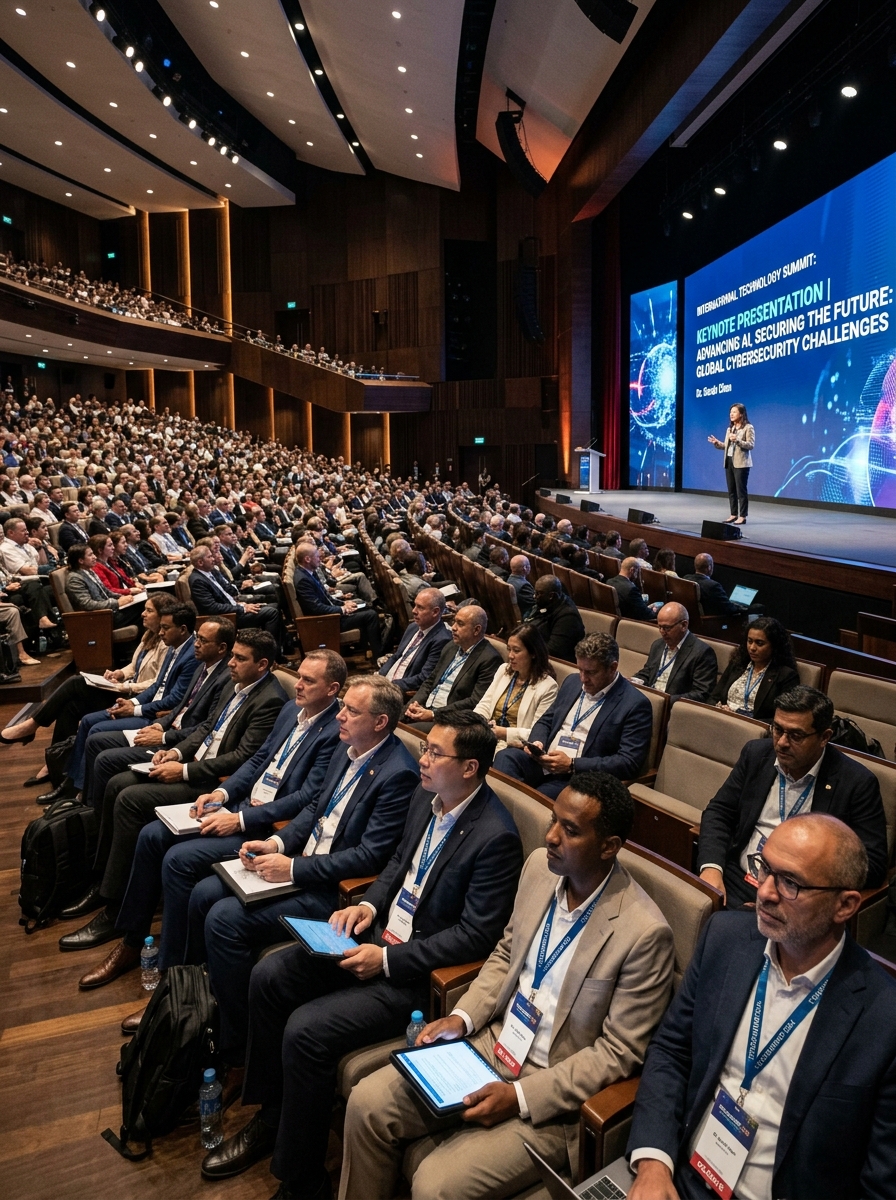
Global technology summit
06

Virtual Instructor-Led Training (VILT) – 5 days

Live online classes led by qualified instructors provide structured learning while allowing participants to attend remotely.

Virtual instructor-led programs may include:

  • Live lectures
  • Instructor demonstrations
  • Interactive discussions
  • Breakout activities
  • Real-time questions and answers
  • Case studies
  • Practical exercises
  • Exam preparation
  • Peer collaboration

This format is especially suitable for professionals who want the benefits of instructor interaction without the need to travel.

Instructor-led classroom training
07

Self-Paced Online Training

Self-paced training lets learners complete course content on their own schedules.

Programs may include:

  • Recorded lessons
  • Structured learning modules
  • Reading materials
  • Knowledge checks
  • Practice questions
  • Case studies
  • Applied exercises
  • Downloadable resources
  • Certification exam preparation

Self-paced learning is ideal for professionals who require maximum scheduling flexibility or prefer independent study.

Hands-on technology laboratory cohort
08

Live Classroom Instructor-Led Training

Traditional instructor-led classroom programs may be available through IBACTP®, approved training partners, corporate locations, conferences, or scheduled training centers.

Classroom programs may include:

  • Face-to-face instruction
  • Collaborative exercises
  • Team discussions
  • Hands-on activities
  • Case-based learning
  • Instructor coaching
  • Practice assessments

This format provides an immersive learning environment and direct interaction with instructors and other participants.

Corporate workforce collaboration
09

Intensive Bootcamps

IBACTP® Bootcamps provide concentrated, high-intensity training designed to accelerate learning over a shorter period.

Bootcamps may be suitable for:

  • Certification preparation
  • Career transition
  • Rapid skills development
  • Technology upskilling
  • Organizational workforce initiatives

Bootcamp activities may include:

  • Intensive instruction
  • Practical exercises
  • Scenario-based learning
  • Case studies
  • Labs
  • Practice examinations
  • Exam-readiness reviews

Bootcamps are designed for participants prepared to engage in a focused and accelerated learning experience.

Executive enterprise workshop
10

Certification Preparation Programs

Certification preparation training is specifically structured around the applicable IBACTP® Body of Knowledge, competency domains, learning outcomes, and examination objectives.

Preparation programs may include:

  • Domain-by-domain review
  • Key concepts
  • Scenario-based questions
  • Practice examinations
  • Exam strategies
  • Applied case studies
  • Instructor review sessions
  • Knowledge-gap identification

Completion of certification training does not automatically result in certification. Candidates must still satisfy applicable eligibility, examination, and credentialing requirements.

More in this section
Hybrid Training Read this

Hybrid programs combine online and in-person learning.

A hybrid model may include:

  • Self-paced pre-course learning
  • Live virtual sessions
  • Classroom workshops
  • Practical activities
  • Instructor coaching
  • Exam preparation

This format allows organizations and individuals to combine flexibility with structured instructor engagement.

Workshops and Short Courses Read this

Focused workshops may address specific AI topics and emerging professional needs.

Examples may include:

  • AI Fundamentals
  • Generative AI for Professionals
  • Responsible AI
  • AI Governance
  • Prompt Engineering
  • AI Risk Management
  • AI for Managers
  • AI Security
  • AI Strategy
  • AI for Executives

Workshops are particularly useful for professionals who need concentrated development in a specific competency area.

Executive Education Programs Read this

Executive AI programs are designed for managers, directors, senior leaders, executives, board members, and public-sector decision-makers.

Executive education may focus on:

  • Enterprise AI strategy
  • AI governance
  • Responsible AI
  • AI risk
  • AI investment
  • Organizational transformation
  • AI performance management
  • Board oversight
  • Strategic leadership

The emphasis is on strategic decision-making rather than hands-on technical implementation.

Corporate and Team Training Read this

IBACTP® may deliver dedicated AI training for organizations, departments, teams, and professional groups.

Corporate training can be adapted to:

  • Organizational objectives
  • Employee roles
  • Technology environment
  • Industry requirements
  • Workforce skill gaps
  • AI maturity levels
  • Governance requirements

Programs may be delivered virtually, onsite, hybrid, or through a dedicated organizational learning pathway.

Customized Enterprise Training Read this

Organizations with specialized requirements may request customized AI programs.

Customized training may include:

  • Organization-specific case studies
  • Industry-specific examples
  • Role-based learning pathways
  • Customized competency frameworks
  • Leadership workshops
  • Technical training
  • Certification preparation
  • Skills assessments
  • AI governance education
  • Workforce transformation programs

Customized programs help organizations align professional development with strategic technology and workforce objectives.

Cohort-Based Learning Read this

Organizations, universities, professional associations, and groups may enroll participants as a learning cohort.

Cohort programs can provide:

  • Structured schedules
  • Group collaboration
  • Instructor support
  • Shared learning activities
  • Peer networking
  • Milestone tracking
  • Certification preparation
AI Labs and Applied Learning Read this

Where appropriate, technical programs may include practical exercises or laboratory activities involving:

  • AI models
  • Data analysis
  • Generative AI
  • Prompt engineering
  • Machine learning
  • AI risk assessment
  • AI governance scenarios
  • AI security
  • Business use-case development

Applied learning helps participants move from theoretical understanding to practical professional competency.

Choose the Learning Format That Works for You Read this

IBACTP® training may be available through:

  • Virtual Instructor-Led Training
  • Self-Paced Online Learning
  • Live Classroom Training
  • Intensive Bootcamps
  • Hybrid Programs
  • Certification Preparation Courses
  • Short Courses and Workshops
  • Executive Education
  • Corporate Training
  • Customized Enterprise Programs
  • Cohort-Based Learning
  • Applied Labs and Practical Exercises
Flexible Training. Practical Skills. Certification-Aligned Learning. Read this

Learn Your Way. Build Competence. Prepare for Certification. Advance Professionally.

Career Relevance Read this

AI training can support roles such as:

  • AI Analyst
  • AI Professional
  • AI Product Specialist
  • AI Consultant
  • AI Program Manager
  • AI Governance Specialist
  • AI Risk Professional
  • Technology Manager
  • Digital Transformation Manager
  • AI Strategy Leader
Why Train in Artificial Intelligence with IBACTP®? Read this

IBACTP® AI training emphasizes:

  • Practical professional application
  • Responsible use of AI
  • Governance and risk awareness
  • Vendor-neutral knowledge where appropriate
  • Career-focused competency development
  • Professional-to-manager progression
  • Certification preparation
Explore Artificial Intelligence Training Read this

Build AI Knowledge. Apply AI Responsibly. Prepare to Lead AI Transformation.

View AI Training Programs →

02 · Training by Certification

Generative AI

Instructor-led classroom training
01

Develop the Skills to Use, Govern and Secure Generative AI

Generative AI is transforming content creation, analytics, software development, customer service, research, automation, knowledge management, and enterprise decision support.

IBACTP® Generative AI training helps professionals understand how large language models and related technologies work, how to apply them effectively, and how to manage their risks.

Hands-on technology laboratory cohort
02

What You Will Learn

IBACTP® Generative AI training helps professionals move beyond basic AI awareness and develop practical, strategic, and governance-focused competencies to use generative AI responsibly and effectively in real organizational environments. Depending on the training level, participants may learn how to evaluate, apply, integrate, secure, and govern generative AI systems across business, technical, operational, and leadership contexts.

Corporate workforce collaboration
03

Generative AI Foundations

Participants may develop an understanding of:

  • What generative AI is and how it differs from traditional AI and machine learning
  • Major generative AI use cases
  • Foundation models
  • Multimodal AI
  • Text, image, audio, and code generation
  • Enterprise applications of generative AI
  • Benefits, limitations, and organizational risks
Executive enterprise workshop
04

Large Language Models

Training may cover:

  • How large language models work at a conceptual level
  • Tokens, context windows, and model inference
  • Model training and fine-tuning concepts
  • Foundation models versus specialized models
  • Model selection considerations
  • Proprietary versus open-source models
  • Model capabilities and limitations
  • Evaluating model outputs
Academic mentorship
05

Prompt Engineering

Participants may learn how to design effective prompts for professional use cases, including:

  • Instruction prompting
  • Role prompting
  • Context setting
  • Few-shot prompting
  • Structured output prompting
  • Constraint-based prompting
  • Iterative prompt improvement
  • Prompt evaluation
  • Prompt testing
  • Prompt libraries
Global technology summit
06

Prompt Design Patterns

Training may introduce reusable prompt strategies for:

  • Summarization
  • Classification
  • Data extraction
  • Analysis
  • Brainstorming
  • Decision support
  • Report generation
  • Coding assistance
  • Research
  • Customer service
  • Knowledge retrieval
  • Business process automation

Participants may also learn when complex prompt structures add value and when simpler prompts work better.

Instructor-led classroom training
07

AI Copilots

Participants may explore how AI copilots can support:

  • Knowledge workers
  • Software developers
  • Cybersecurity teams
  • Data professionals
  • Customer-service teams
  • HR professionals
  • Finance teams
  • Procurement teams
  • Executives
  • Project managers

Training may address human oversight, workflow integration, data protection, and responsible use.

Hands-on technology laboratory cohort
08

Retrieval-Augmented Generation

Participants may develop an understanding of Retrieval-Augmented Generation, or RAG, including:

  • Why RAG is used
  • Connecting AI models to organizational knowledge
  • Document retrieval
  • Knowledge grounding
  • Context injection
  • Search and retrieval concepts
  • Reducing unsupported responses
  • Enterprise knowledge assistants
  • RAG architecture fundamentals
Corporate workforce collaboration
09

Embeddings

Training may introduce embeddings as a way to represent semantic meaning in a form AI systems can use.

Topics may include:

  • Embedding concepts
  • Semantic similarity
  • Search
  • Classification
  • Clustering
  • Knowledge retrieval
  • Document matching
  • Recommendation use cases
Executive enterprise workshop
10

Vector Databases

Participants may learn the role of vector databases in modern generative AI systems, including:

  • Vector storage
  • Semantic search
  • Similarity retrieval
  • Document indexing
  • RAG applications
  • Knowledge-base integration
  • Scalability considerations
More in this section
AI Agents Read this

Training may cover emerging AI agent concepts, including:

  • Agent architecture
  • Goal-directed AI behavior
  • Tool use
  • Planning
  • Memory
  • Multi-step workflows
  • Human-in-the-loop controls
  • Multi-agent systems
  • Agentic automation
  • Enterprise agent governance

Participants may also examine the risks associated with giving AI agents access to tools, systems, data, and decision-making authority.

Enterprise Generative AI Read this

Participants may learn how organizations evaluate and deploy generative AI at scale. Topics may include:

  • Enterprise use-case identification
  • Business-value assessment
  • AI maturity
  • Model selection
  • Platform selection
  • Data integration
  • Security requirements
  • Governance
  • Change management
  • Adoption
  • Measurement of business value
  • Enterprise AI operating models
Generative AI Automation Read this

Training may address how generative AI can be combined with workflow technologies to automate tasks such as:

  • Document processing
  • Email summarization
  • Report creation
  • Knowledge retrieval
  • Customer support
  • Data extraction
  • Research
  • Content generation
  • Decision support
  • Internal service workflows

Participants may also learn where automation should remain subject to human review.

Knowledge Assistants Read this

Participants may explore the design and use of AI-powered knowledge assistants that can help users access organizational information.

Applications may include:

  • Internal help desks
  • Policy assistants
  • Technical support
  • Knowledge management
  • Employee onboarding
  • Customer service
  • Training support
  • Research assistance

Training may address data quality, access control, grounding, and content governance.

Responsible AI Read this

IBACTP® training strongly emphasizes responsible generative AI use.

Participants may examine:

  • Fairness
  • Transparency
  • Explainability
  • Accountability
  • Human oversight
  • Privacy
  • Safety
  • Security
  • Bias
  • Accessibility
  • Responsible deployment
Hallucination Management Read this

Participants may learn how and why generative AI systems can produce inaccurate or unsupported content.

Training may address:

  • Hallucination causes
  • Factual verification
  • Source grounding
  • RAG
  • Prompt design
  • Human review
  • Confidence awareness
  • Output validation
  • Risk-based use policies

The objective is to help professionals understand that fluent AI output should not automatically be treated as accurate.

Prompt Injection Read this

Participants may be introduced to prompt injection and related security risks, including:

  • Direct prompt injection
  • Indirect prompt injection
  • Malicious instructions embedded in content
  • Instruction hierarchy
  • Tool-use risks
  • Data exfiltration
  • Agent manipulation
  • Defensive controls
Data Leakage Read this

Training may address the risk of exposing confidential, regulated, proprietary, or personal information through generative AI systems. Topics may include:

  • Sensitive-data handling
  • Public versus enterprise AI platforms
  • Data retention
  • Access controls
  • Employee usage policies
  • Privacy considerations
  • Data classification
  • Secure AI deployment
Deepfakes and Synthetic Media Read this

Participants may explore risks associated with:

  • Synthetic video
  • AI-generated images
  • Voice cloning
  • Synthetic identities
  • Impersonation
  • Fraud
  • Misinformation
  • Social engineering
  • Reputation risk

Training may also discuss detection, verification, and organizational response strategies.

Model Misuse Read this

Participants may examine intentional and unintentional misuse of generative AI, including:

  • Fraud
  • Phishing
  • Social engineering
  • Malicious code assistance
  • Disinformation
  • Identity impersonation
  • Unauthorized automation
  • Policy violations
  • Unsafe decision support
Generative AI Governance Read this

Training may include governance principles for organizational use of generative AI, such as:

  • AI policies
  • Acceptable-use standards
  • Roles and responsibilities
  • Risk classification
  • Model approval
  • Vendor assessment
  • Data governance
  • Human oversight
  • Monitoring
  • Incident management
  • Auditability
  • Performance review
AI Security Controls Read this

Participants may learn about controls that can help protect generative AI applications and infrastructure. These may include:

  • Authentication
  • Authorization
  • Least privilege
  • Data encryption
  • Secure APIs
  • Input validation
  • Output filtering
  • Logging
  • Monitoring
  • Prompt protection
  • Model access controls
  • Secure RAG architecture
  • Agent tool restrictions
  • Incident response
Applied Generative AI Competencies Read this

By the end of an appropriate IBACTP® Generative AI training program, participants may be better prepared to:

  • Use generative AI effectively in professional workflows
  • Develop stronger prompts
  • Evaluate AI-generated outputs critically
  • Identify appropriate enterprise use cases
  • Understand RAG, embeddings, vector databases, and AI agents
  • Recognize hallucination and misinformation risks
  • Protect sensitive information
  • Identify prompt injection and model misuse risks
  • Apply responsible AI principles
  • Support generative AI governance
  • Communicate generative AI opportunities and risks to stakeholders
  • Participate in enterprise generative AI implementation initiatives
From Prompting to Enterprise AI Read this

IBACTP® Generative AI training is designed around a progression of:

  • UNDERSTAND
  • PROMPT
  • BUILD
  • INTEGRATE
  • AUTOMATE
  • SECURE
  • GOVERN
  • LEAD

The goal is not simply to teach professionals how to use an AI chatbot. It is to help them understand how to apply generative AI productively, integrate it responsibly, secure it appropriately, and govern it effectively within modern organizations.

Professional Skills Developed Read this

Participants in IBACTP® Generative AI training programs may develop a combination of practical, technical, analytical, security, governance, and business competencies needed to use and manage generative AI effectively in modern organizations.

Depending on the program level, participants may develop competencies in:

  • Understanding generative AI, foundation models, large language models, and multimodal AI systems
  • Distinguishing generative AI from traditional AI, machine learning, predictive analytics, and automation
  • Identifying high-value generative AI use cases across different business functions and industries
  • Designing effective prompts using structured prompt-engineering techniques
  • Developing reusable prompt templates and prompt libraries for organizational workflows
  • Evaluating and improving the quality, relevance, consistency, and reliability of AI-generated outputs
  • Using AI copilots and assistants to improve individual and team productivity
  • Understanding Retrieval-Augmented Generation (RAG) architectures and their enterprise applications
  • Applying concepts involving embeddings, semantic search, vector databases, and enterprise knowledge retrieval
  • Understanding AI agents, agentic workflows, tool use, memory, planning, and human-in-the-loop controls
  • Designing generative AI-supported workflows for research, analysis, customer service, knowledge management, and business operations
  • Integrating generative AI into organizational processes and digital transformation initiatives
  • Identifying opportunities for generative AI automation
  • Recognizing AI hallucinations and implementing appropriate verification and validation approaches
  • Identifying prompt injection, indirect prompt injection, and other generative AI security threats
  • Recognizing data leakage, privacy, confidentiality, and intellectual property risks
  • Understanding deepfakes, synthetic media, AI-enabled impersonation, and misinformation risks
  • Recognizing inappropriate or malicious model use
  • Applying responsible AI principles to generative AI development and deployment
  • Understanding the importance of fairness, transparency, accountability, explainability, privacy, safety, and human oversight
  • Supporting generative AI governance policies and acceptable-use standards
  • Evaluating generative AI vendors, models, platforms, and enterprise solutions
  • Applying security controls to generative AI applications
  • Understanding secure RAG and AI-agent deployment considerations
  • Communicating generative AI opportunities, limitations, costs, and risks to technical and non-technical stakeholders
  • Supporting organizational AI adoption and workforce transformation
  • Evaluating the potential business value and organizational impact of generative AI
  • Preparing for applicable IBACTP® Generative AI certification examinations
Applied Business Skills Read this

Participants may also strengthen their ability to apply generative AI to:

  • Research and knowledge discovery
  • Document analysis and summarization
  • Report development
  • Customer engagement
  • Marketing and communications
  • Software development
  • Data analysis
  • Cybersecurity
  • Human resources
  • Finance
  • Procurement
  • Project management
  • Operations
  • Training and education
  • Decision support
  • Business process automation

The objective is to help professionals move beyond basic chatbot use toward structured, secure, measurable, and responsible application of generative AI.

Professional-Level Skills Read this

Professional-level training generally focuses on using, applying, evaluating, and supporting generative AI technologies.

Participants may develop skills in:

  • Prompt engineering
  • AI-assisted research
  • AI productivity tools
  • AI copilots
  • Output validation
  • RAG fundamentals
  • Knowledge assistants
  • AI workflow development
  • Responsible AI
  • AI security awareness
  • Generative AI risk identification
  • Business use-case development

The professional competency progression is:

  • UNDERSTAND
  • PROMPT
  • APPLY
  • ANALYZE
  • VALIDATE
  • SECURE
  • DEMONSTRATE
Manager-Level Skills Read this

Manager-level Generative AI training extends beyond individual use and focuses on enterprise adoption, governance, risk, investment, workforce transformation, and leadership.

Participants may develop competencies in:

  • Developing organizational generative AI strategies
  • Identifying and prioritizing enterprise AI opportunities
  • Establishing generative AI governance structures
  • Developing acceptable-use policies
  • Managing generative AI risk
  • Evaluating AI vendors and technology platforms
  • Establishing human oversight requirements
  • Managing AI-enabled workforce transformation
  • Measuring generative AI performance and business value
  • Managing generative AI projects and portfolios
  • Establishing security and privacy requirements
  • Managing organizational AI adoption
  • Communicating AI strategy to executives and boards
  • Developing responsible AI operating models
  • Leading cross-functional AI teams
  • Establishing generative AI performance indicators
  • Managing regulatory and compliance considerations
  • Developing organizational AI literacy programs

The manager-level progression emphasizes:

  • EVALUATE
  • PRIORITIZE
  • INTEGRATE
  • GOVERN
  • MANAGE
  • TRANSFORM
  • LEAD

Training Formats

Flexible Generative AI Training for Individuals, Teams, and Organizations Read this

IBACTP® Generative AI training may be offered through multiple learning formats to accommodate different professional schedules, learning preferences, certification objectives, and organizational requirements.

Depending on the program, participants may choose from the following delivery options.

Virtual Instructor-Led Training (VILT) Read this

Live online Generative AI training gives participants direct access to instructors while letting them attend remotely.

Virtual instructor-led programs may include:

  • Live instructor presentations
  • Generative AI demonstrations
  • Real-time prompt engineering
  • Interactive exercises
  • AI tool demonstrations
  • Group discussions
  • Case studies
  • Breakout activities
  • Question-and-answer sessions
  • Certification exam preparation

This format is ideal for professionals who want structured instruction and instructor interaction without traveling to a physical classroom.

Self-Paced Online Training Read this

Self-paced programs let participants progress through Generative AI content on their own schedules.

Programs may include:

  • Recorded instructional modules
  • Structured lessons
  • Demonstration videos
  • Reading materials
  • Prompt-engineering exercises
  • Knowledge checks
  • Practice questions
  • Case studies
  • Applied activities
  • Certification preparation resources

Self-paced learning is especially suitable for working professionals, international learners, and individuals who require scheduling flexibility.

Live Classroom Instructor-Led Training Read this

IBACTP® Generative AI programs may also be delivered through traditional face-to-face classroom instruction.

Classroom training may include:

  • Instructor-led lessons
  • Live AI demonstrations
  • Prompt-engineering exercises
  • Team activities
  • Case analysis
  • Generative AI workshops
  • Scenario-based exercises
  • Peer collaboration
  • Instructor coaching
  • Certification preparation

Classroom delivery can be particularly effective for organizations seeking intensive team development.

Generative AI Bootcamps Read this

Generative AI Bootcamps provide accelerated and intensive skills development over a concentrated training period.

Bootcamps may focus on areas such as:

  • Generative AI fundamentals
  • Prompt engineering
  • AI productivity
  • RAG
  • AI agents
  • AI automation
  • Responsible AI
  • Generative AI security
  • AI governance
  • Certification preparation

Bootcamp activities may include:

  • Learn
  • Demonstrate
  • Practice
  • Build
  • Evaluate
  • Prepare

Bootcamps suit professionals seeking rapid competency development and organizations implementing accelerated workforce upskilling.

Certification Preparation Training Read this

Certification preparation programs are specifically structured around applicable IBACTP® Generative AI certification competency domains, Bodies of Knowledge, learning outcomes, and examination objectives.

Programs may include:

  • Domain-by-domain instruction
  • Examination topic reviews
  • Scenario-based questions
  • Practice examinations
  • Applied exercises
  • Knowledge assessments
  • Instructor review sessions
  • Examination-readiness strategies

Completing training does not automatically confer IBACTP® certification. Candidates must independently satisfy all applicable certification and examination requirements.

Hybrid Training Read this

Hybrid programs combine multiple delivery approaches to provide flexibility and structured interaction.

A typical hybrid program may combine:

  • Self-Paced Learning
  • Virtual Instructor Sessions
  • Applied Exercises
  • Live Workshops
  • Exam Preparation

Hybrid learning can be particularly effective for longer certification and corporate-development programs.

Hands-On Generative AI Workshops Read this

Focused workshops provide practical training on specific Generative AI competencies.

Workshop topics may include:

  • Prompt Engineering
  • Advanced Prompt Design
  • Generative AI for Business
  • Generative AI for Cybersecurity
  • Generative AI for Data Analytics
  • AI Copilots
  • RAG Fundamentals
  • AI Agents
  • Responsible Generative AI
  • Generative AI Governance
  • AI Security
  • Prompt Injection Defense
  • Generative AI Risk Management

These workshops are designed for participants seeking targeted development without completing a longer certification-preparation program.

Applied Generative AI Labs Read this

Technical and professional programs may incorporate hands-on laboratory activities. Participants may work with:

  • Large language models
  • Prompting environments
  • AI copilots
  • RAG workflows
  • Embeddings
  • Vector search
  • Knowledge assistants
  • AI agents
  • Workflow automation
  • Model evaluation
  • AI security scenarios

Applied labs help participants move from conceptual understanding to practical professional capability.

Executive Generative AI Education Read this

Executive programs are designed for:

  • Executives
  • Directors
  • Senior managers
  • Business leaders
  • Technology leaders
  • Board members
  • Government leaders
  • Organizational decision-makers

Rather than focusing heavily on technical implementation, executive programs may address:

  • Generative AI strategy
  • Competitive impact
  • AI investment
  • Enterprise adoption
  • AI governance
  • Responsible AI
  • AI risk
  • Cybersecurity
  • Workforce transformation
  • Regulatory considerations
  • Board oversight
  • Measuring AI business value

The objective is to help leaders make informed decisions about how to adopt, govern, fund, secure, and scale generative AI.

Corporate Generative AI Training Read this

IBACTP® may provide dedicated Generative AI training for corporate teams and organizations. Programs can be developed for:

  • Organization-wide AI literacy
  • Department-specific AI adoption
  • Executive leadership
  • Technical teams
  • Cybersecurity teams
  • Data teams
  • HR teams
  • Finance teams
  • Marketing teams
  • Operations teams
  • Customer-service teams

Corporate programs may be delivered virtually, onsite, in a hybrid format, or through customized learning cohorts.

Customized Enterprise Generative AI Programs Read this

Organizations with specialized requirements may request customized programs aligned with their:

  • Industry
  • AI strategy
  • Technology environment
  • Business processes
  • Workforce roles
  • Governance requirements
  • Security requirements
  • Organizational AI maturity
  • Regulatory environment

Customized programs may combine:

  • AI skills assessments
  • Generative AI literacy
  • Role-based training
  • Prompt engineering
  • AI security
  • AI governance
  • Executive education
  • Certification preparation
  • Applied workshops
  • Team projects
Cohort-Based Training Read this

IBACTP® may provide cohort-based Generative AI programs for organizations, universities, government agencies, professional associations, and other groups. Cohort programs may provide:

  • Scheduled learning
  • Instructor guidance
  • Peer collaboration
  • Group exercises
  • Applied projects
  • Progress milestones
  • Practice assessments
  • Certification preparation
Training Delivery Options at a Glance Read this

IBACTP® Generative AI training may be available through:

  • Virtual Instructor-Led Training (VILT)
  • Self-Paced Online Training
  • Live Classroom Training
  • Generative AI Bootcamps
  • Hybrid Training
  • Certification Preparation Programs
  • Hands-On Workshops
  • Applied AI Labs
  • Executive Education
  • Corporate Training
  • Customized Enterprise Training
  • Cohort-Based Learning
Learn Generative AI Your Way Read this

Whether you are beginning your Generative AI journey, preparing for professional certification, developing advanced technical skills, managing AI initiatives, or leading enterprise AI transformation, IBACTP® provides flexible training pathways designed around professional competency.

  • UNDERSTAND
  • PRACTICE
  • APPLY
  • SECURE
  • GOVERN
  • CERTIFY
  • LEAD

Flexible Learning. Applied Skills. Responsible AI. Certification-Aligned Professional Development.

Who Should Attend Read this

Suitable participants include:

  • AI practitioners
  • Business professionals
  • Developers
  • Data scientists
  • Cybersecurity professionals
  • Content and knowledge professionals
  • Product managers
  • Consultants
  • Managers
  • Executives
  • Educators
  • Technology leaders
Organizational Applications Read this

Training may address applications in:

  • Customer service
  • Cybersecurity
  • Data analysis
  • Research
  • Knowledge management
  • Software development
  • Marketing
  • HR
  • Procurement
  • Finance
  • Operations
  • Education
  • Executive decision support
Generative AI Risk & Governance Read this

Special attention is given to:

  • Privacy
  • Security
  • Bias
  • Intellectual property considerations
  • Model hallucinations
  • Data governance
  • Prompt injection
  • Deepfakes
  • Synthetic content
  • Responsible deployment
  • Human oversight
Career Relevance Read this

Potential career-development areas include:

  • Generative AI Specialist
  • AI Prompt Professional
  • AI Automation Specialist
  • AI Governance Professional
  • Generative AI Consultant
  • AI Product Manager
  • AI Risk Specialist
  • AI Security Professional
Explore Generative AI Training Read this

Prompt Smarter. Automate Responsibly. Govern Generative AI with Confidence.

View Generative AI Training Programs →

03 · Training by Certification

AI Engineering

Instructor-led classroom training
01

Move from AI Concepts to Production-Ready AI Systems

AI Engineering is where Artificial Intelligence moves from experimentation and proof-of-concept development into secure, scalable, reliable, monitored, and production-ready systems.

IBACTP® AI Engineering training is designed for technically oriented professionals who want to develop the practical capabilities required to design, build, integrate, deploy, operate, monitor, scale, and secure AI solutions in real-world enterprise environments.

The training bridges data science, machine learning, software engineering, cloud infrastructure, MLOps, generative AI, and AI security. Participants learn not only how AI models are developed, but also how those models become dependable applications and services that organizations can operate on a scale. The AI Engineering learning journey emphasizes:

  • DESIGN
  • BUILD
  • TRAIN
  • INTEGRATE
  • DEPLOY
  • MONITOR
  • SECURE
  • SCALE
  • OPTIMIZE
Hands-on technology laboratory cohort
02

What You Will Learn

IBACTP® AI Engineering training may cover the following competency areas, depending on the program and certification level.

Corporate workforce collaboration
03

Python for AI Engineering

Participants may develop practical knowledge of Python as a core language for AI and machine learning development, including:

  • Python programming fundamentals
  • Data structures
  • Functions and modules
  • Object-oriented concepts
  • Data manipulation
  • AI and ML libraries
  • API interaction
  • Automation scripts
  • Error handling
  • Development environments
  • Reusable AI components

The objective is to provide the programming foundation needed to build and maintain AI-enabled applications.

Executive enterprise workshop
04

Machine Learning Pipelines

Participants may learn how to transform machine learning workflows into repeatable production pipelines. Topics may include:

  • Data ingestion
  • Data validation
  • Data preprocessing
  • Feature engineering
  • Model training
  • Model validation
  • Model packaging
  • Deployment
  • Monitoring
  • Retraining

Participants develop an understanding of the complete:

  • Data
  • Features
  • Model
  • Validation
  • Deployment
  • Monitoring
  • Retraining

lifecycle.

Academic mentorship
05

Model Training and Optimization

Training may address:

  • Training data preparation
  • Algorithm selection
  • Training workflows
  • Hyperparameter concepts
  • Validation strategies
  • Performance metrics
  • Overfitting and underfitting
  • Model optimization
  • Experiment tracking
  • Reproducibility

Participants learn to evaluate models not simply by whether they work, but by whether they meet appropriate accuracy, reliability, efficiency, security, and business requirements.

Global technology summit
06

Model Deployment

Participants may learn approaches for moving trained models from development environments into production. Topics may include:

  • Batch inference
  • Real-time inference
  • Model serving
  • REST APIs
  • Containerized deployment
  • Cloud deployment
  • Endpoint management
  • Deployment automation
  • Rollback strategies
  • Production testing
  • Blue/green and canary deployment concepts
Instructor-led classroom training
07

APIs and AI Integration

Modern AI systems rarely operate independently. They must communicate with applications, databases, cloud services, and enterprise platforms. Training may therefore cover:

  • REST API concepts
  • API endpoints
  • Authentication
  • Request and response structures
  • AI model APIs
  • API security
  • Rate limiting
  • Error handling
  • Application integration
  • Third-party AI services
  • Microservice concepts
Hands-on technology laboratory cohort
08

Data Pipelines

Participants may learn how reliable AI systems depend on reliable data pipelines. Topics may include:

  • Data ingestion
  • ETL and ELT concepts
  • Batch processing
  • Streaming data
  • Data transformation
  • Data validation
  • Data quality
  • Pipeline orchestration
  • Data lineage
  • Data storage
  • Pipeline monitoring

Special emphasis may be placed on ensuring that AI models receive accurate, timely, appropriately governed, and production-ready data.

Corporate workforce collaboration
09

MLOps

MLOps applies engineering and operational practices to the machine learning lifecycle. Participants may explore:

  • Model lifecycle management
  • Experiment tracking
  • Model registries
  • Automated pipelines
  • CI/CD for machine learning
  • Model deployment
  • Monitoring
  • Retraining
  • Reproducibility
  • Governance
  • Collaboration between development and operations teams

The MLOps lifecycle may be presented as:

  • DEVELOP
  • TEST
  • RELEASE
  • DEPLOY
  • MONITOR
  • RETRAIN
  • IMPROVE
Executive enterprise workshop
10

Model Versioning and Reproducibility

Participants may learn how to manage:

  • Model versions
  • Dataset versions
  • Source-code versions
  • Configuration changes
  • Experiment histories
  • Model artifacts
  • Deployment versions
  • Rollback procedures

Version control supports reproducibility, auditability, troubleshooting, governance, and controlled deployment.

More in this section
Model Monitoring Read this

Deploying a model is not the end of the AI engineering lifecycle. Training may address continuous monitoring of:

  • Model accuracy
  • Prediction quality
  • Latency
  • Availability
  • Error rates
  • Resource consumption
  • Data quality
  • Bias indicators
  • Security events
  • Business performance

Participants may learn how monitoring enables organizations to identify degradation before it creates significant operational or business consequences.

Model and Data Drift Read this

Participants may learn to distinguish between:

  • Data drift
  • Concept drift
  • Prediction drift
  • Performance degradation

Training may address:

  • Drift detection
  • Thresholds
  • Alerts
  • Root-cause investigation
  • Model retraining
  • Model replacement
  • Continuous evaluation
Feature Engineering Read this

Training may introduce techniques for transforming raw data into useful model inputs. Topics may include:

  • Feature creation
  • Feature selection
  • Encoding
  • Scaling
  • Normalization
  • Missing-value handling
  • Feature transformation
  • Feature stores
  • Leakage prevention
  • Feature consistency
Cloud AI Services Read this

Participants may develop awareness of AI capabilities available through major cloud environments. Training may include concepts associated with:

  • Amazon Web Services
  • Microsoft Azure
  • Google Cloud
  • Managed machine learning platforms
  • Cloud model endpoints
  • Generative AI services
  • Cloud storage
  • Compute resources
  • GPU infrastructure
  • Identity and access management
  • Monitoring
  • Cloud security

The emphasis is on transferable cloud AI engineering concepts rather than dependence on a single platform.

Containerization Read this

Participants may learn how containers support consistent and portable AI deployment. Topics may include:

  • Container concepts
  • Images
  • Registries
  • Dependencies
  • Environment consistency
  • Docker concepts
  • Container security
  • Containerized model serving
  • Kubernetes concepts
  • Container orchestration
AI Application Architecture Read this

Training may examine how production AI applications are structured. Participants may explore:

  • AI application layers
  • Model services
  • APIs
  • Databases
  • Data pipelines
  • User interfaces
  • Authentication
  • Cloud services
  • Observability
  • Security controls
  • Scalability
  • Resilience

Participants learn to view AI as part of a larger enterprise technology architecture, rather than as an isolated model.

Retrieval-Augmented Generation (RAG) Implementation Read this

For generative AI applications, participants may learn how RAG systems connect foundation models with trusted enterprise information. Topics may include:

  • Document ingestion
  • Chunking
  • Embeddings
  • Vector indexing
  • Semantic retrieval
  • Prompt augmentation
  • Model generation
  • Source grounding
  • Retrieval evaluation
  • Access control
  • RAG security
  • RAG monitoring

A typical architecture may be represented as:

  • Enterprise Data
  • Process
  • Embed
  • Vector Store
  • Retrieve
  • Augment Prompt
  • LLM
  • Validate Response
Vector Databases Read this

Participants may learn how vector databases support semantic search and generative AI applications. Topics may include:

  • Vector representations
  • Embeddings
  • Similarity search
  • Indexing
  • Metadata
  • Retrieval
  • Filtering
  • Performance
  • Scaling
  • Access control
AI Agents and Agentic Systems Read this

Training may introduce AI systems that can perform multi-step tasks and interact with tools and applications. Topics may include:

  • Agent architecture
  • Goals
  • Planning
  • Memory
  • Tool use
  • API interaction
  • Workflow execution
  • Multi-agent concepts
  • Human-in-the-loop controls
  • Agent permissions
  • Agent monitoring
  • Agent security

Participants may examine the additional risks created when AI systems are permitted to take actions rather than simply generate information.

Model Security Read this

AI Engineering training may address security throughout the AI lifecycle. Participants may examine:

  • Model access control
  • Data poisoning
  • Adversarial attacks
  • Model theft
  • Prompt injection
  • Model extraction
  • Sensitive-data exposure
  • API attacks
  • Supply-chain risks
  • Secrets management
  • Dependency security
  • Secure deployment
  • Model abuse

The objective is to promote security-by-design throughout AI engineering.

AI Testing and Validation Read this

Participants may learn approaches for systematically testing AI systems. Testing may include:

  • Functional testing
  • Model-performance testing
  • Integration testing
  • API testing
  • Regression testing
  • Security testing
  • Bias and fairness testing
  • Load and scalability testing
  • Resilience testing
  • Generative AI evaluation
  • Human validation
Secure AI Development Read this

Participants may develop competency in integrating security throughout the AI development lifecycle. This may include:

  • DESIGN SECURELY
  • BUILD SECURELY
  • TEST SECURELY
  • DEPLOY SECURELY
  • MONITOR CONTINUOUSLY

Topics may address:

  • Secure coding
  • Dependency management
  • Identity and access
  • Secrets management
  • Data protection
  • API security
  • Vulnerability management
  • Logging
  • Incident response
  • AI-specific threat modeling
AI Observability Read this

AI observability helps engineering teams understand what production AI systems are doing and why. Training may address:

  • Logs
  • Metrics
  • Traces
  • Model performance
  • Prompt and response monitoring
  • Latency
  • Token usage
  • Cost monitoring
  • Error analysis
  • Drift
  • System health
  • AI application telemetry
AI Infrastructure Read this

Participants may learn about infrastructure requirements for production AI workloads, including:

  • Compute
  • CPU and GPU resources
  • Storage
  • Networking
  • Databases
  • Cloud infrastructure
  • Containers
  • Orchestration
  • Scalability
  • High availability
  • Disaster recovery
  • Performance
  • Cost optimization
Professional Skills Developed Read this

Participants may develop practical AI engineering competencies in:

  • Designing production-ready AI architectures
  • Developing Python-based AI applications
  • Building machine learning pipelines
  • Preparing and engineering model features
  • Training and evaluating machine learning models
  • Integrating AI models through APIs
  • Deploying models into production environments
  • Implementing MLOps workflows
  • Managing model versions and experiments
  • Monitoring production AI performance
  • Detecting model and data drift
  • Developing and supporting data pipelines
  • Working with cloud AI environments
  • Containerizing AI applications
  • Understanding orchestration and scalability
  • Implementing RAG architectures
  • Working with embeddings and vector databases
  • Developing AI-agent workflows
  • Applying human-in-the-loop controls
  • Testing AI systems
  • Implementing secure AI-development practices
  • Monitoring AI applications through observability practices
  • Identifying and mitigating AI security risks
  • Supporting scalable and resilient AI infrastructure
  • Troubleshooting production AI systems
  • Balancing model performance, latency, reliability, security, and cost
  • Supporting enterprise AI implementation
  • Preparing for applicable IBACTP® AI Engineering certifications
Professional-Level Competency Progression Read this
  • CODE
  • BUILD
  • TEST
  • INTEGRATE
  • DEPLOY
  • MONITOR
  • SECURE
  • OPTIMIZE

For advanced technical and managerial programs, participants may also develop skills in:

  • AI platform architecture
  • MLOps strategy
  • AI infrastructure planning
  • Model governance
  • Engineering-team leadership
  • AI technology selection
  • Cloud AI strategy
  • AI reliability and resilience
  • Production-risk management
  • AI engineering performance metrics
  • Enterprise AI architecture
  • AI engineering cost management
  • Secure AI lifecycle governance

Training Formats

Flexible, Applied and Hands-On AI Engineering Training Read this

Because AI Engineering is highly practical, IBACTP® training may combine instructor-led instruction with laboratories, demonstrations, technical exercises, projects, and certification preparation.

Virtual Instructor-Led Training (VILT) Read this

Live online training may include:

  • Instructor-led technical lessons
  • Live coding
  • AI demonstrations
  • Model-development exercises
  • Cloud demonstrations
  • MLOps walkthroughs
  • RAG implementation exercises
  • Technical case studies
  • Q&A sessions
  • Certification preparation

This option combines remote flexibility with real-time instructor interaction.

Self-Paced Online Training Read this

Participants may complete structured learning according to their own schedules through:

  • Recorded lessons
  • Coding demonstrations
  • Guided technical exercises
  • Reading materials
  • Knowledge assessments
  • Practice questions
  • AI engineering case studies
  • Project activities
  • Certification preparation resources
Live Classroom Instructor-Led Training Read this

Face-to-face programs may provide an immersive technical learning environment involving:

  • Instructor demonstrations
  • Coding exercises
  • Labs
  • Team activities
  • Architecture exercises
  • AI deployment scenarios
  • Troubleshooting exercises
  • Case studies
  • Certification review
AI Engineering Bootcamps Read this

Intensive bootcamps are designed for accelerated competency development. A bootcamp may move participants through:

  • BUILD
  • TRAIN
  • DEPLOY
  • MONITOR
  • SECURE
  • TROUBLESHOOT

Bootcamps may include extensive labs, coding exercises, deployment scenarios, RAG projects, MLOps activities, and certification preparation.

Hands-On AI Engineering Labs Read this

Practical labs may involve:

  • Python
  • Machine learning
  • Data pipelines
  • Model training
  • APIs
  • Containers
  • Model deployment
  • MLOps
  • Cloud AI
  • RAG
  • Vector databases
  • AI agents
  • Model monitoring
  • AI security

Labs are designed to transform theoretical understanding into applied engineering capability.

Project-Based Training Read this

Selected programs may require participants to develop an end-to-end AI solution. A project might involve:

  • Define Use Case
  • Prepare Data
  • Build Model
  • Develop API
  • Containerize
  • Deploy
  • Monitor
  • Secure
  • Present Results

This provides participants with experience connecting multiple AI engineering competencies within one solution lifecycle.

Hybrid Training Read this

Hybrid programs may combine:

  • Self-Paced Preparation
  • Virtual Instruction
  • Hands-On Labs
  • Live Workshops
  • Certification Review

This format is particularly suitable for longer technical programs and corporate cohorts.

Certification Preparation Programs Read this

Certification-focused training may include:

  • Body of Knowledge review
  • Competency-domain instruction
  • Technical exercises
  • Scenario-based questions
  • Practice examinations
  • Knowledge-gap analysis
  • Instructor review
  • Exam-readiness preparation

Training completion does not automatically confer certification. Candidates must satisfy applicable IBACTP® certification requirements.

Corporate AI Engineering Training Read this

Organizations may request dedicated training for:

  • AI engineering teams
  • Data science teams
  • Software-development teams
  • Cloud teams
  • DevOps/MLOps teams
  • Cybersecurity teams
  • Enterprise architecture teams
  • Technology managers

Corporate programs may be delivered virtually, onsite, hybrid, or through dedicated organizational cohorts.

Customized Enterprise AI Engineering Programs Read this

Customized programs may be aligned with an organization's:

  • Technology stack
  • Cloud environment
  • AI architecture
  • Development practices
  • Security requirements
  • AI maturity
  • Workforce roles
  • Business objectives

Programs may combine skills assessment, technical training, labs, projects, certification preparation, and management education.

Training Delivery Options at a Glance Read this

IBACTP® AI Engineering training may be available as:

  • Virtual Instructor-Led Training (VILT)
  • Self-Paced Online Training
  • Live Classroom Training
  • Intensive AI Engineering Bootcamps
  • Hands-On Technical Labs
  • Project-Based Training
  • Hybrid Learning
  • Certification Preparation
  • Corporate Team Training
  • Customized Enterprise Training
  • Cohort-Based Programs
  • Technical Workshops
From AI Model to Enterprise AI System Read this

IBACTP® AI Engineering training prepares professionals to understand the complete production lifecycle:

  • DATA
  • BUILD
  • TRAIN
  • TEST
  • DEPLOY
  • INTEGRATE
  • MONITOR
  • SECURE
  • SCALE
  • OPTIMIZE

Build It. Deploy It. Secure It. Scale It.

IBACTP® AI Engineering Training — Developing the Technical Professionals Who Turn AI Innovation into Production-Ready Systems.

Who Should Attend Read this

This training category is suitable for:

  • AI engineers
  • Machine learning engineers
  • Software developers
  • Data engineers
  • Cloud engineers
  • DevOps professionals
  • MLOps professionals
  • Data scientists transitioning into engineering
  • AI platform professionals
  • Technical consultants
Professional Skills Developed Read this

Participants may learn to:

  • Design AI solution architectures
  • Build machine learning workflows
  • Integrate AI models into applications
  • Deploy AI services
  • Monitor model performance
  • Manage model lifecycle
  • Secure AI infrastructure
  • Implement AI APIs
  • Support production AI systems
  • Evaluate scalability and reliability
AI Engineering Lifecycle Read this

Training may follow the lifecycle:

  • Data
  • Build
  • Train
  • Validate
  • Deploy
  • Monitor
  • Secure
  • Improve
Tools and Technology Concepts Read this

Participants may encounter concepts associated with:

  • Python
  • TensorFlow
  • PyTorch
  • Scikit-learn
  • Git
  • GitHub
  • Docker concepts
  • Kubernetes concepts
  • MLflow
  • Databricks
  • Cloud AI platforms
  • Vector databases
  • APIs
  • CI/CD
  • MLOps platforms
Career Relevance Read this

AI Engineering training can support roles such as:

  • AI Engineer
  • Machine Learning Engineer
  • MLOps Engineer
  • AI Platform Engineer
  • Data Engineer
  • AI Application Developer
  • AI Solutions Architect
  • AI Infrastructure Specialist
  • AI Technical Consultant

Explore AI Engineering Training

Build AI. Deploy AI. Scale AI. Secure AI.

View AI Engineering Training Programs →

04 · Training by Certification

Data & Analytics

Instructor-led classroom training
01

Transform Data into Insight, Intelligence and Business Value

Data has become one of the most important strategic resources in modern organizations. Organizations increasingly depend on data to understand customers, improve operations, forecast future outcomes, manage risk, measure performance, identify opportunities, automate decisions, and develop Artificial Intelligence solutions.

However, collecting data alone does not create value. Organizations need professionals who can transform raw information into reliable analysis, actionable intelligence, meaningful visualization, predictive insights, and informed business decisions.

IBACTP® Data & Analytics training helps professionals develop the technical, analytical, business, governance, and leadership competencies required to collect, prepare, analyze, visualize, model, interpret, communicate, and govern data.

Training supports multiple career levels—from emerging data professionals and analysts to experienced data scientists, analytics managers, consultants, and leaders responsible for enterprise data and analytics strategy.

The IBACTP® Data & Analytics learning journey emphasizes:

  • COLLECT
  • PREPARE
  • ANALYZE
  • VISUALIZE
  • MODEL
  • PREDICT
  • COMMUNICATE
  • GOVERN
  • DECIDE
Hands-on technology laboratory cohort
02

What You Will Learn

Depending on the training program and certification level, IBACTP® Data & Analytics training may cover the following competency areas.

Corporate workforce collaboration
03

Data Science Foundations

Participants develop an understanding of the principles that support modern data science and analytics. Topics may include:

  • Data science concepts
  • Data science lifecycle
  • Structured and unstructured data
  • Data types
  • Data sources
  • Analytical problem definition
  • Descriptive analytics
  • Diagnostic analytics
  • Predictive analytics
  • Prescriptive analytics
  • Machine learning fundamentals
  • Data-driven decision-making
  • Data science use cases
  • Roles within data and analytics teams

Participants learn how data science combines statistics, computing, analytical reasoning, machine learning, domain knowledge, and business understanding.

Executive enterprise workshop
04

Data Analytics

Training may introduce systematic methods for examining data to identify patterns, relationships, trends, exceptions, and actionable insights. Participants may learn:

  • Analytical problem formulation
  • Data collection
  • Data exploration
  • Descriptive analysis
  • Trend analysis
  • Comparative analysis
  • Root-cause analysis
  • Segmentation
  • Performance analysis
  • KPI analysis
  • Business analytics
  • Decision support

The objective is to help professionals move from simply reporting numbers to understanding what happened, why it happened, what may happen next, and what actions to consider.

Academic mentorship
05

Statistics for Data Analytics

Participants may develop practical statistical knowledge needed to analyze and interpret data appropriately. Topics may include:

  • Descriptive statistics
  • Mean, median, and mode
  • Variance
  • Standard deviation
  • Probability
  • Distributions
  • Sampling
  • Confidence intervals
  • Hypothesis testing
  • Correlation
  • Regression
  • Statistical significance
  • Outliers
  • Statistical interpretation

The emphasis is on applying statistical reasoning to real business and technology problems rather than performing calculations without context.

Global technology summit
06

Exploratory Data Analysis

Exploratory Data Analysis (EDA) helps professionals understand datasets before advanced modeling begins. Participants may learn how to:

  • Examine dataset structure
  • Generate summary statistics
  • Identify distributions
  • Detect missing values
  • Identify outliers
  • Explore relationships between variables
  • Recognize patterns
  • Detect anomalies
  • Develop analytical hypotheses
  • Create exploratory visualizations

EDA helps answer the critical question: “What is the data telling us before we build a model?”

Instructor-led classroom training
07

SQL for Data Analytics

SQL remains an essential competency for professionals working with organizational data. Training may cover:

  • Relational database concepts
  • Tables and relationships
  • SELECT statements
  • Filtering
  • Sorting
  • Aggregation
  • GROUP BY
  • JOIN operations
  • Subqueries
  • Common Table Expressions
  • Window functions
  • Data transformation
  • Query optimization concepts
  • Analytical SQL

Participants may use SQL to retrieve and transform data for reporting, visualization, analytics, and machine learning.

Hands-on technology laboratory cohort
08

Python for Data Science and Analytics

Participants may develop Python skills for data manipulation, analysis, visualization, and machine learning. Training may introduce:

  • Python fundamentals
  • Variables and data types
  • Data structures
  • Functions
  • Jupyter environments
  • NumPy
  • Pandas
  • DataFrames
  • Data manipulation
  • Data visualization
  • Statistical analysis
  • Scikit-learn
  • Machine learning workflows
  • Automation of analytical tasks

Python training emphasizes practical application to real analytical problems.

Corporate workforce collaboration
09

Data Preparation

High-quality analysis depends on properly prepared data. Participants may learn techniques involving:

  • Data acquisition
  • Data extraction
  • Data integration
  • Data transformation
  • Data formatting
  • Data validation
  • Data type conversion
  • Missing-value treatment
  • Duplicate management
  • Feature preparation
  • Dataset merging
  • Analytical dataset creation

Participants develop an appreciation for the principle: Better Data → Better Analysis → Better Models → Better Decisions

Executive enterprise workshop
10

Data Cleaning

Real-world data is rarely perfect. Training may address:

  • Missing data
  • Duplicate records
  • Incorrect values
  • Inconsistent formats
  • Invalid categories
  • Outliers
  • Data-entry errors
  • Inconsistent naming
  • Date and time inconsistencies
  • Data-type errors
  • Data-quality validation

Participants learn systematic approaches for improving the reliability of data before analysis.

More in this section
Data Visualization Read this

Data visualization helps transform complex analysis into understandable information. Training may include:

  • Visualization principles
  • Chart selection
  • Bar charts
  • Line charts
  • Scatterplots
  • Histograms
  • Heatmaps
  • Geographic visualizations
  • Interactive visualizations
  • Dashboard design
  • Visual hierarchy
  • Accessibility
  • Avoiding misleading visualizations

The emphasis is on selecting visualizations that communicate the right information to the right audience.

Business Intelligence Read this

Business Intelligence training may help professionals transform organizational data into operational and strategic information. Topics may include:

  • BI concepts
  • Data sources
  • Data models
  • KPIs
  • Metrics
  • Dashboards
  • Reporting
  • Self-service analytics
  • Drill-down analysis
  • Performance monitoring
  • Executive reporting
  • Decision support

Participants may explore how BI platforms support organizational visibility and performance management.

Machine Learning Read this

Participants may be introduced to machine learning techniques used to discover patterns and make predictions from data. Topics may include:

  • Supervised learning
  • Unsupervised learning
  • Classification
  • Regression
  • Clustering
  • Decision trees
  • Ensemble methods
  • Model training
  • Train/test splits
  • Feature engineering
  • Model evaluation
  • Overfitting
  • Underfitting
  • Cross-validation
  • Model interpretation

Training emphasizes understanding both the capabilities and limitations of machine learning.

Predictive Analytics Read this

Predictive analytics uses historical data and analytical models to estimate future outcomes. Participants may explore applications involving:

  • Customer behavior
  • Churn prediction
  • Fraud detection
  • Credit and financial risk
  • Demand forecasting
  • Equipment failure
  • Sales performance
  • Operational risk
  • Customer response
  • Workforce analytics

Participants learn how predictive models can support better decisions while recognizing uncertainty and model risk.

Forecasting Read this

Forecasting training may address methods for estimating future conditions based on historical patterns and relevant variables. Topics may include:

  • Time-series concepts
  • Trends
  • Seasonality
  • Moving averages
  • Exponential smoothing concepts
  • Regression-based forecasting
  • Forecast accuracy
  • Error metrics
  • Scenario analysis
  • Demand forecasting
  • Revenue forecasting
  • Capacity planning

Participants may learn how forecasting supports planning, budgeting, inventory management, workforce planning, and strategic decision-making.

Data Governance Read this

Organizations need mechanisms to ensure data is managed responsibly throughout its lifecycle. Training may include:

  • Data governance principles
  • Governance structures
  • Data ownership
  • Data stewardship
  • Policies
  • Standards
  • Metadata
  • Data lineage
  • Data classification
  • Access management
  • Data lifecycle management
  • Privacy
  • Regulatory considerations
  • Master data concepts
  • Governance metrics

Participants learn that successful analytics requires both technical capability and effective governance.

Data Quality Read this

Data quality directly affects analytics, AI, reporting, and organizational decisions. Participants may learn to evaluate dimensions such as:

  • Accuracy
  • Completeness
  • Consistency
  • Timeliness
  • Validity
  • Uniqueness
  • Integrity

Training may also address:

  • Data-quality rules
  • Profiling
  • Monitoring
  • Validation
  • Issue remediation
  • Root-cause analysis
  • Data-quality metrics
Data Ethics and Responsible Analytics Read this

Data professionals frequently make decisions that affect customers, employees, organizations, and communities. Training may therefore address:

  • Privacy
  • Consent
  • Bias
  • Fairness
  • Transparency
  • Responsible data collection
  • Responsible model use
  • Ethical visualization
  • Algorithmic decision-making
  • Human oversight
  • Data minimization
  • Responsible AI
  • Professional accountability

Participants are encouraged to consider not only what can be done with data, but what should be done responsibly.

Analytics Strategy Read this

Advanced and manager-level programs may examine how analytics capabilities are aligned with organizational strategy. Topics may include:

  • Analytics maturity
  • Data strategy
  • Analytics operating models
  • Business alignment
  • Use-case prioritization
  • Analytics portfolios
  • Investment decisions
  • Talent development
  • Technology selection
  • Analytics governance
  • Performance measurement
  • Analytics ROI
  • AI integration
  • Organizational adoption

Managers learn to move from isolated analytics projects toward sustainable enterprise analytics capabilities.

Data Storytelling Read this

Strong analysis creates limited value if decision-makers cannot understand it. Participants may develop skills in:

  • Identifying the audience
  • Developing analytical narratives
  • Communicating findings
  • Explaining trends
  • Highlighting important insights
  • Providing context
  • Connecting insights with business outcomes
  • Developing recommendations
  • Presenting uncertainty
  • Avoiding misleading claims
  • Executive communication

Data storytelling connects:

  • DATA
  • INSIGHT
  • CONTEXT
  • RECOMMENDATION
  • ACTION
Executive Dashboards Read this

Participants may learn how to design dashboards that give leaders meaningful, actionable performance information. Training may cover:

  • KPI selection
  • Strategic metrics
  • Operational metrics
  • Dashboard layouts
  • Executive summaries
  • Trend indicators
  • Targets
  • Variance analysis
  • Exception reporting
  • Drill-down functionality
  • Data visualization
  • Decision-oriented reporting

The emphasis is on presenting the information leaders need to understand performance and make informed decisions.

Professional Skills Developed Read this

Participants in IBACTP® Data & Analytics training may develop competencies in:

  • Collecting and organizing data
  • Preparing analytical datasets
  • Cleaning and validating data
  • Writing SQL queries
  • Using Python for analytics
  • Performing exploratory data analysis
  • Applying statistical techniques
  • Identifying patterns and trends
  • Developing data visualizations
  • Creating dashboards and reports
  • Defining and evaluating KPIs
  • Performing business intelligence analysis
  • Building basic machine learning models
  • Evaluating predictive models
  • Performing forecasting
  • Interpreting analytical results
  • Communicating insights to stakeholders
  • Developing data stories
  • Assessing data quality
  • Applying data-governance principles
  • Recognizing privacy and ethical risks
  • Supporting responsible AI and analytics
  • Translating business questions into analytical problems
  • Supporting data-driven organizational decisions
  • Preparing for applicable IBACTP® Data & Analytics certifications
Professional-Level Competency Progression Read this
  • COLLECT
  • PREPARE
  • QUERY
  • ANALYZE
  • VISUALIZE
  • MODEL
  • INTERPRET
  • COMMUNICATE
Manager-Level Skills Developed Read this

Manager-level training expands beyond performing analysis and focuses on building, governing, and leading organizational data and analytics capabilities. Participants may develop competencies in:

  • Developing analytics strategies
  • Aligning analytics initiatives with organizational objectives
  • Leading data and analytics teams
  • Prioritizing analytics projects
  • Managing analytics portfolios
  • Establishing data-governance structures
  • Managing data quality
  • Evaluating analytics platforms
  • Managing data-related risks
  • Developing analytics KPIs
  • Measuring analytics performance and ROI
  • Governing AI and machine learning applications
  • Managing responsible analytics
  • Building data-driven organizational cultures
  • Communicating analytical strategy to executives
  • Managing analytics talent
  • Supporting organizational transformation
  • Developing executive dashboards
  • Translating analytical findings into strategic action

The manager-level progression emphasizes:

  • EVALUATE
  • PRIORITIZE
  • INTEGRATE
  • GOVERN
  • MANAGE
  • COMMUNICATE
  • LEAD

Training Formats

Flexible, Practical and Certification-Aligned Data & Analytics Training Read this

IBACTP® Data & Analytics training may be delivered through multiple formats to support different professional backgrounds, schedules, technical skill levels, and organizational needs.

Virtual Instructor-Led Training (VILT) Read this

Live online training may provide:

  • Real-time instructor-led lessons
  • Live SQL demonstrations
  • Python demonstrations
  • Data-analysis exercises
  • Statistical examples
  • Machine learning demonstrations
  • Dashboard development
  • Case studies
  • Q&A sessions
  • Certification preparation

This format provides instructor interaction while allowing professionals to participate remotely.

Self-Paced Online Training Read this

Self-paced programs provide flexibility for professionals who prefer independent study. Programs may include:

  • Recorded lessons
  • Structured learning modules
  • SQL exercises
  • Python demonstrations
  • Analytical datasets
  • Practice exercises
  • Knowledge checks
  • Case studies
  • Practice questions
  • Certification-preparation materials

Participants can progress according to their own schedules.

Live Classroom Instructor-Led Training Read this

Face-to-face training may include:

  • Instructor-led lessons
  • Data-analysis demonstrations
  • Hands-on SQL
  • Python exercises
  • Statistical analysis
  • Dashboard development
  • Team activities
  • Case studies
  • Instructor coaching
  • Certification review
Data & Analytics Bootcamps Read this

IBACTP® Data & Analytics Bootcamps provide accelerated and intensive learning for participants seeking rapid skills development. Bootcamps may focus on:

  • Data analytics
  • SQL
  • Python
  • Statistics
  • Data visualization
  • Business intelligence
  • Machine learning
  • Predictive analytics
  • Certification preparation

A typical bootcamp progression may follow:

  • DATA
  • SQL
  • PYTHON
  • ANALYSIS
  • VISUALIZATION
  • MODELING
  • PROJECT
Hands-On Data Labs Read this

Applied laboratory activities may involve:

  • SQL databases
  • Python
  • Jupyter notebooks
  • Data cleaning
  • Exploratory analysis
  • Statistical analysis
  • Visualization
  • Machine learning
  • Forecasting
  • Dashboard development

Labs help participants transform conceptual knowledge into demonstrable analytical competency.

Project-Based Training Read this

Selected programs may include end-to-end analytics projects. A participant might:

  • Define a Business Problem
  • Acquire Data
  • Clean Data
  • Analyze
  • Visualize
  • Model
  • Interpret
  • Present Recommendations

Projects help integrate technical, analytical, business, and communication competencies.

Certification Preparation Programs Read this

IBACTP® certification preparation may include:

  • Body of Knowledge review
  • Competency-domain instruction
  • SQL and analytical exercises
  • Scenario-based questions
  • Practice examinations
  • Case studies
  • Knowledge-gap assessment
  • Instructor review
  • Exam-readiness preparation

Training completion does not automatically confer certification. Candidates must satisfy the applicable IBACTP® certification requirements.

Hybrid Training Read this

Hybrid programs may combine:

  • Self-Paced Learning
  • Virtual Instruction
  • Hands-On Labs
  • Projects
  • Certification Review

This model provides flexibility while preserving instructor interaction and practical experience.

Data & Analytics Workshops Read this

Short professional workshops may be available in areas such as:

  • SQL for Data Analytics
  • Python for Data Science
  • Data Visualization
  • Business Intelligence
  • Power BI
  • Statistical Analysis
  • Machine Learning
  • Predictive Analytics
  • Forecasting
  • Data Governance
  • Data Quality
  • Data Storytelling
  • Executive Dashboards
  • AI for Data Analytics
Executive Data & Analytics Education Read this

Executive programs may be designed for:

  • Senior managers
  • Directors
  • Executives
  • CIOs
  • CDOs
  • Technology leaders
  • Business leaders
  • Board members

Topics may include:

  • Data strategy
  • Analytics strategy
  • AI strategy
  • Data governance
  • Data investment
  • Analytics ROI
  • Responsible AI
  • Data privacy
  • Organizational analytics maturity
  • Building data-driven cultures
  • Executive dashboards
  • Decision intelligence
Corporate Data & Analytics Training Read this

IBACTP® may provide dedicated programs for organizational teams, including:

  • Data teams
  • Business intelligence teams
  • Finance teams
  • Operations teams
  • Marketing teams
  • Risk teams
  • Technology teams
  • Management teams
  • Executive leadership

Corporate training may be delivered virtually, onsite, through hybrid learning, or as structured organizational cohorts.

Customized Enterprise Training Read this

Programs may be customized around an organization's:

  • Industry
  • Data maturity
  • Technology platforms
  • Workforce skill gaps
  • Analytics strategy
  • Business objectives
  • Data-governance requirements
  • AI initiatives
  • Reporting environment
  • Leadership priorities

Customized programs may combine training, labs, projects, certification preparation, skills assessment, and executive education.

Training Tools and Technologies Read this

Depending on the course and learning objectives, participants may gain exposure to tools and technologies such as:

  • Python
  • SQL
  • Microsoft Excel
  • Microsoft Power BI
  • Tableau
  • Jupyter Notebook
  • Pandas
  • NumPy
  • Matplotlib
  • Scikit-learn
  • Databricks concepts
  • Snowflake concepts
  • Cloud analytics platforms
  • Relational databases
  • Generative AI-assisted analytics

Specific tools may vary by program. The emphasis is on developing transferable analytical competencies rather than dependence on one technology vendor.

Training Delivery Options at a Glance Read this

IBACTP® Data & Analytics training may be available through:

  • Virtual Instructor-Led Training (VILT)
  • Self-Paced Online Training
  • Live Classroom Training
  • Intensive Data & Analytics Bootcamps
  • Hands-On Data Labs
  • Project-Based Training
  • Hybrid Learning
  • Certification Preparation Programs
  • Short Courses and Workshops
  • Executive Education
  • Corporate Team Training
  • Customized Enterprise Programs
  • Cohort-Based Learning
From Raw Data to Better Decisions Read this

IBACTP® Data & Analytics training helps professionals progress from working with raw information to producing insights that support meaningful organizational action.

  • RAW DATA
  • QUALITY DATA
  • ANALYSIS
  • INSIGHT
  • PREDICTION
  • COMMUNICATION
  • DECISION
  • BUSINESS VALUE

Analyze with Confidence. Communicate with Clarity. Lead with Data.

IBACTP® Data & Analytics Training — Developing Data Professionals and Analytics Leaders for an AI-Driven, Data-Centered World.

Who Should Attend Read this

This category is suitable for:

  • Data Analysts
  • Data Scientists
  • Business Analysts
  • BI Analysts
  • Operations Analysts
  • Financial Analysts
  • Research Professionals
  • IT Professionals
  • Analytics Managers
  • Data Science Managers
  • Consultants
  • Students and career changers
Professional Skills Developed Read this

Participants may develop skills in:

  • Data preparation
  • Statistical reasoning
  • Analytical problem solving
  • Dashboard creation
  • Predictive modeling
  • Data visualization
  • Model interpretation
  • KPI development
  • Business intelligence
  • Data-driven decision support
Management-Level Training Read this

Advanced programs may include:

  • Data strategy
  • Analytics portfolio management
  • Data governance
  • AI governance
  • Data team leadership
  • Analytics ROI
  • Data architecture
  • Executive communication
  • Decision intelligence
Tools and Technology Concepts Read this

Training may include:

  • Python
  • SQL
  • Excel
  • Power BI
  • Tableau
  • Jupyter
  • Pandas
  • NumPy
  • Scikit-learn
  • Databricks concepts
  • Snowflake concepts
  • Cloud analytics platforms
  • Generative AI for analytics
Career Relevance Read this

Training can support roles such as:

  • Data Analyst
  • Data Scientist
  • Business Intelligence Analyst
  • Analytics Consultant
  • Machine Learning Analyst
  • Data Science Manager
  • Analytics Manager
  • Data Strategy Manager
  • Decision Intelligence Professional

Explore Data & Analytics Training

Analyze Better. Predict Smarter. Lead with Data.

View Data & Analytics Training Programs →

05 · Training by Certification

Cybersecurity & Defense

Instructor-led classroom training
01

Build the Skills to Detect, Defend, Respond and Lead

Cybersecurity has become a critical organizational capability as businesses, governments, educational institutions, healthcare systems, financial organizations, critical infrastructure operators, and technology companies become increasingly dependent on interconnected digital systems.

At the same time, cyber threats continue to evolve in scale, speed, automation, sophistication, and business impact. Ransomware, advanced persistent threats, cloud attacks, identity compromise, supply-chain attacks, insider threats, AI-enabled social engineering, deepfakes, and attacks against Artificial Intelligence systems have expanded the responsibilities of today's cybersecurity professionals.

IBACTP® Cybersecurity & Defense training is designed to help professionals develop the technical, analytical, operational, investigative, governance, risk-management, and leadership competencies required to identify threats, protect systems, detect malicious activity, investigate incidents, respond effectively, recover operations, and strengthen organizational cyber resilience.

Training supports professionals ranging from emerging cybersecurity practitioners and SOC analysts to threat intelligence specialists, security engineers, incident responders, cybersecurity managers, consultants, and senior security leaders.

The IBACTP® Cybersecurity & Defense learning journey emphasizes:

  • GOVERN
  • IDENTIFY
  • PROTECT
  • DETECT
  • ANALYZE
  • RESPOND
  • RECOVER
  • IMPROVE
Hands-on technology laboratory cohort
02

What You Will Learn

Depending on the course, certification pathway, and professional level, IBACTP® Cybersecurity & Defense training may cover the following areas.

Corporate workforce collaboration
03

Cybersecurity Fundamentals

Participants develop foundational knowledge of modern cybersecurity principles, terminology, threats, technologies, controls, and professional responsibilities.

Topics may include:

  • Confidentiality, integrity, and availability
  • Cybersecurity principles
  • Security controls
  • Threats and vulnerabilities
  • Attack surfaces
  • Risk concepts
  • Authentication and authorization
  • Identity and access management
  • Cryptography fundamentals
  • Security policies
  • Defense-in-depth
  • Security architecture
  • Security monitoring
  • Incident management
  • Cybersecurity ethics
  • Security awareness
  • Cyber resilience

Participants learn to view cybersecurity as an integrated combination of: People + Processes + Technology + Governance + Risk + Intelligence

Executive enterprise workshop
04

Network Security

Networks remain a primary target for cyber attackers. Training may address:

  • Network architecture
  • TCP/IP fundamentals
  • Network protocols
  • Firewalls
  • Intrusion Detection Systems
  • Intrusion Prevention Systems
  • Network segmentation
  • Virtual private networks
  • Secure remote access
  • DNS security
  • Wireless security
  • Network monitoring
  • Network traffic analysis
  • Secure network architecture
  • Zero Trust network concepts

Participants may learn how to combine network controls to reduce attack surfaces and detect suspicious activity.

Academic mentorship
05

Cyber Threat Intelligence

Threat intelligence helps organizations understand the adversaries, capabilities, motivations, infrastructure, and techniques that may threaten their operations.

Participants may learn about:

  • Threat intelligence lifecycle
  • Strategic intelligence
  • Operational intelligence
  • Tactical intelligence
  • Technical intelligence
  • Threat actors
  • Indicators of Compromise
  • Tactics, Techniques, and Procedures
  • Threat intelligence sources
  • Open-source intelligence
  • Intelligence collection
  • Intelligence analysis
  • Threat reporting
  • Intelligence dissemination
  • MITRE ATT&CK concepts
  • Intelligence sharing
  • AI-assisted intelligence analysis

The intelligence lifecycle may be presented as:

  • PLAN
  • COLLECT
  • PROCESS
  • ANALYZE
  • DISSEMINATE
  • FEEDBACK
Global technology summit
06

Security Operations Centers

Participants may explore how Security Operations Centers coordinate continuous security monitoring and cyber-defense activities. Training may include:

  • SOC structures
  • SOC roles and responsibilities
  • Security monitoring
  • Alert management
  • Event triage
  • Escalation
  • Incident identification
  • Threat intelligence integration
  • Detection engineering concepts
  • SOC workflows
  • SOC metrics
  • SOC maturity
  • Analyst performance
  • AI-assisted SOC operations

Manager-level programs may also address SOC staffing, technology selection, service-level objectives, performance measurement, budgeting, and operational leadership.

Instructor-led classroom training
07

SIEM — Security Information and Event Management

Participants may learn how SIEM platforms support centralized security visibility. Training may address:

  • Log collection
  • Event normalization
  • Correlation
  • Search
  • Alert generation
  • Detection rules
  • Dashboards
  • Threat investigation
  • Log retention
  • Use cases
  • Security analytics
  • Threat intelligence integration
  • Incident support

Participants learn how to transform security telemetry into actionable information.

Hands-on technology laboratory cohort
08

SOAR — Security Orchestration, Automation and Response

SOAR technologies help cybersecurity teams automate repetitive activities and coordinate response processes. Training may include:

  • Security orchestration
  • Workflow automation
  • Playbooks
  • Automated enrichment
  • Alert triage
  • Threat intelligence integration
  • Incident workflows
  • Case management
  • Automated response
  • Human approval controls
  • AI-assisted automation

Participants also examine where automation should remain subject to human judgment and authorization.

Corporate workforce collaboration
09

Endpoint Security

Endpoints are common entry points for malware, ransomware, credential theft, and unauthorized access. Training may address:

  • Endpoint protection
  • Endpoint Detection and Response
  • Extended Detection and Response
  • Host-based monitoring
  • Malware prevention
  • Application control
  • Device security
  • Endpoint hardening
  • Behavioral detection
  • Endpoint isolation
  • Incident investigation
Executive enterprise workshop
10

Threat Hunting

Threat hunting involves proactively searching for malicious activity that may not have triggered existing security alerts. Participants may develop competencies in:

  • Hypothesis-driven hunting
  • Threat intelligence-driven hunting
  • Indicators of Compromise
  • TTP-based hunting
  • Behavioral analysis
  • Log analysis
  • Endpoint telemetry
  • Network telemetry
  • Anomaly investigation
  • Hunt documentation
  • Detection improvement

The process may follow:

  • HYPOTHESIZE
  • SEARCH
  • INVESTIGATE
  • VALIDATE
  • DOCUMENT
  • IMPROVE DETECTION
More in this section
Malware Analysis Read this

Training may introduce participants to the concepts and methodologies used to understand malicious software. Topics may include:

  • Malware categories
  • Ransomware
  • Trojans
  • Worms
  • Spyware
  • Rootkits
  • File analysis
  • Static-analysis concepts
  • Dynamic-analysis concepts
  • Behavioral indicators
  • Malware persistence
  • Command-and-control concepts
  • Indicators of Compromise
  • AI-assisted malware classification

Training is conducted within appropriate defensive, ethical, and controlled learning contexts.

Vulnerability Management Read this

Participants may learn how organizations identify, assess, prioritize, remediate, and monitor security vulnerabilities. Topics may include:

  • Vulnerability identification
  • Vulnerability scanning
  • Asset inventories
  • Severity assessment
  • CVSS concepts
  • Threat context
  • Exploitability
  • Business criticality
  • Risk-based prioritization
  • Patch management
  • Remediation
  • Exceptions
  • Validation
  • Vulnerability metrics
  • AI-assisted vulnerability prioritization

The lifecycle may follow:

  • DISCOVER
  • ASSESS
  • PRIORITIZE
  • REMEDIATE
  • VALIDATE
  • MONITOR
Incident Response Read this

Participants may learn structured approaches to managing cybersecurity incidents. Training may address:

  • Incident-response planning
  • Preparation
  • Detection
  • Analysis
  • Triage
  • Containment
  • Eradication
  • Recovery
  • Evidence preservation
  • Communication
  • Documentation
  • Post-incident review
  • Lessons learned
  • Improvement planning

Participants may work through realistic scenarios involving phishing, ransomware, unauthorized access, compromised credentials, malware, cloud incidents, and data exposure.

Digital Forensics Read this

Digital forensics supports the collection, preservation, examination, analysis, and reporting of digital evidence. Topics may include:

  • Forensic principles
  • Evidence preservation
  • Chain of custody
  • Disk evidence
  • Memory concepts
  • Network evidence
  • Log evidence
  • Cloud evidence
  • Mobile evidence concepts
  • Timeline analysis
  • Artifact analysis
  • Forensic reporting
  • AI-assisted forensic analysis

Emphasis is placed on evidence integrity, documentation, authorized access, and professional practice.

Cloud Security Read this

Participants may examine cybersecurity within public, private, hybrid, and multi-cloud environments. Training may include:

  • Shared-responsibility models
  • Cloud identity
  • IAM
  • Privileged access
  • Cloud configuration
  • Encryption
  • Key management
  • Logging
  • Cloud monitoring
  • Workload protection
  • Cloud vulnerability management
  • Cloud Security Posture Management concepts
  • Container security
  • Cloud incident response
  • Multi-cloud risk
Zero Trust Read this

Zero Trust represents a security approach in which trust is not automatically granted based on network location. Training may address principles such as:

  • Verify explicitly
  • Least privilege
  • Assume breach
  • Strong identity
  • Device trust
  • Microsegmentation
  • Continuous authorization
  • Context-aware access
  • Data protection
  • Continuous monitoring

Participants may examine how Zero Trust principles can be incorporated into modern security architecture.

AI-Powered Threat Detection Read this

Artificial Intelligence and machine learning are increasingly used to support security monitoring and analysis. Participants may explore:

  • AI-assisted anomaly detection
  • Behavioral analytics
  • User and Entity Behavior Analytics
  • Security-event classification
  • Threat prioritization
  • AI-assisted alert triage
  • Pattern recognition
  • Predictive security analytics
  • AI-assisted threat hunting
  • False-positive reduction
  • Human-AI collaboration

Training also emphasizes that AI-generated security conclusions require appropriate validation and human oversight.

Generative AI Cybersecurity Risks Read this

Generative AI introduces both opportunities and new attack surfaces. Participants may examine:

  • AI-assisted phishing
  • Deepfakes
  • Synthetic identities
  • Voice cloning
  • AI-enabled social engineering
  • Prompt injection
  • Indirect prompt injection
  • Sensitive-data leakage
  • AI hallucinations
  • Model misuse
  • Agentic AI risks
  • AI-generated misinformation
  • AI application vulnerabilities
  • Secure generative AI use
Adversarial AI Read this

As organizations increasingly deploy machine learning, attackers may attempt to manipulate AI systems themselves. Training may introduce:

  • Adversarial examples
  • Data poisoning
  • Model evasion
  • Model extraction
  • Model theft
  • Model inversion concepts
  • Training-data risks
  • Model robustness
  • AI supply-chain risk
  • Defensive testing
  • AI model monitoring
AI Red Teaming Read this

AI red teaming evaluates AI systems for security, safety, misuse, and control weaknesses in authorized environments. Participants may learn concepts involving:

  • AI threat modeling
  • Model testing
  • Prompt-based security testing
  • Jailbreak risk assessment
  • Abuse-case development
  • RAG security testing
  • AI-agent security
  • Model-output evaluation
  • Data-exposure testing
  • Guardrail evaluation
  • Responsible disclosure
  • Remediation planning

The emphasis is on authorized defensive testing and improving AI-system resilience.

Cyber Governance Read this

Cybersecurity requires organizational accountability in addition to technical controls. Training may address:

  • Governance structures
  • Security policies
  • Roles and responsibilities
  • Security strategy
  • Control frameworks
  • Risk ownership
  • Compliance
  • Third-party governance
  • Metrics
  • Executive reporting
  • Board oversight
  • Security program maturity
  • Cybersecurity accountability

Manager-level participants learn how cybersecurity programs are aligned with organizational objectives and risk appetite.

Cyber Risk Management Read this

Participants may develop capabilities to identify and manage technology-related risks. Training may cover:

  • Risk identification
  • Threat assessment
  • Vulnerability assessment
  • Likelihood and impact
  • Inherent risk
  • Residual risk
  • Risk treatment
  • Risk acceptance
  • Risk mitigation
  • Risk transfer
  • Risk registers
  • Risk appetite
  • Key risk indicators
  • Third-party risk
  • Cyber-risk reporting
  • Quantitative and qualitative assessment concepts
Professional Skills Developed Read this

IBACTP® Cybersecurity & Defense training may help participants develop competencies in:

  • Identifying common cybersecurity threats and vulnerabilities
  • Applying foundational cybersecurity controls
  • Understanding secure network architectures
  • Analyzing security events and alerts
  • Working with security logs and telemetry
  • Understanding SIEM and SOAR workflows
  • Performing security-event triage
  • Supporting SOC operations
  • Conducting defensive threat hunting
  • Analyzing cyber threat intelligence
  • Recognizing adversary TTPs
  • Supporting malware investigations
  • Assessing and prioritizing vulnerabilities
  • Supporting incident-response activities
  • Preserving and analyzing digital evidence
  • Understanding endpoint security
  • Applying cloud-security principles
  • Understanding Zero Trust architecture
  • Using AI concepts for threat detection
  • Recognizing generative AI security risks
  • Understanding adversarial machine learning threats
  • Supporting authorized AI security testing
  • Assessing cyber risk
  • Applying cybersecurity governance principles
  • Communicating security findings
  • Developing incident and threat reports
  • Supporting cyber-resilience initiatives
  • Preparing for applicable IBACTP® Cybersecurity & Defense certifications
Professional-Level Competency Progression Read this
  • IDENTIFY
  • PROTECT
  • MONITOR
  • DETECT
  • ANALYZE
  • INVESTIGATE
  • RESPOND
  • IMPROVE
Manager-Level Skills Developed Read this

Manager-level Cybersecurity & Defense training moves beyond individual technical activities to focus on security leadership, governance, risk, resources, programs, performance, and organizational resilience.

Participants may develop competencies in:

  • Leading cybersecurity teams
  • Managing SOC operations
  • Managing cyber threat intelligence programs
  • Establishing cybersecurity strategies
  • Prioritizing security investments
  • Managing cyber-risk portfolios
  • Developing cybersecurity policies
  • Establishing security metrics and KPIs
  • Managing major cyber incidents
  • Coordinating crisis response
  • Overseeing vulnerability-management programs
  • Managing cloud-security programs
  • Governing AI cybersecurity risk
  • Managing third-party cyber risk
  • Evaluating security technologies
  • Managing cybersecurity budgets and resources
  • Communicating cyber risk to executives
  • Preparing board-level cybersecurity reporting
  • Supporting regulatory and compliance requirements
  • Developing cyber-resilience strategies
  • Managing security workforce capabilities
  • Developing continuous-improvement programs

The manager-level progression emphasizes:

  • ASSESS
  • PRIORITIZE
  • GOVERN
  • MANAGE
  • COORDINATE
  • MEASURE
  • COMMUNICATE
  • LEAD

Training Formats

Flexible, Practical and Scenario-Based Cybersecurity Training Read this

IBACTP® Cybersecurity & Defense programs may combine theoretical instruction, practical exercises, defensive labs, cyber scenarios, case studies, simulations, and certification preparation.

Virtual Instructor-Led Training (VILT) Read this

Live online cybersecurity programs may include:

  • Instructor-led lessons
  • Live security demonstrations
  • Threat-analysis exercises
  • SOC scenarios
  • SIEM demonstrations
  • Incident-response exercises
  • Threat intelligence analysis
  • Cloud-security scenarios
  • AI-security demonstrations
  • Interactive discussions
  • Q&A sessions
  • Certification preparation

This format provides real-time instructor interaction while allowing professionals to participate remotely.

Self-Paced Online Training Read this

Self-paced learning lets participants progress on their own schedules.

Programs may include:

  • Recorded lessons
  • Structured learning modules
  • Security demonstrations
  • Scenario exercises
  • Case studies
  • Knowledge checks
  • Practice questions
  • Defensive labs where applicable
  • Certification-preparation resources
Live Classroom Instructor-Led Training Read this

Face-to-face cybersecurity training may provide:

  • Instructor-led instruction
  • Security demonstrations
  • Group exercises
  • Threat-analysis activities
  • Incident-response simulations
  • SOC exercises
  • Case studies
  • Team-based scenarios
  • Instructor coaching
  • Certification review
Cybersecurity Bootcamps Read this

IBACTP® Cybersecurity & Defense Bootcamps provide intensive, accelerated training for professionals seeking rapid competency development.

Bootcamp areas may include:

  • Cybersecurity fundamentals
  • SOC operations
  • Threat intelligence
  • Threat hunting
  • Incident response
  • Digital forensics
  • Cloud security
  • Vulnerability management
  • AI cybersecurity
  • Certification preparation

A typical bootcamp progression may follow:

  • LEARN
  • DETECT
  • INVESTIGATE
  • DEFEND
  • RESPOND
  • RECOVER
Cyber Defense Labs Read this

Where appropriate, participants may complete controlled defensive exercises involving:

  • Network monitoring
  • Log analysis
  • SIEM
  • Endpoint telemetry
  • Threat intelligence
  • Vulnerability assessment
  • Incident investigation
  • Digital forensics
  • Cloud security
  • AI-assisted security analysis

Labs are designed to reinforce legitimate defensive cybersecurity competencies in controlled environments.

Cyber Range and Simulation-Based Training Read this

Selected programs may incorporate cyber-range or simulated environments where available. Participants may work through scenarios such as:

  • Phishing incidents
  • Credential compromise
  • Ransomware
  • Malware detection
  • Cloud misconfiguration
  • Unauthorized access
  • Insider threats
  • Data exposure
  • SOC alert escalation
  • AI-enabled social engineering

Simulation-based training helps participants practice decision-making without affecting production systems.

Incident Response Tabletop Exercises Read this

Managers, security teams, and executives may participate in facilitated cybersecurity tabletop exercises. Scenarios may require participants to make decisions involving:

  • Incident escalation
  • Containment
  • Business continuity
  • Communications
  • Legal and compliance coordination
  • Executive notification
  • Third-party coordination
  • Recovery
  • Post-incident improvement

These exercises help organizations evaluate both technical and managerial readiness.

Certification Preparation Programs Read this

IBACTP® certification preparation may include:

  • Body of Knowledge review
  • Domain-by-domain instruction
  • Scenario-based questions
  • Threat-analysis exercises
  • Practice examinations
  • Case studies
  • Knowledge-gap assessment
  • Instructor review sessions
  • Examination-readiness preparation

Completion of training does not automatically confer certification. Candidates must satisfy applicable IBACTP® certification requirements.

Hybrid Training Read this

Hybrid programs may combine:

  • Self-Paced Study
  • Virtual Instruction
  • Defensive Labs
  • Live Workshops
  • Simulations
  • Certification Review

This approach is particularly useful for technical certification pathways and organizational cybersecurity academies.

Cybersecurity Workshops Read this

Focused professional workshops may include:

  • Cybersecurity Fundamentals
  • SOC Operations
  • SIEM and Security Analytics
  • Cyber Threat Intelligence
  • Threat Hunting
  • Vulnerability Management
  • Incident Response
  • Digital Forensics
  • Cloud Security
  • Zero Trust
  • AI-Powered Threat Detection
  • Generative AI Security
  • AI Red Teaming
  • Cyber Risk Management
  • Cybersecurity Governance
  • Cybersecurity for Executives
Executive Cybersecurity Education Read this

Executive programs may be designed for:

  • CEOs
  • CIOs
  • CISOs
  • CTOs
  • Directors
  • Senior managers
  • Board members
  • Risk leaders
  • Government executives

Programs may focus on:

  • Enterprise cyber risk
  • Cybersecurity governance
  • Board oversight
  • Cyber resilience
  • Incident leadership
  • Cyber crisis management
  • AI cybersecurity risk
  • Third-party risk
  • Security investment
  • Cybersecurity metrics
  • Regulatory considerations
  • Executive decision-making

The objective is to enable leaders to understand cybersecurity as an enterprise risk and strategic leadership responsibility, not simply a technical issue.

Corporate Cybersecurity Training Read this

IBACTP® may provide dedicated cybersecurity programs for:

  • SOC teams
  • Security operations teams
  • IT teams
  • Cloud teams
  • Threat intelligence teams
  • Incident-response teams
  • Risk and compliance teams
  • Management
  • Executive leadership
  • Organization-wide workforces

Programs may be delivered virtually, onsite, hybrid, or through dedicated corporate cohorts.

Customized Enterprise Cybersecurity Programs Read this

Organizations may request programs aligned with their:

  • Industry
  • Threat environment
  • Technology architecture
  • Cybersecurity maturity
  • Workforce roles
  • Security technologies
  • Regulatory environment
  • Risk profile
  • AI adoption
  • Business objectives

Customized programs may combine:

  • Skills Assessment
  • Role-Based Training
  • Defensive Labs
  • Simulations
  • Certification Preparation
  • Competency Assessment
Modern Tools and Technologies Read this

Depending on the course and learning objectives, participants may gain exposure to concepts or authorized training environments involving:

  • SIEM platforms
  • SOAR platforms
  • EDR/XDR technologies
  • Network monitoring tools
  • Threat intelligence platforms
  • Vulnerability-management tools
  • Digital forensic tools
  • Cloud-security platforms
  • Identity and access-management technologies
  • Security automation
  • AI-assisted security analytics
  • Threat-hunting technologies
  • Security dashboards
  • Cyber-range environments

The emphasis is on developing transferable cybersecurity competencies rather than dependence on a single technology vendor.

Standards and Framework Awareness Read this

Where relevant, training may incorporate concepts associated with recognized cybersecurity and risk frameworks, including:

  • NIST Cybersecurity Framework
  • NICE Cybersecurity Workforce Framework
  • NIST AI Risk Management Framework
  • ISO/IEC 27001
  • ISO/IEC 27002
  • ISO/IEC 27005
  • ISO/IEC 42001
  • ISO 31000
  • MITRE ATT&CK
  • MITRE D3FEND
  • Zero Trust principles
  • CIS Controls
  • COBIT

Reference to an external standard or framework indicates educational alignment or use of relevant concepts and does not imply accreditation, endorsement, sponsorship, or approval unless formally obtained.

Training Delivery Options at a Glance Read this

IBACTP® Cybersecurity & Defense training may be available through:

  • Virtual Instructor-Led Training (VILT)
  • Self-Paced Online Training
  • Live Classroom Instructor-Led Training
  • Intensive Cybersecurity Bootcamps
  • Hands-On Cyber Defense Labs
  • Cyber Range and Simulation Training
  • Incident Response Tabletop Exercises
  • Hybrid Learning
  • Certification Preparation Programs
  • Short Courses and Specialized Workshops
  • Executive Cybersecurity Education
  • Corporate Team Training
  • Customized Enterprise Programs
  • Cohort-Based Training
From Cybersecurity Knowledge to Cyber Resilience Read this

IBACTP® Cybersecurity & Defense training is designed to develop professionals who can understand threats, protect technology environments, detect suspicious activity, investigate incidents, respond effectively, manage cyber risk, and contribute to resilient organizations.

  • UNDERSTAND
  • PROTECT
  • DETECT
  • ANALYZE
  • DEFEND
  • RESPOND
  • RECOVER
  • GOVERN
  • LEAD

Detect Earlier. Defend Smarter. Respond Faster. Lead with Resilience.

IBACTP® Cybersecurity & Defense Training — Developing the Professionals and Leaders Who Protect the Digital Future.

Who Should Attend Read this

This category is suitable for:

  • Cybersecurity analysts
  • SOC analysts
  • Threat intelligence professionals
  • Security engineers
  • Incident responders
  • Digital forensic professionals
  • Vulnerability analysts
  • Cyber risk professionals
  • Security managers
  • Cybersecurity consultants
  • IT professionals
  • Government and defense professionals
Professional and Manager Pathways Read this

Cybersecurity training may support progression from:

  • Analyst
  • Specialist
  • Professional
  • Manager
  • Cybersecurity Leader

Professional training emphasizes operational and analytical competency. Manager training emphasizes:

  • SOC leadership
  • Program management
  • Cyber governance
  • Cyber-risk management
  • Security strategy
  • Team leadership
  • Incident leadership
  • Executive communication
Tools and Technology Concepts Read this

Participants may encounter:

  • SIEM
  • SOAR
  • EDR/XDR
  • Threat intelligence platforms
  • Vulnerability scanners
  • Cloud security tools
  • Network monitoring
  • MITRE ATT&CK
  • Security automation
  • AI-assisted security analytics
  • Forensic tools
Career Relevance Read this

Potential roles include:

  • Cybersecurity Analyst
  • SOC Analyst
  • Threat Intelligence Analyst
  • Threat Hunter
  • Incident Response Analyst
  • Digital Forensics Specialist
  • Security Operations Manager
  • Cyber Threat Intelligence Manager
  • Cybersecurity Manager
  • Cyber Risk Manager
  • Security Consultant
Explore Cybersecurity & Defense Training Read this

Detect Threats. Defend Systems. Respond Faster. Lead Cyber Resilience.

View Cybersecurity & Defense Training Programs →

06 · Training by Certification

Infrastructure & Cloud

Instructor-led classroom training
01

Build Secure, Resilient and Scalable Digital Infrastructure

Modern organizations depend on cloud platforms, networks, virtualization, identity systems, automation, containers, and highly available digital services to operate efficiently and support digital transformation.

As organizations move more workloads to cloud and hybrid environments, infrastructure professionals are expected to understand not only how systems are deployed, but also how they are secured, monitored, automated, governed, optimized, and recovered during disruptions.

IBACTP® Infrastructure & Cloud training helps professionals develop the technical, operational, architectural, security, governance, and management competencies needed to design, implement, operate, secure, monitor, and scale enterprise infrastructure and cloud environments.

Training supports a broad range of learners—from systems administrators and cloud engineers to network professionals, infrastructure specialists, DevOps practitioners, cloud security professionals, IT managers, and technology leaders.

The IBACTP® Infrastructure & Cloud learning journey emphasizes:

  • DESIGN
  • DEPLOY
  • CONNECT
  • SECURE
  • AUTOMATE
  • MONITOR
  • SCALE
  • RECOVER
  • GOVERN
Hands-on technology laboratory cohort
02

What You Will Learn

Depending on the program, certification pathway, and professional level, IBACTP® Infrastructure & Cloud training may cover the following competency areas.

Corporate workforce collaboration
03

Cloud Computing Fundamentals

Participants may develop an understanding of the foundational concepts behind cloud computing, including:

  • Public cloud
  • Private cloud
  • Hybrid cloud
  • Multi-cloud
  • Infrastructure as a Service
  • Platform as a Service
  • Software as a Service
  • Shared responsibility
  • Elasticity
  • Scalability
  • Resource pooling
  • Availability
  • Cloud regions and zones
  • Cloud service models
  • Cost and consumption concepts

Participants learn how cloud computing changes the way organizations acquire, deploy, secure, and manage technology resources.

Executive enterprise workshop
04

Cloud Architecture

Training may cover the principles involved in designing reliable and scalable cloud environments. Topics may include:

  • Cloud design principles
  • Compute services
  • Storage services
  • Networking
  • Databases
  • Load balancing
  • High availability
  • Fault tolerance
  • Resilience
  • Scalability
  • Performance
  • Cloud-native architecture
  • Service integration
  • Backup
  • Disaster recovery
  • Architectural trade-offs

Participants learn how architectural decisions affect security, availability, performance, cost, and operational complexity.

Academic mentorship
05

Infrastructure Concepts

Training may address the core technologies that support enterprise computing environments, including:

  • Servers
  • Storage
  • Networks
  • Operating systems
  • Data centers
  • Compute resources
  • Memory
  • Storage architecture
  • Infrastructure services
  • High availability
  • Redundancy
  • Capacity planning
  • Performance management
  • Infrastructure lifecycle

Participants gain a broader understanding of how infrastructure components work together to support business applications and digital services.

Global technology summit
06

Network Architecture

Reliable cloud and enterprise environments depend on secure network design. Training may include:

  • LAN and WAN concepts
  • IP addressing
  • Routing
  • Switching
  • Subnets
  • DNS
  • VPNs
  • Load balancers
  • Firewalls
  • Network segmentation
  • Cloud virtual networks
  • Secure connectivity
  • Hybrid connectivity
  • Software-defined networking
  • Network monitoring
  • Network resilience

Participants may learn how to design connectivity that supports both performance and security requirements.

Instructor-led classroom training
07

Identity and Access Management

Identity is a core control in modern cloud and infrastructure environments. Training may cover:

  • Authentication
  • Authorization
  • Identity lifecycle
  • Role-based access control
  • Least privilege
  • Privileged access
  • Multifactor authentication
  • Single sign-on
  • Federation
  • Service accounts
  • Machine identities
  • Access reviews
  • Identity governance
  • Conditional access

Participants learn that strong identity architecture is fundamental to cloud security and Zero Trust.

Hands-on technology laboratory cohort
08

Virtualization

Virtualization enables organizations to use physical infrastructure more efficiently. Training may introduce:

  • Virtual machines
  • Hypervisors
  • Virtual networks
  • Virtual storage
  • Resource allocation
  • Consolidation
  • Isolation
  • VM lifecycle
  • High availability
  • Virtual desktop concepts
  • Virtualization security

Participants may explore how virtualization supports modern data centers, private clouds, and hybrid environments.

Corporate workforce collaboration
09

Cloud Security

Cloud security training may address:

  • Shared responsibility
  • Identity security
  • Network security
  • Data protection
  • Encryption
  • Key management
  • Cloud configuration
  • Logging
  • Monitoring
  • Vulnerability management
  • Cloud workload protection
  • Secure APIs
  • Container security
  • Secrets management
  • Cloud Security Posture Management concepts
  • Incident response
  • Compliance
  • Security baselines

Participants learn to apply security controls throughout the cloud lifecycle.

Executive enterprise workshop
10

Cloud Monitoring

Visibility is essential to maintaining reliable and secure infrastructure. Training may include:

  • Metrics
  • Logs
  • Traces
  • Alerts
  • Performance monitoring
  • Availability monitoring
  • Resource monitoring
  • Security monitoring
  • Cost monitoring
  • Capacity monitoring
  • Event correlation
  • Dashboarding
  • Service health
  • Incident detection

Participants may learn how monitoring enables proactive detection of performance, security, and availability issues.

More in this section
Hybrid Cloud Read this

Many organizations operate across both on-premises and cloud environments. Training may address:

  • Hybrid architecture
  • Workload placement
  • Connectivity
  • Identity integration
  • Data synchronization
  • Hybrid security
  • Unified monitoring
  • Governance
  • Migration
  • Hybrid disaster recovery
  • Legacy integration

Participants will understand how to manage hybrid environments as a coordinated technology ecosystem.

Multi-Cloud Read this

Organizations may use more than one cloud provider for resilience, specialization, regulatory, or business reasons. Training may cover:

  • Multi-cloud strategy
  • Platform differences
  • Identity consistency
  • Network integration
  • Security standardization
  • Cost management
  • Data portability
  • Monitoring
  • Governance
  • Vendor concentration risk
  • Operational complexity

The emphasis is on managing multi-cloud environments without sacrificing security, visibility, or control.

DevOps Concepts Read this

Participants may explore the relationship between development, infrastructure, automation, and operations. Topics may include:

  • DevOps culture
  • Continuous integration
  • Continuous delivery
  • Infrastructure automation
  • Version control
  • Configuration management
  • Release pipelines
  • Collaboration
  • Monitoring
  • Feedback loops
  • DevSecOps
  • Automation governance

Participants learn how DevOps practices can improve delivery speed while maintaining operational discipline.

Infrastructure Automation Read this

Automation can improve consistency, efficiency, and scalability. Training may include:

  • Infrastructure as Code concepts
  • Configuration automation
  • Provisioning
  • Standardized templates
  • Automated deployment
  • Policy enforcement
  • Repeatability
  • Version control
  • Change management
  • Automated remediation
  • Orchestration

Participants may learn how automation reduces manual errors and improves environment consistency.

Containerization Read this

Containers have become important for cloud-native and modern application delivery. Training may cover:

  • Container concepts
  • Images
  • Registries
  • Containers versus virtual machines
  • Docker concepts
  • Container networking
  • Container storage
  • Container security
  • Orchestration concepts
  • Kubernetes fundamentals
  • Scaling
  • Deployment patterns

Participants may learn how containerization supports portability, consistency, and scalable application deployment.

Cloud Governance Read this

Cloud adoption without governance can create cost, security, compliance, and operational risks. Training may include:

  • Cloud policies
  • Account and subscription structures
  • Resource tagging
  • Cost management
  • Security baselines
  • Access governance
  • Configuration standards
  • Compliance
  • Architecture standards
  • Data residency
  • Vendor management
  • Cloud risk
  • Governance committees

Manager-level programs may place strong emphasis on establishing enterprise cloud operating models.

Zero Trust Read this

Zero Trust principles are increasingly applied to infrastructure and cloud environments. Training may cover:

  • Verify explicitly
  • Least privilege
  • Assume breach
  • Identity-centric security
  • Device trust
  • Microsegmentation
  • Continuous authorization
  • Context-aware access
  • Data protection
  • Continuous monitoring

Participants may learn how to integrate Zero Trust principles into infrastructure architecture and cloud security.

Business Continuity Read this

Infrastructure professionals play a critical role in maintaining business services during disruption. Training may address:

  • Business impact analysis
  • Critical systems
  • Recovery priorities
  • Service dependencies
  • Continuity strategies
  • Redundancy
  • Alternate infrastructure
  • Backup
  • Communication
  • Testing
  • Continuity exercises

Participants learn how infrastructure design directly affects organizational continuity.

Disaster Recovery Read this

Disaster recovery focuses on restoring technology capabilities following major disruptions. Training may include:

  • Recovery Time Objectives
  • Recovery Point Objectives
  • Backup strategies
  • Replication
  • Failover
  • Recovery sites
  • Cloud disaster recovery
  • Data restoration
  • Recovery testing
  • Runbooks
  • Post-recovery review

The recovery lifecycle may follow:

  • PREPARE
  • PROTECT
  • FAILOVER
  • RESTORE
  • VALIDATE
  • IMPROVE
Infrastructure Resilience Read this

Resilience involves designing environments that can continue operating or recover quickly under stress. Training may address:

  • Redundancy
  • Fault tolerance
  • High availability
  • Scalability
  • Geographic distribution
  • Resilient networking
  • Backup
  • Recovery
  • Capacity
  • Incident response
  • Chaos-testing concepts
  • Dependency management

Participants learn to think beyond uptime and consider broader operational resilience.

AI Infrastructure Read this

Artificial Intelligence workloads create specialized infrastructure requirements. Training may include:

  • AI compute
  • GPU concepts
  • AI accelerators
  • Storage requirements
  • High-speed networking
  • Data pipelines
  • Model serving
  • Cloud AI infrastructure
  • Containerized AI workloads
  • AI platform architecture
  • MLOps infrastructure
  • AI observability
  • Cost optimization
  • AI workload security

Participants may explore how infrastructure supports model training, inference, generative AI, and enterprise AI applications.

Professional Skills Developed Read this

Participants in IBACTP® Infrastructure & Cloud training may develop competencies in:

  • Understanding cloud service models
  • Designing cloud and hybrid architectures
  • Supporting network connectivity
  • Managing identity and access
  • Understanding virtualization
  • Implementing cloud security controls
  • Monitoring infrastructure performance
  • Managing cloud resources
  • Supporting multi-cloud environments
  • Applying DevOps concepts
  • Automating infrastructure deployment
  • Working with containers
  • Understanding Kubernetes concepts
  • Applying Infrastructure as Code concepts
  • Supporting cloud governance
  • Implementing Zero Trust principles
  • Supporting business continuity
  • Supporting disaster recovery
  • Designing for resilience
  • Troubleshooting infrastructure issues
  • Evaluating scalability and availability
  • Supporting cloud migration
  • Managing infrastructure risk
  • Supporting AI infrastructure
  • Communicating infrastructure issues to stakeholders
  • Preparing for applicable IBACTP® Infrastructure & Cloud certifications
Professional-Level Competency Progression Read this
  • DESIGN
  • CONFIGURE
  • DEPLOY
  • CONNECT
  • SECURE
  • MONITOR
  • AUTOMATE
  • TROUBLESHOOT
Manager-Level Skills Developed Read this

Manager-level training expands beyond operational administration and focuses on architecture oversight, cloud strategy, governance, risk, investment, performance, and technology leadership. Participants may develop competencies in:

  • Developing cloud strategies
  • Leading infrastructure teams
  • Evaluating cloud operating models
  • Managing cloud migration programs
  • Prioritizing infrastructure investments
  • Managing cloud cost and consumption
  • Establishing cloud governance
  • Managing identity and access strategy
  • Overseeing network architecture
  • Managing hybrid and multi-cloud risk
  • Governing automation
  • Managing cloud security programs
  • Developing resilience strategies
  • Managing business continuity and disaster recovery
  • Evaluating cloud vendors
  • Establishing infrastructure KPIs
  • Managing capacity and performance
  • Aligning infrastructure with business objectives
  • Communicating infrastructure risk to executives
  • Supporting enterprise AI infrastructure strategy

The manager-level progression emphasizes:

  • ASSESS
  • ARCHITECT
  • PRIORITIZE
  • GOVERN
  • MANAGE
  • OPTIMIZE
  • COMMUNICATE
  • LEAD

Training Formats

Flexible, Practical and Certification-Aligned Infrastructure & Cloud Training Read this

IBACTP® Infrastructure & Cloud training may be delivered through multiple learning formats to support technical professionals, managers, teams, and organizations.

Virtual Instructor-Led Training (VILT) Read this

Live online training may include:

  • Instructor-led lessons
  • Live cloud demonstrations
  • Network architecture examples
  • IAM exercises
  • Cloud-security demonstrations
  • Container demonstrations
  • Infrastructure automation examples
  • Troubleshooting scenarios
  • Q&A sessions
  • Certification preparation

This format provides real-time instructor interaction while allowing participants to attend remotely.

Self-Paced Online Training Read this

Self-paced programs may include:

  • Recorded lessons
  • Structured modules
  • Cloud demonstrations
  • Architecture exercises
  • Knowledge checks
  • Technical scenarios
  • Practice questions
  • Labs where available
  • Certification preparation

Participants can progress according to their own schedules.

Live Classroom Instructor-Led Training Read this

Face-to-face programs may include:

  • Instructor-led technical lessons
  • Architecture exercises
  • Hands-on activities
  • Networking scenarios
  • Cloud-security exercises
  • Automation demonstrations
  • Team problem solving
  • Case studies
  • Instructor coaching
  • Certification review
Infrastructure & Cloud Bootcamps Read this

IBACTP® bootcamps may provide intensive and accelerated development in areas such as:

  • Cloud fundamentals
  • Cloud architecture
  • Cloud security
  • Networking
  • IAM
  • Containers
  • Infrastructure automation
  • Hybrid cloud
  • Disaster recovery
  • Certification preparation

A typical bootcamp progression may follow:

  • DESIGN
  • DEPLOY
  • SECURE
  • AUTOMATE
  • MONITOR
  • RECOVER
Hands-On Cloud Labs Read this

Where applicable, participants may work in controlled lab environments involving:

  • Virtual machines
  • Cloud storage
  • Virtual networks
  • IAM
  • Security groups
  • Logging
  • Monitoring
  • Containers
  • Infrastructure automation
  • Backup
  • Recovery
  • Cloud security

Applied labs help participants build practical competency.

Architecture Workshops Read this

Architecture-focused workshops may require participants to design solutions involving:

  • High availability
  • Multi-tier applications
  • Secure networks
  • Hybrid cloud
  • Multi-cloud
  • Identity
  • Business continuity
  • Disaster recovery
  • Zero Trust
  • AI infrastructure

These exercises help participants understand architectural trade-offs.

Project-Based Training Read this

Selected programs may include projects such as:

  • Assess Requirements
  • Design Architecture
  • Deploy Infrastructure
  • Secure
  • Monitor
  • Automate
  • Test Recovery
  • Present Recommendations

This helps participants integrate multiple infrastructure and cloud competencies within an end-to-end scenario.

Certification Preparation Programs Read this

Certification-focused programs may include:

  • Body of Knowledge review
  • Domain-by-domain instruction
  • Technical scenarios
  • Architecture questions
  • Practice assessments
  • Case studies
  • Knowledge-gap analysis
  • Instructor review
  • Exam-readiness preparation

Completion of training does not automatically confer certification. Candidates must satisfy the applicable IBACTP® certification requirements.

Hybrid Training Read this

Hybrid learning may combine:

  • Self-Paced Study
  • Virtual Instruction
  • Hands-On Labs
  • Live Workshops
  • Certification Review

This model is particularly useful for technical certification pathways and corporate training cohorts.

Infrastructure & Cloud Workshops Read this

Focused short courses may include:

  • Cloud Computing Fundamentals
  • Cloud Architecture
  • Cloud Security
  • Identity and Access Management
  • Network Architecture
  • Hybrid Cloud
  • Multi-Cloud Management
  • DevOps Fundamentals
  • Infrastructure as Code
  • Containers and Kubernetes
  • Cloud Governance
  • Zero Trust
  • Business Continuity
  • Disaster Recovery
  • AI Infrastructure
Executive Cloud & Infrastructure Education Read this

Executive programs may be designed for:

  • CIOs
  • CTOs
  • IT Directors
  • Infrastructure leaders
  • Cloud leaders
  • Technology executives
  • Risk leaders
  • Business executives

Topics may include:

  • Cloud strategy
  • Cloud economics
  • Cloud governance
  • Technology risk
  • Vendor strategy
  • Resilience
  • Multi-cloud strategy
  • Security
  • AI infrastructure investment
  • Business continuity
  • Technology modernization

The emphasis is on strategic decision-making rather than day-to-day configuration.

Corporate Infrastructure & Cloud Training Read this

IBACTP® may provide dedicated programs for:

  • Cloud teams
  • Network teams
  • Infrastructure teams
  • Systems administration teams
  • DevOps teams
  • Security teams
  • Architecture teams
  • IT managers
  • Technology leaders

Programs may be delivered virtually, onsite, hybrid, or through dedicated corporate cohorts.

Customized Enterprise Training Read this

Organizations may request training aligned with their:

  • Cloud platforms
  • Network architecture
  • Technology stack
  • Security model
  • Automation strategy
  • Workforce roles
  • Resilience requirements
  • Compliance environment
  • AI infrastructure strategy
  • Digital transformation goals

Customized programs may combine:

  • Skills Assessment
  • Role-Based Training
  • Technical Labs
  • Architecture Exercises
  • Certification Preparation
  • Competency Assessment
Modern Tools and Technologies Read this

Depending on the course and learning objectives, participants may gain exposure to concepts or environments involving:

  • AWS
  • Microsoft Azure
  • Google Cloud
  • Linux
  • Windows Server concepts
  • Virtualization platforms
  • Docker
  • Kubernetes
  • Infrastructure as Code tools
  • Configuration-management tools
  • CI/CD platforms
  • Cloud monitoring tools
  • IAM platforms
  • Network-security technologies
  • Cloud-security tools
  • Backup and recovery platforms
  • Observability tools

Specific tools may vary by program. The emphasis remains on developing transferable infrastructure and cloud competencies.

Standards and Framework Awareness Read this

Where relevant, training may incorporate concepts associated with:

  • ISO/IEC 27001
  • ISO/IEC 27002
  • ISO 22301
  • ISO 31000
  • NIST Cybersecurity Framework
  • NIST Zero Trust Architecture concepts
  • Cloud Security Alliance guidance
  • CIS Controls
  • COBIT
  • IT service-management principles

Reference to an external framework indicates educational alignment and does not imply endorsement, accreditation, sponsorship, or approval unless formally documented.

Training Delivery Options at a Glance Read this

IBACTP® Infrastructure & Cloud training may be available through:

  • Virtual Instructor-Led Training (VILT)
  • Self-Paced Online Training
  • Live Classroom Instructor-Led Training
  • Intensive Infrastructure & Cloud Bootcamps
  • Hands-On Cloud Labs
  • Architecture Workshops
  • Project-Based Training
  • Hybrid Learning
  • Certification Preparation Programs
  • Short Courses and Specialized Workshops
  • Executive Cloud & Infrastructure Education
  • Corporate Team Training
  • Customized Enterprise Programs
  • Cohort-Based Learning
From Infrastructure to Digital Resilience Read this

IBACTP® Infrastructure & Cloud training helps professionals build environments that are not only functional but also secure, automated, scalable, observable, resilient, and aligned with business needs.

  • ARCHITECT
  • DEPLOY
  • CONNECT
  • SECURE
  • AUTOMATE
  • MONITOR
  • SCALE
  • RECOVER
  • GOVERN
  • LEAD

Build Stronger Infrastructure. Secure the Cloud. Enable Digital Transformation.

IBACTP® Infrastructure & Cloud Training — Developing the Professionals and Leaders Who Power the Modern Digital Enterprise.

Cloud Security Emphasis Read this

Training may address:

  • Shared responsibility
  • IAM
  • Encryption
  • Logging
  • Monitoring
  • Misconfiguration
  • Cloud workload protection
  • CSPM
  • Multi-cloud risk
  • Secure cloud architecture
Technology Concepts Read this

Participants may encounter:

  • AWS concepts
  • Microsoft Azure concepts
  • Google Cloud concepts
  • Linux
  • Virtualization
  • Containers
  • Kubernetes concepts
  • Infrastructure as Code
  • Cloud monitoring
  • Identity platforms
  • Zero Trust
  • DevOps tools
Career Relevance Read this

Training can support roles such as:

  • Cloud Engineer
  • Cloud Administrator
  • Infrastructure Engineer
  • Network Engineer
  • Cloud Security Specialist
  • Cloud Operations Professional
  • Infrastructure Manager
  • Cloud Security Manager
  • IT Infrastructure Manager
  • Cloud Consultant
Explore Infrastructure & Cloud Training Read this

Build Resilient Infrastructure. Secure the Cloud. Enable Digital Business.

View Infrastructure & Cloud Training Programs →

07 · Training by Certification

IT Systems & Governance

Instructor-led classroom training
01

Connect Technology Operations with Risk, Governance and Business Strategy

Effective technology environments require more than functioning systems. They require strong governance, clear accountability, appropriate controls, risk management, compliance, strategic alignment, performance measurement, and responsible leadership.

As organizations become increasingly dependent on digital platforms, cloud services, artificial intelligence, data, automation, and third-party technology providers, IT governance has become essential to ensuring that technology investments support organizational objectives while managing security, operational, financial, regulatory, and reputational risks.

IBACTP® IT Systems & Governance training helps professionals develop the knowledge and competencies required to operate, govern, assess, manage, and improve technology environments responsibly.

Training supports both practitioners and leaders—from IT professionals, auditors, risk analysts, and compliance specialists to IT managers, governance leaders, technology executives, and digital transformation decision-makers.

The IBACTP® IT Systems & Governance learning journey emphasizes:

  • UNDERSTAND
  • CONTROL
  • ASSESS
  • GOVERN
  • ALIGN
  • MONITOR
  • IMPROVE
  • LEAD
Hands-on technology laboratory cohort
02

What You Will Learn

Depending on the program, certification pathway, and professional level, IBACTP® IT Systems & Governance training may cover the following areas.

Corporate workforce collaboration
03

IT Systems Fundamentals

Participants may develop a strong understanding of the core components that support modern enterprise technology environments. Topics may include:

  • Hardware and software systems
  • Operating systems
  • Enterprise applications
  • Networks
  • Databases
  • Cloud platforms
  • IT infrastructure
  • Identity systems
  • Application environments
  • Systems integration
  • IT architecture
  • Service availability
  • System dependencies
  • Technology lifecycle management

Participants learn how systems interact and how technical environments support business operations.

Executive enterprise workshop
04

IT Governance

IT governance establishes the structures and decision-making processes that direct and control technology. Training may include:

  • Governance principles
  • Governance structures
  • Roles and responsibilities
  • Decision rights
  • Accountability
  • Technology oversight
  • Policy governance
  • Performance oversight
  • Risk governance
  • Investment governance
  • Governance committees
  • Escalation
  • Executive and board oversight

Participants learn how IT governance helps ensure that technology supports organizational objectives and delivers value responsibly.

Academic mentorship
05

Technology Risk

Technology introduces operational, cybersecurity, strategic, compliance, financial, and third-party risks. Training may cover:

  • Risk identification
  • Risk analysis
  • Likelihood and impact
  • Inherent risk
  • Residual risk
  • Risk treatment
  • Risk acceptance
  • Risk mitigation
  • Risk transfer
  • Risk registers
  • Key risk indicators
  • Technology risk appetite
  • Emerging technology risk
  • AI-related risk
  • Cloud risk

Participants may learn to translate technical risk into business-relevant decision information.

Global technology summit
06

IT Controls

IT controls help organizations reduce risk and maintain reliable technology environments. Training may address:

  • General IT controls
  • Application controls
  • Access controls
  • Change management
  • Configuration management
  • Backup controls
  • Recovery controls
  • Logging and monitoring
  • Segregation of duties
  • Identity controls
  • Data protection controls
  • Vendor controls
  • Control testing
  • Control effectiveness

Participants learn how controls support security, reliability, compliance, and accountability.

Instructor-led classroom training
07

Technology Compliance

Organizations must often demonstrate compliance with internal policies, contractual obligations, regulations, and industry requirements. Training may cover:

  • Compliance frameworks
  • Regulatory obligations
  • Policy compliance
  • Evidence collection
  • Documentation
  • Compliance monitoring
  • Control mapping
  • Audit readiness
  • Gap analysis
  • Remediation
  • Compliance reporting
  • Continuous compliance concepts

Participants learn how governance and controls support a defensible compliance posture.

Hands-on technology laboratory cohort
08

Information Security Governance

Information security governance connects cybersecurity with organizational leadership. Topics may include:

  • Security strategy
  • Security policies
  • Security roles and responsibilities
  • Risk ownership
  • Security governance committees
  • Information security controls
  • Cybersecurity metrics
  • Incident oversight
  • Security performance
  • Third-party security
  • Executive reporting
  • Board-level oversight

The emphasis is on managing cybersecurity as an enterprise responsibility rather than an isolated technical function.

Corporate workforce collaboration
09

IT Service Management

IT service management helps organizations deliver reliable and effective technology services. Training may include:

  • Service strategy
  • Service design
  • Incident management
  • Problem management
  • Change enablement
  • Request management
  • Configuration management
  • Service-level management
  • Availability
  • Capacity
  • Continual improvement
  • Service metrics
  • User experience
  • IT support models

Participants learn how service-management disciplines can improve consistency, reliability, and business value.

Executive enterprise workshop
10

IT Audit

IT audit helps organizations evaluate whether technology controls, processes, and governance mechanisms are operating effectively. Training may cover:

  • IT audit fundamentals
  • Audit planning
  • Risk assessment
  • Control evaluation
  • Evidence collection
  • Sampling concepts
  • Audit testing
  • Findings
  • Root-cause analysis
  • Recommendations
  • Management responses
  • Follow-up
  • Audit reporting

Participants may learn how to evaluate technology risk objectively and communicate findings professionally.

More in this section
Technology Policy Read this

Technology policies provide organizational rules and expectations for responsible technology use and management. Training may include:

  • Policy development
  • Policy structure
  • Policy ownership
  • Standards
  • Procedures
  • Guidelines
  • Acceptable-use policies
  • Security policies
  • AI policies
  • Data policies
  • Cloud policies
  • Vendor-management policies
  • Policy enforcement
  • Policy review

Participants learn how policy converts governance expectations into operational direction.

Digital Governance Read this

Digital governance extends oversight into broader digital transformation environments. Topics may include:

  • Digital strategy
  • Technology modernization
  • Digital platforms
  • Cloud adoption
  • AI adoption
  • Data governance
  • Automation
  • Digital risk
  • Digital ethics
  • Innovation governance
  • Technology accountability
  • Transformation oversight

Participants learn how governance must evolve as organizations adopt more complex digital capabilities.

Risk Assessment Read this

Risk assessment is a core competency across IT governance, audit, cybersecurity, and compliance. Training may include:

  • Asset identification
  • Threat identification
  • Vulnerability assessment
  • Impact analysis
  • Likelihood analysis
  • Risk scoring
  • Risk matrices
  • Control evaluation
  • Risk treatment
  • Residual risk
  • Reporting
  • Ongoing monitoring

Participants may learn both qualitative and quantitative approaches where appropriate.

Business Continuity Read this

Business continuity helps organizations maintain critical services during disruption. Training may address:

  • Business impact analysis
  • Critical processes
  • Technology dependencies
  • Recovery priorities
  • Continuity strategies
  • Communication
  • Alternate operations
  • Testing
  • Crisis coordination
  • Continuity plans
  • Exercise programs

Participants learn how technology continuity supports broader organizational resilience.

Vendor Risk Read this

Third-party vendors can introduce substantial technology and operational risk. Training may cover:

  • Vendor due diligence
  • Risk classification
  • Contractual controls
  • Service-level agreements
  • Security requirements
  • Financial risk
  • Operational risk
  • Concentration risk
  • Vendor performance
  • Monitoring
  • Exit planning
  • Vendor assurance

Participants may learn how to evaluate technology providers before, during, and after engagement.

Third-Party Technology Risk Read this

Third-party technology ecosystems increasingly include:

  • Cloud providers
  • SaaS vendors
  • Managed service providers
  • Software suppliers
  • Data processors
  • AI providers
  • Contractors
  • Outsourced technology services

Training may address:

  • Third-party risk frameworks
  • Fourth-party risk
  • Supply-chain exposure
  • Data access
  • Cybersecurity requirements
  • Privacy
  • Resilience
  • Vendor monitoring
  • Contractual protections
  • Offboarding
AI Governance Read this

Artificial Intelligence introduces new governance responsibilities. Training may include:

  • Responsible AI
  • AI policies
  • AI risk classification
  • Model accountability
  • Human oversight
  • Data quality
  • Bias
  • Explainability
  • Transparency
  • AI security
  • Vendor AI risk
  • Generative AI governance
  • AI monitoring
  • AI lifecycle governance

Manager-level programs may focus on how organizations establish enterprise AI governance models and oversight structures.

Data Governance Read this

Reliable technology and AI depend on trustworthy data. Training may cover:

  • Data ownership
  • Data stewardship
  • Data classification
  • Data quality
  • Metadata
  • Data lineage
  • Access control
  • Privacy
  • Data lifecycle
  • Retention
  • Master data
  • Governance councils
  • Data policy
  • Data risk
Cybersecurity Governance Read this

Cybersecurity governance integrates cyber defense with enterprise risk management. Training may include:

  • Cyber-risk governance
  • Policy oversight
  • Security accountability
  • Control frameworks
  • Risk ownership
  • Cyber metrics
  • Threat reporting
  • Incident governance
  • Security investment
  • Executive communication
  • Board reporting
  • Cyber resilience
IT Strategy Read this

IT strategy aligns technology capability with business priorities. Training may cover:

  • Strategic alignment
  • Technology roadmaps
  • Business capability analysis
  • IT operating models
  • Technology investment
  • Architecture strategy
  • Digital transformation
  • Cloud strategy
  • AI strategy
  • Workforce capability
  • Vendor strategy
  • Performance objectives

Participants learn how to manage technology as a strategic organizational capability rather than merely a support function.

Technology Performance Management Read this

Organizations need evidence that technology investments are delivering expected outcomes. Training may include:

  • Key performance indicators
  • Key risk indicators
  • Service metrics
  • Availability
  • Reliability
  • Cost performance
  • Project performance
  • User satisfaction
  • Risk metrics
  • Governance dashboards
  • Executive reporting
  • Continuous improvement

The objective is to connect technology performance with measurable organizational value.

Who Should Attend Read this

This training category is suitable for:

  • IT professionals
  • IT managers
  • Technology risk professionals
  • IT auditors
  • Compliance professionals
  • Governance specialists
  • Information security managers
  • Cybersecurity governance professionals
  • Technology consultants
  • Digital transformation leaders
  • Project managers
  • Program managers
  • Operations managers
  • Business continuity professionals
  • Vendor risk professionals
  • Data governance professionals
  • AI governance professionals
  • Internal auditors
  • Technology control specialists
  • CIO-office professionals
  • Senior technology leaders
  • Executives responsible for technology oversight
Professional Skills Developed Read this

Participants may develop competencies in:

  • Understanding enterprise IT systems and dependencies
  • Applying governance frameworks
  • Identifying and evaluating technology risk
  • Designing and assessing IT controls
  • Supporting compliance monitoring
  • Developing technology policies
  • Conducting control assessments
  • Supporting IT audit activities
  • Evaluating service-management processes
  • Assessing vendor and third-party risk
  • Supporting business continuity
  • Evaluating technology governance maturity
  • Applying data-governance principles
  • Applying AI-governance principles
  • Supporting cybersecurity governance
  • Developing governance metrics
  • Interpreting technology performance indicators
  • Supporting risk registers
  • Communicating control deficiencies
  • Developing remediation recommendations
  • Evaluating policy compliance
  • Supporting digital transformation governance
  • Translating technical issues into business language
  • Preparing governance reports
  • Supporting executive decision-making
  • Preparing for applicable IBACTP® IT Systems & Governance certifications

Professional-Level Competency Progression

  • UNDERSTAND
  • ASSESS
  • CONTROL
  • MONITOR
  • REPORT
  • IMPROVE
Manager-Level Skills Developed Read this

Manager-level programs focus on governance leadership, strategy, risk ownership, accountability, oversight, and organizational decision-making. Participants may develop competencies in:

  • Designing IT governance structures
  • Establishing technology policies
  • Defining governance roles and responsibilities
  • Developing technology-risk frameworks
  • Setting risk appetite and tolerance
  • Governing technology investments
  • Leading IT risk and compliance programs
  • Managing technology-control environments
  • Overseeing IT audit remediation
  • Managing vendor and third-party risk
  • Establishing AI-governance structures
  • Governing enterprise data
  • Overseeing cybersecurity governance
  • Managing business continuity programs
  • Developing IT strategy
  • Managing technology portfolios
  • Measuring technology performance
  • Establishing governance KPIs and KRIs
  • Communicating risk to executives and boards
  • Leading digital governance initiatives
  • Aligning technology with business strategy
  • Managing technology-policy frameworks
  • Building governance maturity
  • Supporting regulatory readiness
  • Leading cross-functional governance committees

The manager-level progression emphasizes:

  • ASSESS
  • PRIORITIZE
  • GOVERN
  • DIRECT
  • MONITOR
  • COMMUNICATE
  • LEAD

Training Formats

Flexible, Practical and Governance-Focused Learning Read this

IBACTP® IT Systems & Governance training may be delivered through multiple formats to meet the needs of professionals, managers, executives, teams, and organizations.

Virtual Instructor-Led Training (VILT) Read this

Live online training may include:

  • Instructor-led governance lessons
  • IT risk scenarios
  • Control-assessment exercises
  • Policy-development workshops
  • Audit case studies
  • Vendor-risk scenarios
  • Governance discussions
  • Executive-reporting exercises
  • Q&A sessions
  • Certification preparation

This format provides real-time instructor interaction while allowing professionals to participate remotely.

Self-Paced Online Training Read this

Self-paced programs may include:

  • Recorded lessons
  • Structured learning modules
  • Reading materials
  • Governance case studies
  • Policy exercises
  • Risk-assessment activities
  • Knowledge checks
  • Practice questions
  • Certification preparation

This format is ideal for professionals who require flexibility.

Live Classroom Instructor-Led Training Read this

Face-to-face programs may include:

  • Instructor-led lessons
  • Governance case studies
  • Group exercises
  • Risk workshops
  • Audit simulations
  • Policy development
  • Compliance scenarios
  • Executive-reporting activities
  • Certification review
IT Governance Bootcamps Read this

IBACTP® bootcamps may provide concentrated learning in areas such as:

  • IT governance
  • Technology risk
  • IT controls
  • IT audit
  • Compliance
  • Vendor risk
  • AI governance
  • Data governance
  • Cybersecurity governance
  • Certification preparation

A typical progression may follow:

  • ASSESS
  • CONTROL
  • GOVERN
  • MONITOR
  • REPORT
  • IMPROVE
Governance and Risk Workshops Read this

Focused workshops may include:

  • IT Governance Fundamentals
  • Technology Risk Management
  • IT Controls
  • IT Audit
  • IT Compliance
  • AI Governance
  • Data Governance
  • Cybersecurity Governance
  • Vendor Risk
  • Third-Party Technology Risk
  • Business Continuity
  • Technology Policy
  • IT Strategy
  • Technology Performance Management
Case-Based Training Read this

Participants may analyze realistic scenarios involving:

  • Failed technology projects
  • Vendor incidents
  • Cloud-risk decisions
  • AI-governance challenges
  • Cybersecurity failures
  • Audit findings
  • Regulatory issues
  • Data-governance weaknesses
  • Business continuity disruptions
  • Technology-investment decisions

Case-based learning helps participants develop professional judgment rather than memorize terminology.

Tabletop and Governance Simulations Read this

Selected programs may include simulated decision-making exercises for managers and executives. Participants may be asked to respond to scenarios involving:

  • Major technology outages
  • Cyber incidents
  • Third-party failures
  • Regulatory findings
  • AI misuse
  • Data breaches
  • Governance breakdowns
  • Continuity failures
  • Board-level risk concerns

These exercises help develop leadership and decision-making capability.

Certification Preparation Programs Read this

Certification-aligned programs may include:

  • Body of Knowledge review
  • Domain instruction
  • Scenario-based questions
  • Governance case studies
  • Practice examinations
  • Knowledge-gap assessment
  • Instructor review
  • Examination-readiness preparation

Completion of training does not automatically confer certification. Candidates must satisfy applicable IBACTP® certification requirements.

Hybrid Training Read this

Hybrid programs may combine:

  • Self-Paced Study
  • Virtual Instruction
  • Case Workshops
  • Governance Simulations
  • Certification Review

This model is especially suitable for managers and organizational cohorts.

Executive Education Read this

Executive programs may be designed for:

  • CIOs
  • CTOs
  • CISOs
  • Chief Data Officers
  • Chief AI Officers
  • Directors
  • Senior managers
  • Board members
  • Risk executives
  • Business leaders

Programs may focus on:

  • IT governance
  • AI governance
  • Technology risk
  • Cybersecurity oversight
  • Digital strategy
  • Technology investment
  • Data governance
  • Third-party risk
  • Business continuity
  • Executive accountability
  • Board reporting
  • Technology performance

The emphasis is on strategic oversight and informed decision-making.

Corporate Training Read this

IBACTP® may provide dedicated programs for:

  • IT departments
  • Risk teams
  • Audit teams
  • Compliance teams
  • Cybersecurity teams
  • Governance teams
  • Data teams
  • AI teams
  • Project-management offices
  • Executive leadership

Corporate training may be delivered virtually, onsite, hybrid, or through dedicated learning cohorts.

Customized Enterprise Programs Read this

Programs may be tailored to an organization's:

  • Industry
  • Governance maturity
  • Technology environment
  • Regulatory obligations
  • Risk profile
  • AI adoption
  • Cloud strategy
  • Data environment
  • Vendor ecosystem
  • Workforce roles
  • Strategic objectives

Customized programs may combine:

  • Skills Assessment
  • Role-Based Training
  • Governance Workshops
  • Simulations
  • Certification Preparation
  • Competency Assessment
Modern Tools and Governance Technologies Read this

Depending on the course, participants may gain exposure to concepts or platforms involving:

  • Governance, Risk and Compliance platforms
  • IT service-management platforms
  • Audit-management systems
  • Risk registers
  • Policy-management systems
  • Vendor-risk platforms
  • Data-governance platforms
  • AI-governance tools
  • Cybersecurity dashboards
  • IT performance dashboards
  • Service-management systems
  • Compliance-monitoring tools
  • Business continuity platforms

The emphasis is on transferable governance and management competencies rather than dependence on a specific vendor.

Standards and Framework Awareness Read this

Where relevant, training may incorporate concepts associated with recognized frameworks and standards, including:

  • COBIT
  • ISO/IEC 27001
  • ISO/IEC 27002
  • ISO/IEC 27005
  • ISO/IEC 42001
  • ISO/IEC 23894
  • ISO/IEC 27701
  • ISO 31000
  • ISO 22301
  • NIST Cybersecurity Framework
  • NIST AI Risk Management Framework
  • IT service-management principles
  • DAMA-DMBOK
  • Zero Trust principles

Reference to an external standard or framework indicates educational alignment or use of relevant concepts and does not imply endorsement, accreditation, approval, or sponsorship unless formally documented.

Training Delivery Options at a Glance Read this

IBACTP® IT Systems & Governance training may be available through:

  • Virtual Instructor-Led Training (VILT)
  • Self-Paced Online Training
  • Live Classroom Instructor-Led Training
  • Intensive IT Governance Bootcamps
  • Governance and Risk Workshops
  • Case-Based Training
  • Tabletop and Governance Simulations
  • Hybrid Learning
  • Certification Preparation Programs
  • Executive Education
  • Corporate Team Training
  • Customized Enterprise Programs
  • Cohort-Based Training
From Technology Operations to Strategic Governance Read this

IBACTP® IT Systems & Governance training helps professionals understand how technology should be controlled, governed, measured, and aligned with organizational goals.

The pathway connects operational knowledge with strategic leadership:

  • SYSTEMS
  • CONTROLS
  • RISK
  • GOVERNANCE
  • PERFORMANCE
  • STRATEGY
  • LEADERSHIP

Govern Technology. Manage Risk. Strengthen Accountability. Enable Business Value.

IBACTP® IT Systems & Governance Training — Developing the Professionals and Leaders Who Govern the Digital Enterprise.

Explore IT Systems & Governance Training Read this

Govern Technology. Manage Risk. Strengthen Accountability. Lead with Confidence.

View IT Systems & Governance Training Programs →

Find the Right Training for Your Certification Read this

IBACTP® training categories are designed to make it easier to identify preparation aligned with your certification pathway.

You can begin by selecting the area that best matches your professional goals:

  • Artificial Intelligence — Develop AI knowledge, application, governance and leadership skills.
  • Generative AI — Master modern generative AI tools, risks, workflows and governance.
  • AI Engineering — Build, deploy, monitor and secure production AI systems.
  • Data & Analytics — Develop data science, analytics, machine learning and decision-intelligence competencies.
  • Cybersecurity & Defense — Build threat detection, security operations, intelligence, incident response and resilience skills.
  • Infrastructure & Cloud — Develop cloud, infrastructure, architecture and cloud-security capabilities.
  • IT Systems & Governance — Strengthen technology governance, risk, compliance and strategic IT leadership.
Training for Individuals Read this

IBACTP® training supports professionals seeking to:

  • Prepare for certification
  • Build new technical skills
  • Transition into technology careers
  • Advance into specialized roles
  • Move into management
  • Maintain professional competency
  • Build leadership capability

Explore Individual Training →

Training for Organizations Read this

Organizations may use IBACTP® training to build structured workforce-development pathways. Corporate programs may include:

  • Skills-gap assessment
  • Role-based training
  • Certification preparation
  • Team boot camps
  • Executive workshops
  • AI literacy programs
  • Cybersecurity awareness
  • Technical academies
  • Manager development
  • Enterprise certification pathways

Explore Corporate Training →

Certification-Aligned Learning Read this

IBACTP® training is designed to support preparation for professional certification; however, completion of training does not automatically confer certification. Candidates must satisfy the applicable eligibility, examination, assessment, ethics, and other requirements associated with the selected credential.

Start Your Training Journey Read this

One Training Ecosystem. Seven Technology Domains. Multiple Career Pathways.

  • LEARN
  • PRACTICE
  • APPLY
  • CERTIFY
  • ADVANCE
Choose Your Training Area Read this
  • Artificial Intelligence
  • Generative AI
  • AI Engineering
  • Data & Analytics
  • Cybersecurity & Defense
  • Infrastructure & Cloud
  • IT Systems & Governance
IBACTP® Training Read this

Building Skills. Preparing Professionals. Developing Technology Leaders.