

IBACTP® — International Board of AI, Cybersecurity & Technology Professionals
Data Analytics Resources

Data Science Insights

Move From Understanding the Past to Predicting What Comes Next

Data science combines statistics, computing, mathematics, domain expertise, and analytical reasoning to discover patterns and build models that support prediction, classification, recommendation, forecasting, and optimization.

Business intelligence and data visualisation laboratory
Data and MLOps pipeline engineering
Cloud data platform infrastructure
Data Analytics Data Science Insights
Data Analytics resource centers

Select a center to explore guidance, standards and practitioner resources

Resource Library

Move From Understanding the Past to Predicting What Comes Next

Cybersecurity Soc Analysts
01

Move From Understanding the Past to Predicting What Comes Next

Data science combines statistics, computing, mathematics, domain expertise, and analytical reasoning to discover patterns and build models that support prediction, classification, recommendation, forecasting, and optimization.

The IBACTP® Data Science Insights Center helps professionals move from conventional business analytics toward advanced analytical and AI-driven methods.
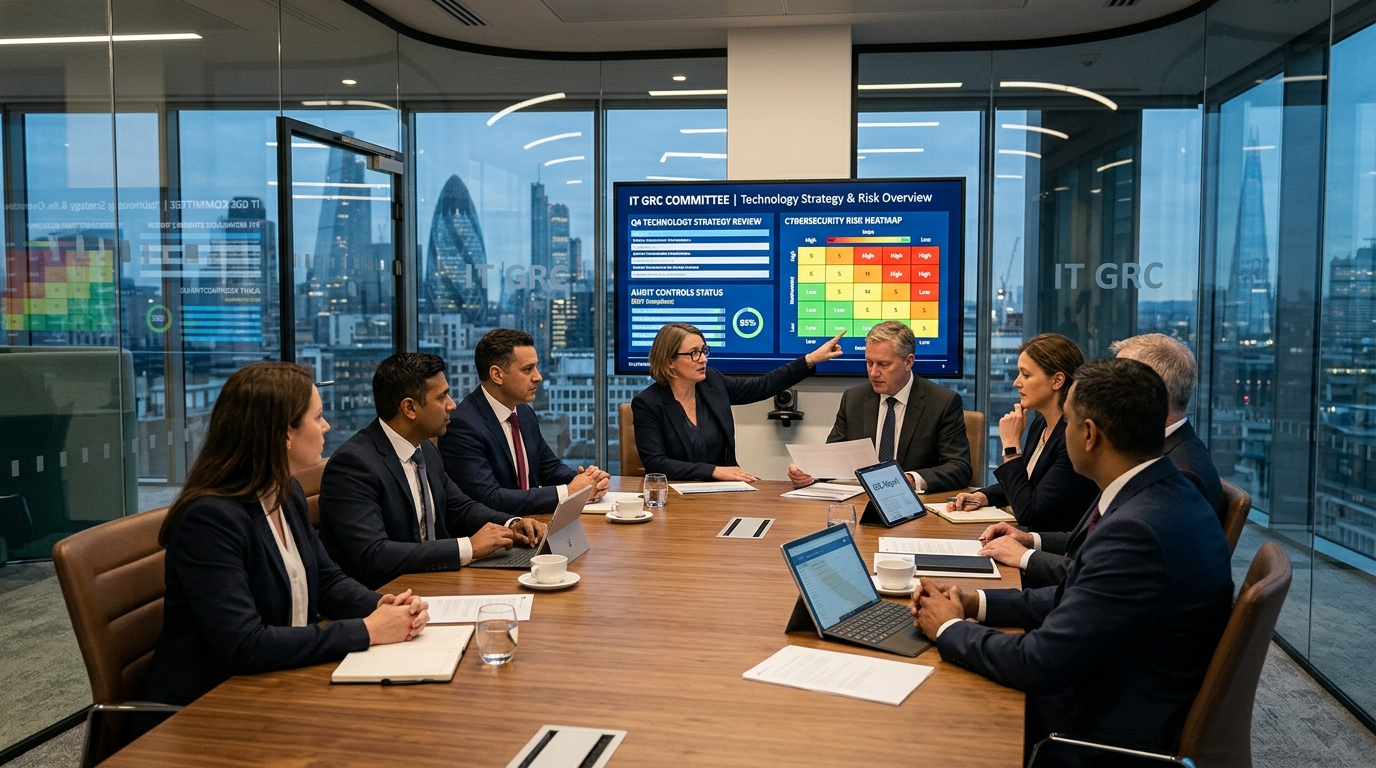
It Governance Grc Board Review
02

DATA SCIENCE WORKFLOW

A professional data-science lifecycle may include:

  • BUSINESS UNDERSTANDING
  • DATA COLLECTION
  • DATA PREPARATION
  • EXPLORATION
  • FEATURE ENGINEERING
  • MODEL DEVELOPMENT
  • MODEL EVALUATION
  • DEPLOYMENT
  • MONITORING
  • IMPROVEMENT
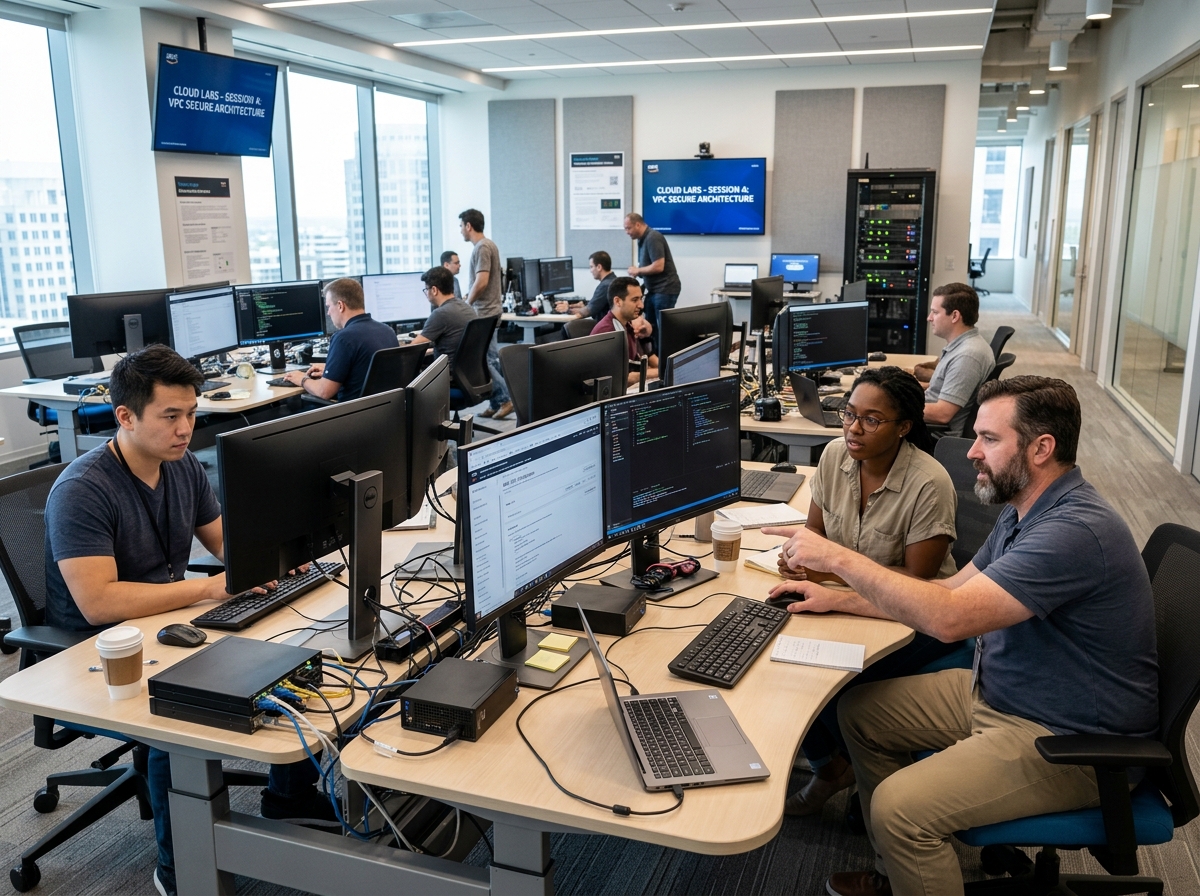
Cloud Infrastructure Data Center
03

STATISTICS FOR DATA SCIENCE

Important concepts include:

  • Mean
  • Median
  • Variance
  • Standard deviation
  • Probability
  • Distributions
  • Sampling
  • Confidence intervals
  • Hypothesis testing
  • Correlation
  • Regression
  • Experimental design

MACHINE LEARNING

Supervised Learning

Models learn from labeled examples.

Applications include:

Handson Tech Lab Cohort
04

Classification

Predict a category.

Examples:

  • Fraud / not fraud
  • Churn / retain
  • Spam / legitimate
Government Defense Cyber Briefing
05

Regression

Predict a numeric value.

Examples:

  • Revenue
  • Property value
  • Demand
  • Cost
Technology governance and risk review
06

Unsupervised Learning

Identify structure without predetermined labels.

Applications include:

  • Customer segmentation
  • Behavioral clustering
  • Anomaly identification
  • Pattern discovery
Cybersecurity Threat Intelligence Hub
07

COMMON MACHINE-LEARNING METHODS

Professionals may encounter:

  • Linear regression
  • Logistic regression
  • Decision trees
  • Random forests
  • Gradient boosting
  • Support Vector Machines
  • K-nearest neighbors
  • Clustering
  • Principal Component Analysis
  • Neural networks

MODEL EVALUATION

Classification Measures

  • Accuracy
  • Precision
  • Recall
  • F1 score
  • ROC-AUC
  • Confusion matrix
Remote Online Proctoring Verification
08

Regression Measures

  • Mean Absolute Error
  • Mean Squared Error
  • Root Mean Squared Error

OVERFITTING & UNDERFITTING

Underfitting

The model is too simple to capture meaningful patterns.

Modern Workspace Office
09

Overfitting

The model learns the training data too closely and performs poorly on new observations.

Professional modeling requires balancing complexity and generalization.

Data Analytics Bi Visualization Lab
10

FEATURE ENGINEERING

Feature engineering can involve:

  • Creating new variables
  • Transforming variables
  • Encoding categories
  • Scaling values
  • Aggregating data
  • Extracting dates
  • Creating interaction terms

Better features can sometimes improve a model more than selecting a more complex algorithm.

More in this section
EXPERIMENTATION & A/B TESTING Read this

Organizations use controlled experiments to evaluate whether interventions cause measurable changes.

Examples include:

  • Website designs
  • Marketing campaigns
  • Product features
  • Pricing
  • Recommendation systems
TIME-SERIES ANALYTICS Read this

Used when observations are ordered through time.

Applications include:

  • Sales forecasting
  • Energy demand
  • Financial forecasting
  • Inventory planning
  • Website traffic
  • Capacity planning

Concepts may include:

  • Trend
  • Seasonality
  • Cycles
  • Autocorrelation
  • Forecast intervals
AI-POWERED ANALYTICS Read this

Artificial intelligence is increasingly changing how professionals interact with data.

Emerging capabilities include:

  • Natural-language queries
  • Automated insight generation
  • AI-assisted SQL
  • Automated visualization
  • Predictive modeling
  • Anomaly detection
  • Generative summaries
  • Conversational BI
  • Intelligent forecasting

AI should augment analytical judgment—not replace the need to validate data, assumptions, methodology, and results.

RESPONSIBLE DATA SCIENCE Read this

Professional data science must address:

  • Bias
  • Fairness
  • Privacy
  • Security
  • Explainability
  • Data quality
  • Model drift
  • Reproducibility
  • Human oversight
  • Appropriate use

EXPLORE DATA SCIENCE INSIGHTS

Data Analytics Resources

Turn Guidance Into Verified Competence

Pair these resources with an IBACTP® credential that validates the competence they describe.