IBACTP® — International Board of AI, Cybersecurity & Technology Professionals
Cybersecurity Resources

Threat Intelligence Reports

Understand the Threat Before It Becomes an Incident

The IBACTP® Threat Intelligence Resource Center connects professionals with authoritative information on cyber threats, attack techniques, vulnerabilities, threat actors, ransomware, fraud, malware, exploitation activity, and emerging cybersecurity risks.

Focus: Adversary TTPs · Ransomware · Zero-Day · Supply Chain · AI Attack Vectors
Cybersecurity Threat Intelligence Hub
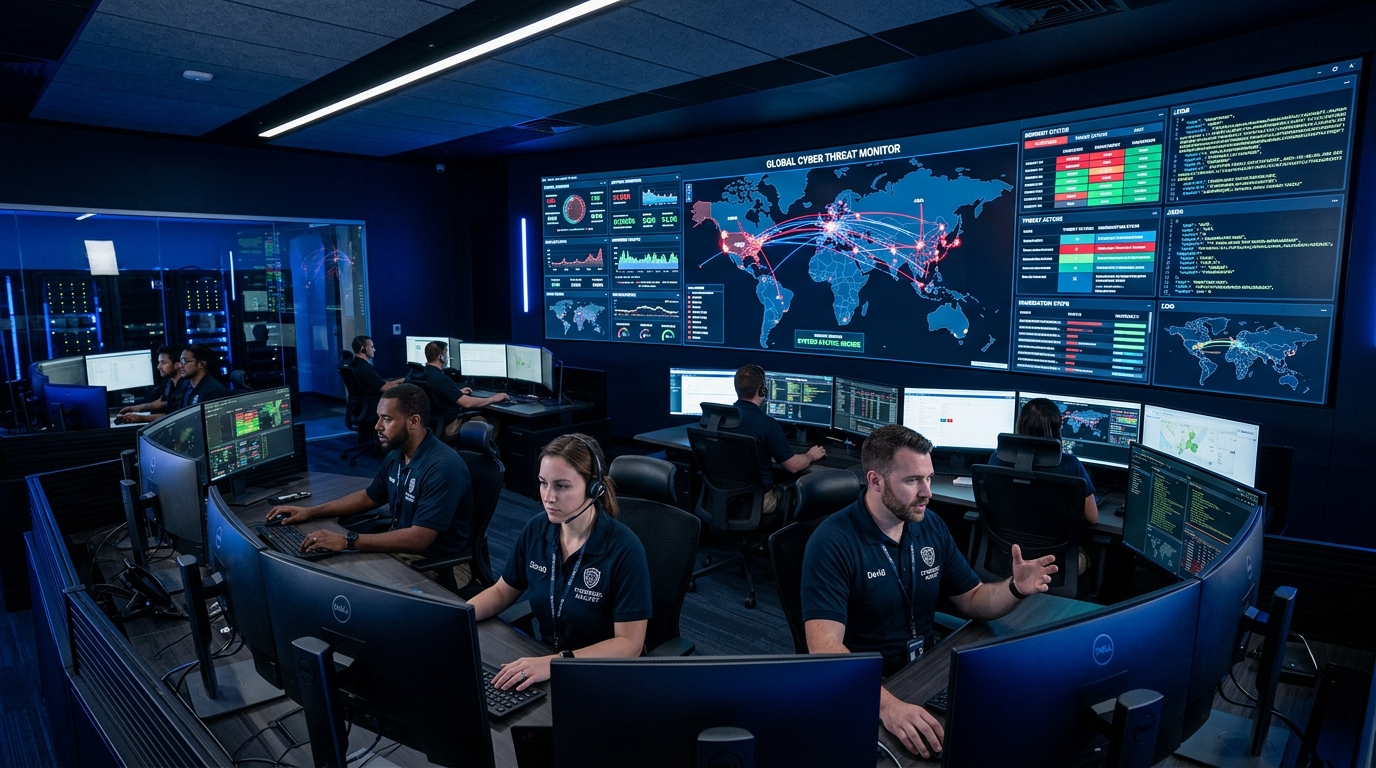
Cybersecurity Soc Analysts
Government Defense Cyber Briefing
Live Intelligence MITRE ATT&CK®
Cybersecurity resource centers

Select a center to explore guidance, standards and practitioner resources

Resource Library

Understand the Threat Before It Becomes an Incident

Effective cybersecurity begins with understanding the adversary.

The IBACTP® Threat Intelligence Resource Center connects professionals with authoritative information on cyber threats, attack techniques, vulnerabilities, threat actors, ransomware, fraud, malware, exploitation activity, and emerging cybersecurity risks.

Threat intelligence can support:

  • Security operations
  • Vulnerability prioritization
  • Threat hunting
  • Incident response
  • Security architecture
Data Analytics Bi Visualization Lab
Cybersecurity Soc Analysts
01

CISA Known Exploited Vulnerabilities Catalog

The Cybersecurity and Infrastructure Security Agency (CISA) Known Exploited Vulnerabilities—or KEV—Catalog provides an authoritative list of vulnerabilities known to have been exploited in real-world attacks.

Use this resource for:

  • Vulnerability prioritization
  • Patch-management decisions
  • Threat-informed risk assessment

Explore the CISA Known Exploited Vulnerabilities Catalog

It Governance Grc Board Review
02

CISA Cybersecurity Advisories

CISA cybersecurity advisories provide timely information on active threat campaigns, emerging vulnerabilities, malware variants, and recommended defensive mitigations.

Key advisory focus areas:

  • Threat actor campaigns & attribution
  • Technical indicators of compromise (IOCs)
  • Defensive mitigations & remediation guidance

Browse CISA Cybersecurity Advisories

Cloud Infrastructure Data Center
03

FBI Internet Crime Complaint Center — Annual Reports

The FBI Internet Crime Complaint Center (IC3) publishes annual reports covering reported cybercrime, financial losses, fraud patterns, ransomware, business email compromise, cryptocurrency-related crime, and other internet-enabled threats.

Useful for:

  • Cybercrime trend analysis
  • Research and threat intelligence
  • Risk-management planning

Access FBI IC3 Annual Cybercrime Reports

Handson Tech Lab Cohort
04

MITRE ATT&CK®

The MITRE ATT&CK® knowledge base documents adversary tactics and techniques based on real-world observations. MITRE makes the resource openly available for threat modeling, defensive analysis, security engineering, detection development, and related cybersecurity work.
Key ATT&CK focus areas:

  • Enterprise, Cloud & Mobile ATT&CK matrices
  • Adversary tactics, techniques & sub-techniques
  • Defensive mitigations & detection strategies

Explore MITRE ATT&CK®

Government Defense Cyber Briefing
05

Core Threat Intelligence Topics & Disciplines

The IBACTP® Threat Intelligence Resource Center organizes guidance around eight major areas of contemporary cyber risk:

  • Ransomware & Data Extortion — Attack patterns, initial-access techniques, data extortion, ransomware operations, recovery, and preventive controls.
  • Advanced Persistent Threats (APTs) — State-sponsored and sophisticated threat actors, campaigns, tactics, techniques, and procedures.
  • Malware & Botnets — Trojans, information stealers, spyware, loaders, botnets, remote-access tools, and malicious software.
  • Phishing & Social Engineering — Email phishing, spear phishing, business email compromise, voice phishing, SMS attacks, and credential theft.
  • Vulnerability Exploitation — Actively exploited vulnerabilities, zero-days, public-facing system exploitation, and patch prioritization.
  • Cloud Threats — Identity compromise, cloud misconfiguration, exposed credentials, API attacks, privilege abuse, and cloud-native attack techniques.
  • Software & Supply-Chain Threats — Compromised software dependencies, third-party access, service providers, and development pipelines.
  • AI-Enabled Cyber Threats — AI-assisted phishing, automated reconnaissance, malicious code generation, synthetic media, identity attacks, and adversarial AI.

EXPLORE THREAT INTELLIGENCE

Cybersecurity Resources

Turn Guidance Into Verified Competence

Pair these resources with an IBACTP® credential that validates the competence they describe.