

IBACTP® — International Board of AI, Cybersecurity & Technology Professionals
Networking Resources

Network Design Guides

Architect Networks That Scale with the Organization

Professional network architecture must anticipate growth, new applications, security requirements, remote access, cloud integration, workforce mobility, AI-enabled operations, and changing business priorities.

Enterprise network and data-centre infrastructure
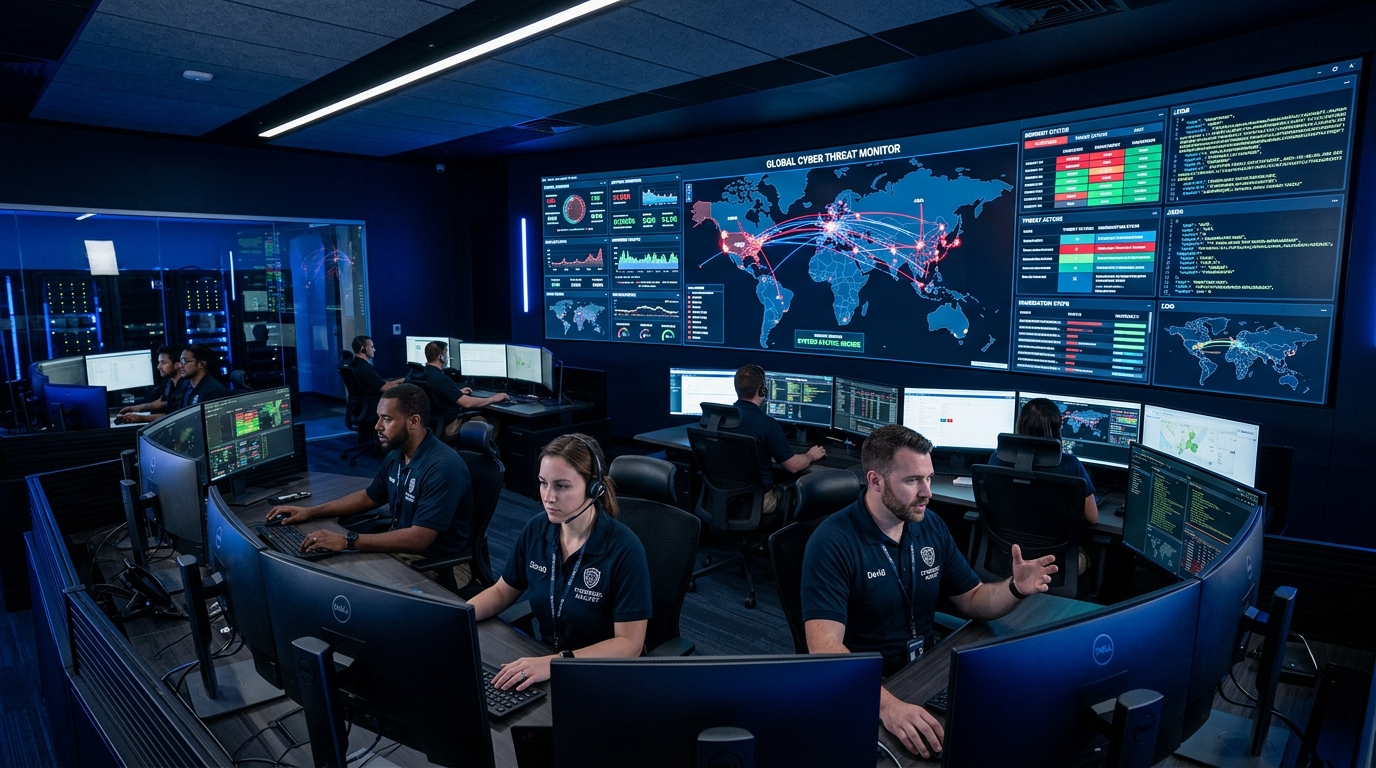
Network operations and monitoring
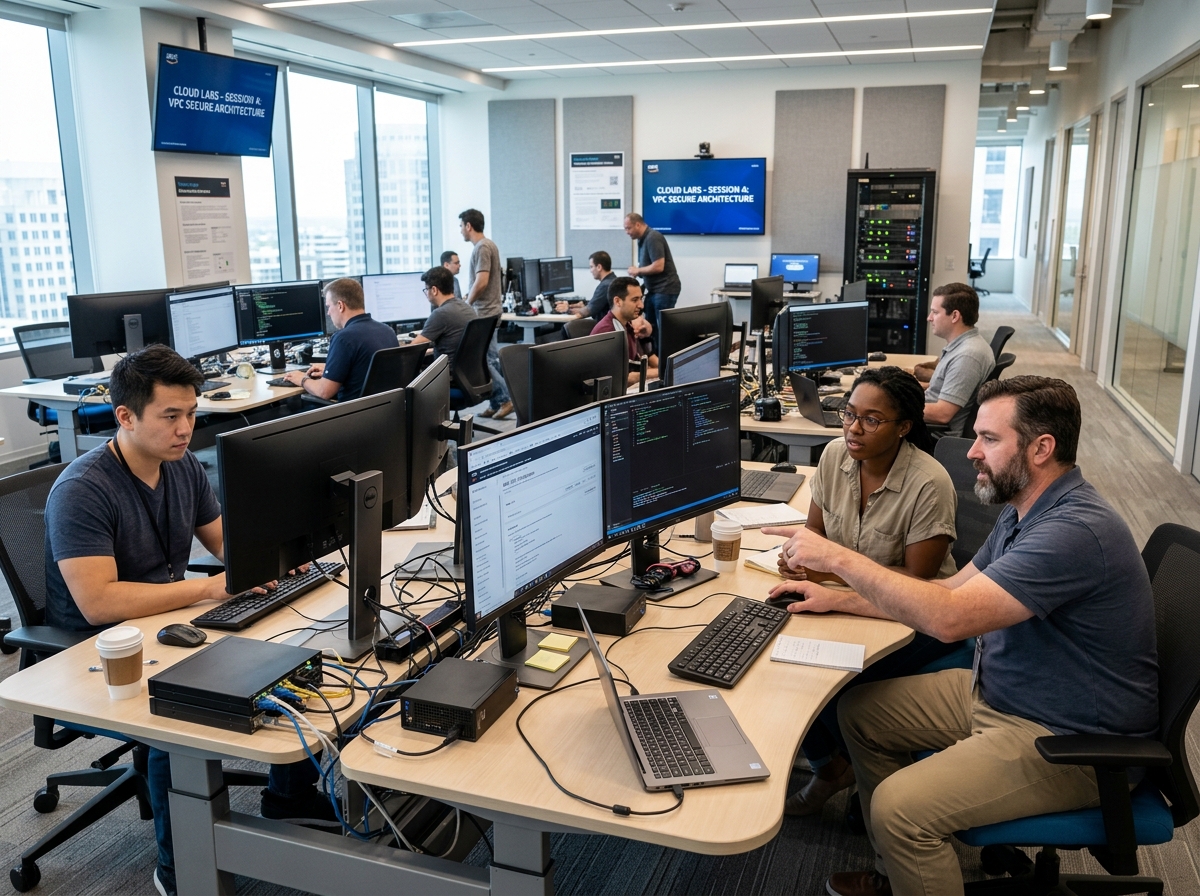
Hands-on networking laboratory
Networking Network Design Guides
Networking resource centers

Select a center to explore guidance, standards and practitioner resources

Resource Library

Architect Networks That Scale with the Organization

Cybersecurity Soc Analysts
01

Architect Networks That Scale with the Organization

A network should never be designed only for today's requirements.

Professional network architecture must anticipate growth, new applications, security requirements, remote access, cloud integration, workforce mobility, AI-enabled operations, and changing business priorities.

The IBACTP® Network Design Guides help professionals make better architectural decisions across campus, branch, WAN, data center, cloud, wireless, and hybrid environments.


It Governance Grc Board Review
02

Design for Business Continuity

A resilient network should continue supporting critical operations even when components, links, providers, or systems fail.

Professional design considers:

  • Redundant routers and switches
  • Diverse communication paths
  • Multiple service providers
  • Automatic failover
  • High-availability firewalls
  • Link aggregation
  • Dynamic routing
  • Resilient power
  • Backup connectivity
  • Tested recovery procedures

The goal is not simply redundancy.

The goal is operational continuity.

Cloud Infrastructure Data Center
03

DESIGN WITH A MODULAR ARCHITECTURE

Breaking a network into clear architectural domains improves scalability, troubleshooting, security, and operational control.

Common network domains include:

Handson Tech Lab Cohort
04

Campus

Connect employees, devices, applications, and services across corporate buildings and facilities.

Government Defense Cyber Briefing
05

Branch

Support distributed offices, remote locations, retail environments, and smaller sites.

Technology governance and risk review
06

WAN

Provide reliable communication between geographically separated locations.

Cybersecurity Threat Intelligence Hub
07

Data Center

Support high-speed, low-latency communication between applications, servers, storage, and services.

Remote Online Proctoring Verification
08

Cloud

Connect virtual environments, workloads, applications, and hybrid infrastructure.

Modern Workspace Office
09

Wireless

Deliver secure, high-capacity mobility across users and devices.

Data Analytics Bi Visualization Lab
10

Security Edge

Protect internet access, cloud connectivity, remote access, and external services.

Management Network

Secure and isolate infrastructure administration.

CAMPUS NETWORKING

More in this section
Build the Digital Workplace Read this

Modern campus networks support:

  • Employees
  • Students
  • Guests
  • Mobile devices
  • VoIP
  • Video collaboration
  • IoT
  • Smart buildings
  • Wireless access
  • Cloud applications

A strong campus architecture balances:

Performance + Security + Mobility + Availability + Operational Simplicity

Core design considerations include:

  • Access-layer capacity
  • Distribution-layer policy
  • Core resiliency
  • Power over Ethernet
  • Multigigabit connectivity
  • Wireless integration
  • Segmentation
  • Authentication
  • Redundancy

BRANCH NETWORKING

Connect Distributed Teams Without Compromising Performance Read this

Branch environments increasingly depend on cloud and SaaS applications.

Modern branch networking may include:

  • SD-WAN
  • Local internet breakout
  • Cloud security
  • VPN
  • LTE/5G backup
  • Wireless access
  • Centralized policy
  • Remote monitoring
  • Zero Trust access

The objective is to create branch networks that are easier to deploy, easier to manage, and more resilient.

WIDE AREA NETWORKING

Connect Locations With Speed, Reliability and Control Read this

WAN design influences user experience, application performance, business continuity, and cloud connectivity.

Organizations may use:

  • Internet VPN
  • MPLS
  • SD-WAN
  • Dedicated circuits
  • Broadband
  • Cellular
  • Satellite
  • Hybrid WAN

A professional WAN strategy should evaluate:

  • Availability
  • Latency
  • Bandwidth
  • Security
  • Application priority
  • Provider diversity
  • Cost

DATA CENTER NETWORKING

Support Modern Applications at Scale Read this

Data-center networks must handle increasingly large volumes of east-west traffic.

Modern architectures may include:

  • Spine-leaf designs
  • VXLAN
  • EVPN
  • Network virtualization
  • Load balancing
  • Microsegmentation
  • High-speed Ethernet
  • Automation
  • Multi-site connectivity

The objective is to provide predictable performance, rapid scaling, and high availability for modern applications.

CLOUD NETWORKING

Connect the Enterprise Beyond the Traditional Perimeter Read this

Cloud networking requires professionals to understand virtualized infrastructure alongside traditional networking principles.

Key areas include:

  • Virtual networks
  • Virtual private clouds
  • Cloud subnets
  • Security groups
  • Route tables
  • Load balancers
  • Transit gateways
  • Private endpoints
  • Cloud VPN
  • Direct interconnects
  • DNS
  • Hybrid connectivity
  • Multi-cloud networking

The challenge is no longer simply connecting a network.

It is securely connecting users, applications, data, workloads, clouds, branches, devices, and services.

IP ADDRESSING & SUBNETTING

Build a Structure That Supports Growth Read this

Strong addressing plans improve routing, security, troubleshooting, and future expansion.

Professionals should understand:

  • IPv4
  • IPv6
  • CIDR
  • VLSM
  • Private addressing
  • Public addressing
  • Route summarization
  • VLAN allocation
  • Address hierarchy
  • Growth planning

A good addressing strategy should be:

  • Structured
  • Scalable
  • Documented
  • Predictable
  • Easy to summarize

NETWORK DESIGN DOCUMENTATION

Professional Networks Require Professional Documentation Read this

Effective documentation reduces troubleshooting time, improves continuity, and supports audits and security reviews.

Recommended documentation includes:

  • Logical topology
  • Physical topology
  • IP address plan
  • VLAN assignments
  • Routing design
  • Device inventory
  • WAN circuits
  • Security zones
  • Firewall flows
  • Wireless architecture
  • Port maps
  • Dependencies
  • Recovery procedures
  • Monitoring architecture
  • Configuration standards

EXPLORE NETWORK DESIGN GUIDES

Networking Resources

Turn Guidance Into Verified Competence

Pair these resources with an IBACTP® credential that validates the competence they describe.