



IBACTP® — International Board of AI, Cybersecurity & Technology Professionals
Cybersecurity Resources

Security Best Practices

Build Stronger Security From the Foundation Up

The IBACTP® Security Best Practices Center provides practical guidance for reducing preventable cybersecurity risk across people, processes, technology, and governance.

Focus: Zero Trust · Identity · Hardening · Segmentation · Secure Configuration
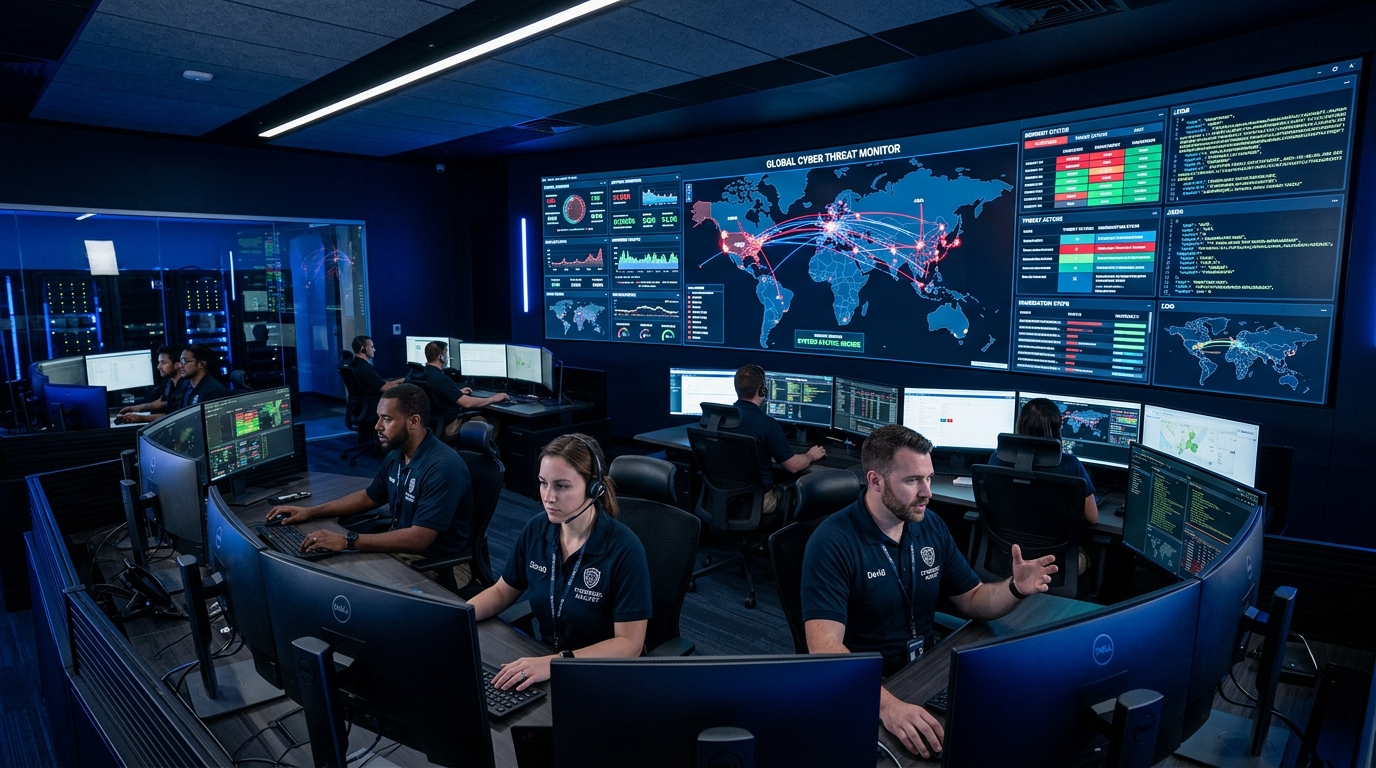
Cybersecurity Soc Analysts
It Governance Grc Board Review
Cloud Infrastructure Data Center
Hardening Baseline Controls
Cybersecurity resource centers

Select a center to explore guidance, standards and practitioner resources

Resource Library

Build Stronger Security From the Foundation Up

Strong cybersecurity depends on consistently implementing fundamental controls.

The IBACTP® Security Best Practices Center provides practical guidance for reducing preventable cybersecurity risk across people, processes, technology, and governance.

Data Analytics Bi Visualization Lab
Cybersecurity Soc Analysts
01

Identity & Access Management

Identity is the primary security boundary. Strong authentication, least privilege, and lifecycle controls prevent credential theft and unauthorized access.

Essential IAM controls include:

  • Phishing-resistant multi-factor authentication (MFA)
  • Principle of least privilege and zero standing access
  • Privileged Access Management (PAM) with session auditing
  • Role-based access control (RBAC) and automated offboarding
  • Single sign-on (SSO) with conditional access evaluation
  • Centralized service account governance and credential rotation

Review IAM Guidance

It Governance Grc Board Review
02

Vulnerability & Patch Management

A continuous, risk-based vulnerability management lifecycle prevents adversaries from exploiting known software and system flaws.

Six-stage lifecycle & priorities:

  • 1. Discover & Catalog — Comprehensive inventory of all software and infrastructure assets
  • 2. Assess & Scan — Automated vulnerability discovery across internal and perimeter systems
  • 3. Prioritize — Risk-informed ranking driven by CISA KEV active exploitation and CVSS metrics
  • 4. Remediate & Patch — Rapid testing, deployment, and configuration correction within strict SLAs
  • 5. Verify & Rescan — Confirmation of successful remediation and absence of regressions
  • 6. Continuous Monitoring — Tracking new CVE advisories and ongoing exposure trends

Review Vulnerability Management

Cloud Infrastructure Data Center
03

Endpoint Security

Comprehensive defense-in-depth across enterprise workstations, mobile devices, and servers.

Recommended endpoint practices:

  • Endpoint Detection and Response (EDR/XDR) with 24/7 telemetry
  • Full-disk encryption and hardware-backed trusted platform modules
  • Application allowlisting and removal of local admin rights
  • CIS baseline hardening and automated configuration enforcement
  • USB and peripheral device control policies
  • Real-time behavioral monitoring and automated threat isolation

Review Endpoint Best Practices

Handson Tech Lab Cohort
04

Network Security

Architectural segmentation, ingress/egress inspection, and boundary defense to minimize blast radius.

Core network safeguards:

  • Network micro-segmentation and VLAN isolation for critical zones
  • Next-generation firewalls (NGFW) with intrusion prevention (IPS)
  • Zero Trust Network Access (ZTNA) replacing legacy full-tunnel VPNs
  • Encrypted DNS and malicious domain filtering at the recursive resolver
  • Network-device configuration hardening and encrypted admin channels
  • Continuous network flow telemetry and anomaly detection

Review Network Security

Government Defense Cyber Briefing
05

Email & Collaboration Security

Defenses against phishing, business email compromise (BEC), and collaboration platform fraud.

Collaboration safeguards:

  • Anti-spoofing protocols: enforced DMARC, DKIM, and SPF validation
  • AI-driven inbound email filtering for zero-day phishing and malware
  • Out-of-band dual verification for financial wire transfers and payroll
  • Automated mailbox behavioral anomaly and inbox-rule monitoring
  • One-click suspicious email reporting for user triage
  • Continuous realistic phishing simulation and role-based training

Review Collaboration Security

Technology governance and risk review
06

Data Security & Cryptography

Protecting the confidentiality, integrity, and availability of critical enterprise data throughout its lifecycle.

Data protection baselines:

  • Data discovery, automated classification, and sensitivity labeling
  • Industry-standard encryption for data at rest (AES-256) and in transit (TLS 1.3)
  • Data Loss Prevention (DLP) across cloud, email, and endpoints
  • Hardware Security Modules (HSM) and secure cryptographic key lifecycle
  • Immutable, air-gapped backups with automated restoration testing
  • Certified cryptographic erasure and defensible media disposal

Review Data Security Baselines

Cybersecurity Threat Intelligence Hub
07

CISA Cross-Sector Goals & Application Security Baselines

The IBACTP® security framework aligns foundational practices directly with CISA Cross-Sector Performance Goals (CPGs) and OWASP application security standards:

  • CISA CPG Alignment — High-impact cybersecurity baselines mapping directly to NIST CSF 2.0 functions (Govern, Identify, Protect, Detect, Respond, Recover).
  • OWASP Top 10:2025 Standard — Defeating critical web-application risks including broken access control, security misconfigurations, and supply-chain vulnerabilities.
  • OWASP Generative AI Security — Hardening LLMs against prompt injection, model poisoning, and unauthorized training data exposure.
  • CISA #StopRansomware Guidance — Proven preventive architectures to eliminate initial access and halt data extortion operations.

EXPLORE SECURITY BEST PRACTICES

Cybersecurity Resources

Turn Guidance Into Verified Competence

Pair these resources with an IBACTP® credential that validates the competence they describe.